
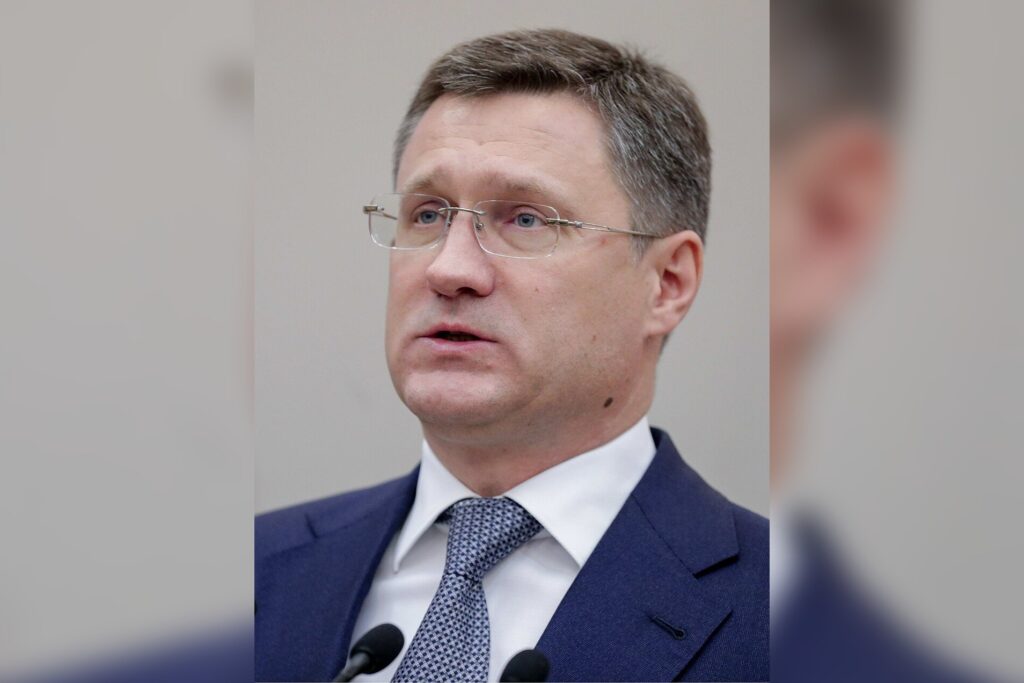
MOSCOW, July 18 — The Kremlin’s point man for the Arctic and energy, Deputy Prime Minister Alexander Novak, now finds himself orchestrating a complex manoeuvre to salvage Russia’s Northern Sea Route ambitions after a key Chinese equipment supplier reportedly walked away from contracts. Novak, the 54-year-old economist and veteran of Russia’s energy bureaucracy, has served as Deputy Prime Minister since November 2020, overseeing trade, energy and Arctic affairs.
His portfolio places him at the centre of Moscow’s strategic push to transform the Northern Sea Route — the shipping lane along Siberia’s coast — into a year-round commercial artery. Against this backdrop, the Chinese refusal to supply critical infrastructure equipment lands squarely in Novak’s domain.
According to officials familiar with the file, he is expected to lead the search for alternative foreign suppliers or to accelerate domestic production of the components needed to keep the NSR expansion on track — a task complicated by the sweeping Western sanctions that have cut Russia off from much of its previous industrial supply chain.
The Arctic Programme and the NSR Targets
Novak personally oversees the state programme ‘Development of the Arctic’, funded with 296 billion rubles (approximately $3.2 billion) for the 2021–2025 period. He coordinates the work of Rosatom, the Ministry of Industry and Trade, and the regional governors on Arctic infrastructure — an indication of how the Kremlin relies on personalised top-down management to advance its Northern ambitions. Those ambitions are quantified in cargo targets that Novak has publicly stated: 80 million tons of cargo along the NSR by 2024, and 150 million tons by 2031.
The 2024 milestone has already passed without public confirmation of achievement — a fact that hangs over the current recalibration. What is at stake is not merely a shipping lane; the NSR is central to Russia’s ability to export liquefied natural gas and minerals to Asian markets without traversing the Suez Canal or the chokepoint of the Danish straits.
The wider picture involves Moscow’s long-term bet on a warming Arctic opening new trade routes, a bet sanctioned by the West as strategically destabilising.
Novak’s Trajectory: From Privatisation to Sanctions
A trained economist who served as Minister of Energy from 2012 to 2020, Novak was deeply involved in the OPEC+ agreement that coordinates oil production cuts between Russia and Saudi Arabia. Earlier in his career, he played a role in privatising Russian oil assets — a period that cemented ties between the state and the energy majors that now dominate the Arctic shelf. Novak has been under US sanctions since 2022 due to his government position.
The restrictions limit his international travel and access to Western financial systems, and they constrain the very equipment sourcing he is now tasked with organising. In the corridors of power in Moscow, the question is whether Novak can find a way past these barriers — or whether the Chinese equipment refusal signals a deeper fragility in Russia’s Arctic supply chains.
For now, the deputy prime minister’s next moves will be closely watched. With the 2031 NSR target still a decade away but infrastructure gaps widening, Novak’s ability to substitute Chinese equipment or accelerate domestic manufacturing may determine whether Russia’s Arctic dream remains a plausible ambition or drifts into the realm of unfulfilled state planning.




