
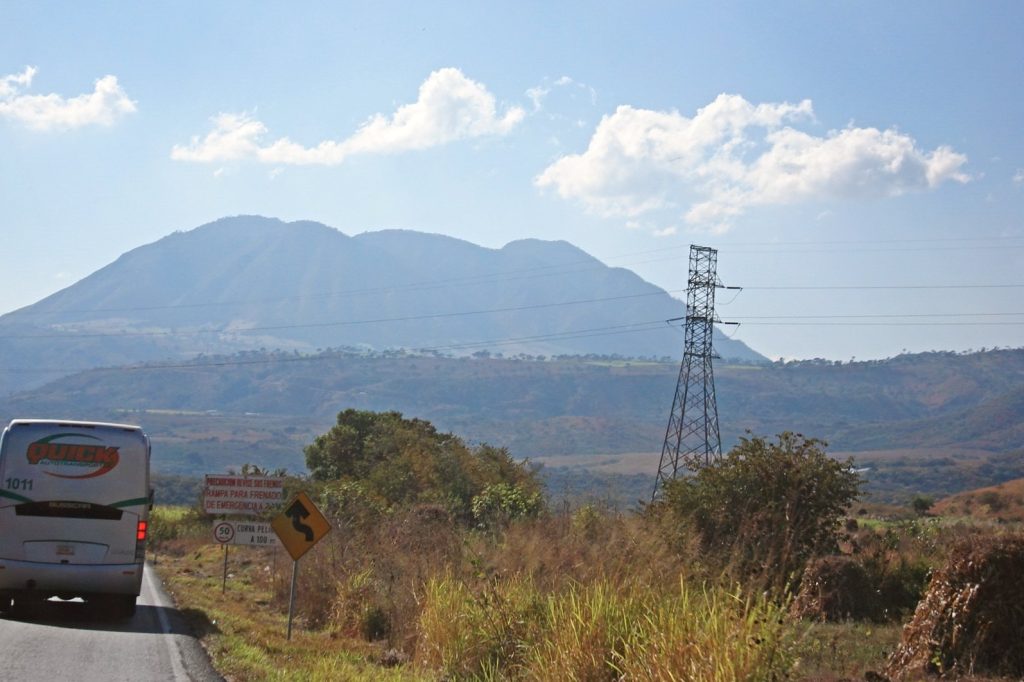
The death toll from a passenger bus that veered off a highway and overturned near Amatlán de Cañas, Nayarit, now stands at eleven. Another thirty-one people were injured. The numbers are raw, but the questions behind them are what will occupy investigators for months.
Mexico’s highways are a patchwork. Some stretches are modern toll roads.
Others are aging two-lane arteries that cut through mountain passes and small towns. The route near Amatlán de Cañas sits in the latter category. The bus came off the road.
It flipped. The wreckage itself will tell part of the story — tire marks, metal fatigue, the position of the guardrail, if any existed.
But the deeper story is about a system under strain. Amatlán de Cañas is a small place. The municipal seat held just 3,275 people as of 2005.
The wider municipality had 10,392. A bus carrying that many passengers is a lifeline, not a luxury. People depend on these vehicles to get to work, to visit family, to reach hospitals.
When a bus crashes, it doesn’t just break metal. It breaks a community’s connective tissue.
The cause remains unknown. That is the standard line in any early report. But the factors that typically kill people on Mexican highways are not mysteries.
Overloaded vehicles. Insufficient rest for drivers.
Roads designed for slower speeds and lighter traffic. Buses that are old, poorly maintained, or both. The investigation will likely look at all of these.
It will also look at the driver’s actions in the minutes before the accident. Fatigue is a common culprit. So is speed.
The state of Nayarit sits along the Pacific coast. It is a tourist destination, but it is also a transit corridor.
Buses move people from the interior to the beach towns, and from the north down to Guadalajara and beyond. The highway near Amatlán de Cañas is part of that corridor. It is not a desolate back road.
It is a route that carries significant traffic. That makes the crash both more tragic and more predictable.
Emergency services responded quickly. The injured were taken to nearby hospitals. That part of the response is standard.
What follows is less standard. Families will wait for news. Some will receive it in a hospital corridor.
Others will receive it from a local official. The dead will be identified.
The funerals will be held. And then the community will have to decide whether this changes anything. It should.
Mexico has one of the highest road fatality rates in the OECD. Bus crashes are a recurring horror.
The response from authorities is usually the same: a promise of a thorough investigation, a call for better safety measures, a moment of silence. But the structural problems remain. The buses are old.
The roads are underfunded. The regulations are unevenly enforced. Until those realities change, the crashes will keep coming.
This accident is a data point in a larger pattern. Eleven dead.
Thirty-one injured. A town of ten thousand people now has a hole in it. The investigation will produce a report.
The report will cite a cause. But the cause will be a symptom of something broader: a transportation system that moves people but does not always protect them.
That is the real story here. It is not a mystery. It is a failure of priorities.




