
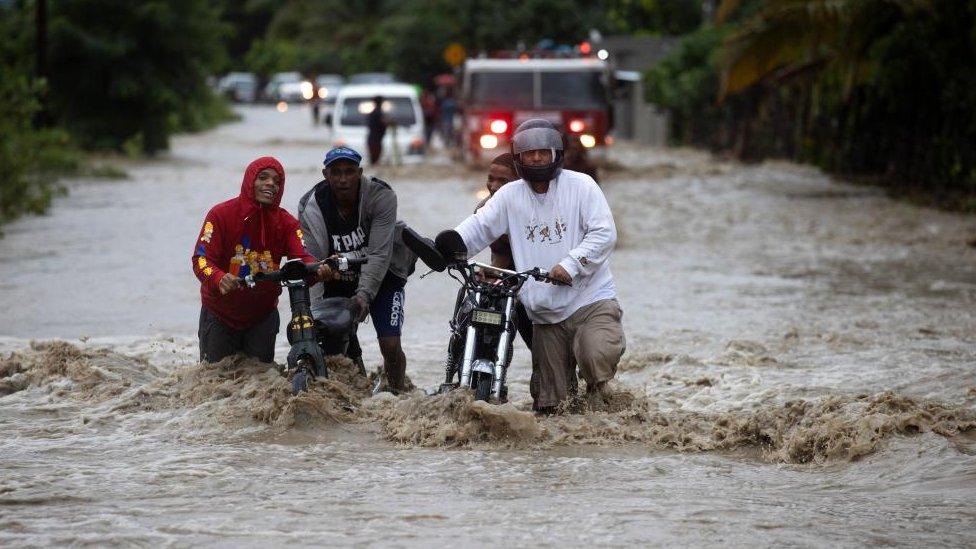
On 19 November 2023, heavy rains triggered widespread flooding that claimed the lives of at least 21 people throughout the Dominican Republic. The fatalities were recorded in several provinces, affecting both urban centres and rural communities. The island nation occupies the eastern five‑eighths of Hispaniola, a landscape marked by rugged interior mountains and low‑lying coastal zones.
This topography makes the country inherently prone to extreme weather, a vulnerability noted by multiple observers who describe the Dominican Republic as “particularly vulnerable to extreme weather events.” The recent deluge was therefore not unexpected given the terrain, yet the loss of life underscores the seriousness of the risk. With a national population of roughly 11.4 million, the Dominican Republic includes the capital city of Santo Domingo, home to about 3.6 million residents.
When floodwaters rose on that November day, they did not discriminate between the densely populated capital and the countryside, resulting in deaths across multiple regions. The incident has reignited discussion about the link between environmental stewardship and disaster mitigation. The country’s geography—steep slopes, deforested hillsides, and exposed coastlines—creates a fixed susceptibility to flooding. What is variable, however, is how the nation prepares for such events.
Analysts argue that protecting natural ecosystems and adopting sustainable development practices can lessen the impact of future floods. One strand of the argument focuses on energy demand.
As global urbanisation and population growth continue, the need for energy rises correspondingly. Investing in renewable sources such as solar and wind is presented as a cost‑effective way to meet this demand while reducing reliance on finite fossil fuels. By curbing the exploitation of vulnerable landscapes for fuel or construction, the pressure on ecosystems that help regulate water flow can be eased.
Deforestation, for example, removes the tree roots that stabilise soil on hillsides. Without that anchorage, soil can slide into river channels, raising water levels and increasing flood risk.
Maintaining forest cover, therefore, can act as a natural buffer, slowing runoff and mitigating the severity of floods. The Dominican Republic ranks as the second‑largest nation in the Antilles by both area and population, behind only Cuba in size and Haiti in population. The island has a long history of weather‑related hazards, including hurricanes, mudslides and previous floods.
While the November 19 event was not linked to a specific storm or measured rainfall total in the reports, it fits within this broader pattern of recurring natural disasters. The central question now is preparedness.
Experts contend that building resilience is tied to concrete actions: preserving forests, enforcing land‑use planning, and expanding renewable energy infrastructure. The logic is straightforward—if communities rely less on activities that degrade the environment, the natural defenses against flooding remain intact, potentially saving lives. Each of the 21 individuals who perished had a personal story and a family, though the coverage focused on the systemic factors that made their deaths possible rather than on individual narratives.
Their loss serves as a stark reminder that the human cost of inadequate environmental management can be high. Urban growth in Santo Domingo and other cities, if pursued without adequate planning and environmental safeguards, amplifies vulnerability.
The November flooding demonstrated that when development proceeds without attention to sustainability, the consequences can be deadly. In summary, the tragic flood of 19 November highlights the Dominican Republic’s exposure to extreme weather due to its physical setting, while also pointing to actionable pathways—such as renewable energy adoption and ecosystem protection—that could reduce future risks. The 21 lives lost stand as a somber call for stronger, environmentally‑focused policies to prevent similar tragedies.




