
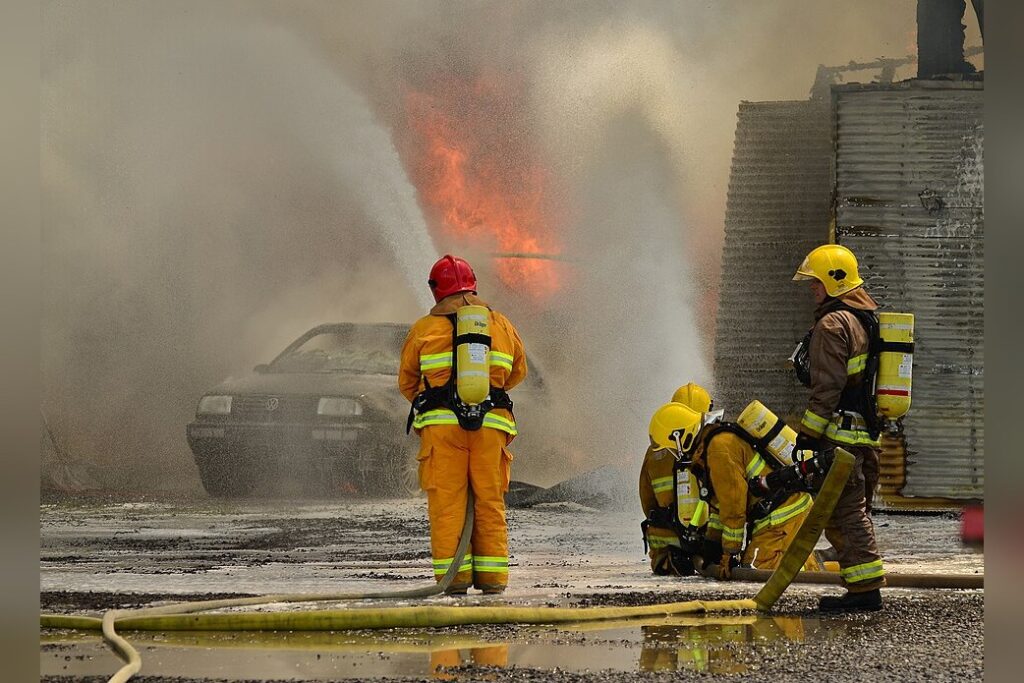
On March 14, 2025, severe wildfires are sweeping across Oklahoma and Texas, fueled by dry conditions, strong winds, and the seasonal volatility of March. The state of Oklahoma, whose name derives from the Choctaw words “okla” (people) and “humma” (red), is experiencing a crisis that has forced thousands to evacuate and left many without power.
The fires are spreading rapidly across dry grassland, propelled by high winds that have turned the landscape into a tinderbox. Emergency responders are struggling to contain blazes that move faster than firebreaks can be established. The situation is most acute in rural areas, but the effects are felt statewide, including in Oklahoma City, the capital and largest city.
Power outages represent the most urgent challenge. Without electricity, communication networks fail, healthcare facilities lose backup options, and evacuees cannot access real-time information about road closures.
The electrical grid, already stressed by recent extreme weather events, is buckling under the combined pressure of fire and wind. While wildfires are not new to this region, the current scale is notable. The fires are not only consuming grass and brush but also threatening Oklahoma’s biodiversity.
The local ecosystem, which includes prairie species, woodland animals, and riparian zone plants, can take years to recover from severe fire. Environmental officials are concerned that some species may not return if the heat is intense enough to sterilize the soil.
Amid the immediate crisis, some Oklahomans are turning to renewable energy as a practical measure, not a political statement. Fossil fuel infrastructure is vulnerable to fire—gas lines can rupture, and coal plants may lose transmission lines. Solar panels paired with battery storage can keep homes running during grid failures, and wind turbines continue to operate.
This diversification of power sources aims to reduce dependence on a single system that can fail during disasters. However, this shift does not stop the fires.
Once winds pick up and humidity drops, containment becomes extremely difficult. Emergency crews continue working to establish containment lines around the largest blazes before weather conditions change. Thousands remain displaced, and the power stays off for many.
The immediate question is whether responders can gain control. The deeper question, one that Oklahoma will face after the smoke clears, is how to live on a landscape that burns so frequently and intensely.
For now, the state burns, people evacuate, and the word “humma” carries a heavy meaning—red, fire, and a people tested by flame.




