
EDINBURGH — For decades, the question of what consciousness actually does has sat at the edge of neuroscience and philosophy, a puzzle with no clear answer. A new theory from a University of Edinburgh academic now proposes a blunt, functional explanation: consciousness evolved so humans could mentally test futures that do not yet exist. If correct, the theory draws a hard line between biological minds and any machine.
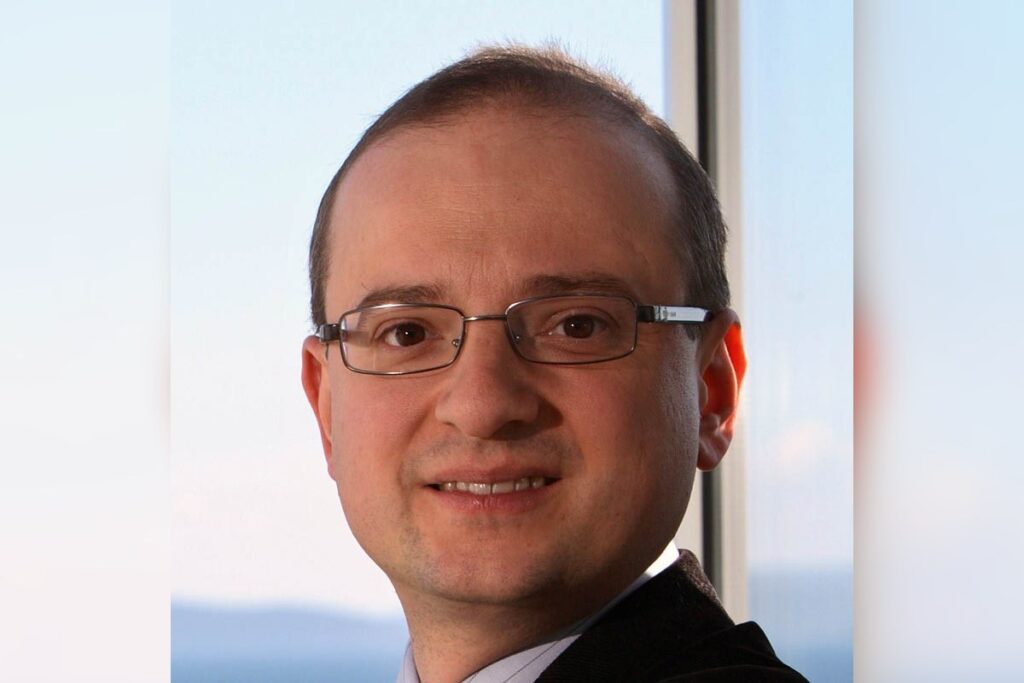
Professor Igor Rudan, Co-Head of the Centre for Global Health at Edinburgh University, laid out the argument in remarks to the Daily Mail. He did not publish it in a peer-reviewed journal or present it at a conference.
He went straight to a newspaper. The theory itself is not about what consciousness feels like or where it lives in the brain. It is about why it exists at all — a survival tool that gave early humans an edge in weighing choices, from crossing a road to pursuing a long-term goal.
Rudan contends that consciousness is not a passive byproduct of brain activity. It is the engine.
“One of the purposes of consciousness is to continuously generate, evaluate, and prioritise ideas,” he told the Daily Mail. That process, he said, allows what he calls “visionaries” — people who learn to use the brain’s “sense of ideas” skillfully — to achieve remarkable career successes. He pointed to the Moon landings as evidence.
No other species has done it. It was, in his framing, an “almost implausible” success. And it was made possible not by raw intelligence or computation, but by a capacity to run mental simulations of futures that do not yet exist.
That, Rudan argues, is what consciousness actually does. The sharp implication for the technology sector is clear.
If consciousness is a specific biological function — one tied to simulating alternative futures for survival — then artificial intelligence, no matter how powerful, might never replicate it. Rudan’s professional background is in global health, not artificial intelligence or consciousness studies. He serves as Co-Head of the Centre for Global Health at Edinburgh University.
The theory is a sideline, not a specialty. Still, the timing matters.
The question of machine consciousness has moved from philosophy departments to corporate boardrooms. Companies pour billions into large language models and neural networks. Claims of sentience surface, then get walked back.
Engineers talk about emergent properties. Governments scramble for regulation. Into that noise, Rudan drops a simple functional claim: consciousness is not a general property of complex information processing.
It is a specific evolutionary adaptation. A trick the human brain learned.
Not a switch that flips once a system gets big enough. The theory does not solve the hard problem of consciousness — why subjective experience exists at all. It side-steps it.
Instead, it offers a practical answer to a different question: what is consciousness for? That answer, if taken seriously, would mean that no amount of data, no improvement in algorithms, no scaling of compute power will produce a conscious machine.
Because the machine was never built for the same job. Rudan’s remarks come as the public debate on AI safety and rights grows louder. Some researchers argue that if an AI system behaves as if it is conscious, we should treat it as such.
Others say consciousness requires a biological substrate — a living body, a nervous system, a evolutionary history. Rudan’s theory lands on the biological side, but with a specific mechanism attached. Not just any biology.
A biology that evolved to simulate futures. Whether the theory holds up under scrutiny is another matter.
It has not been tested. It has not been debated by neuroscientists. It exists, for now, as a newspaper interview.
But it has entered a conversation that is already heated, and it offers a clear, provocative line in the sand: consciousness is not a feature that can be programmed in. It is a function that evolved for a purpose only a living species could have.




