
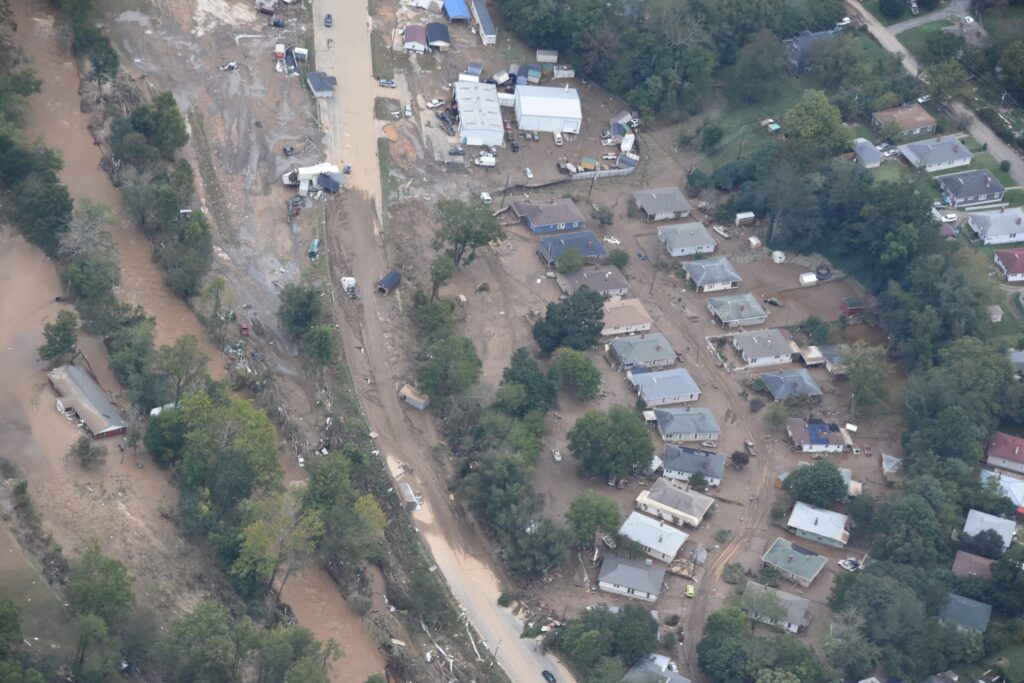
NORTH CAROLINA — Hurricane Helene struck the western Appalachian region of North Carolina on September 27, 2024, causing widespread devastation through powerful winds and heavy flooding. Official reports confirm at least 108 deaths linked to the storm. Damage to homes, roads, bridges and other infrastructure is extensive.
The cyclone first made landfall in Florida’s Big Bend region on September 27. It then moved inland across Georgia as a Category 2 storm.
By the time it entered the Appalachian mountains, it had weakened to a tropical storm. Despite this change in strength, the system unleashed record-breaking rainfall over western North Carolina. Extraordinary precipitation hit several communities.
These included Asheville, Swannanoa, Black Mountain, Montreat, Spruce Pine, Fairview, Chimney Rock and Lake Lure. Local rivers overflowed due to the volume of water.
Impacts on Communities
Swollen rivers inundated numerous settlements. The floodwaters swept away houses and damaged public works. Mudslides occurred across the region, which compounded the destruction.
Residents in the hardest-hit localities had to evacuate their dwellings. They sought shelter elsewhere as their homes were destroyed or became uninhabitable.
Infrastructure and Services
Electricity, transportation networks and telecommunications were disrupted for extended periods in many towns. This left residents without essential services. Daily life was disrupted as people struggled to obtain water, food and medical care while utilities remained offline.
Rescue and relief operations faced difficulties. The loss of roads and bridges hampered emergency responders.
Economic Toll
Hurricane Helene is now the costliest natural disaster in the recorded history of North Carolina. Its economic impact exceeds that of Hurricane Florence in 2018. Damage assessments place the total loss in the millions of dollars.
This figure reflects extensive harm to local businesses, public infrastructure and private property. State government, residents and emergency services need to work together.
Recovery efforts are ongoing. There is a need to watch for updates on these efforts and potential long-term effects on ecosystems and the environment.
Background and why it matters
A hurricane is a large, rotating storm system that forms over warm ocean waters and produces heavy rain and strong winds.
Helene began as a low-pressure system in the western Caribbean Sea on September 22, 2024. It gained strength as it moved toward the Yucatán Peninsula and intensified further while crossing the Gulf of Mexico. The storm reached peak intensity before hitting the Big Bend region of Florida on September 26. It then traveled through Georgia and Tennessee before dissipating on September 29.
This storm caused the most deaths of any Atlantic hurricane since 2017. It also resulted in the highest death toll for a hurricane hitting the mainland United States since 2005. Prior to reaching the U.S., the system caused flooding in the Cayman Islands, Honduras, and Nicaragua.
The event demonstrates the danger of rapid intensification in the Gulf of Mexico. Such storms threaten a wide area of the Southeastern United States. They can cause catastrophic damage far from the coast through inland flooding and landslides.




