
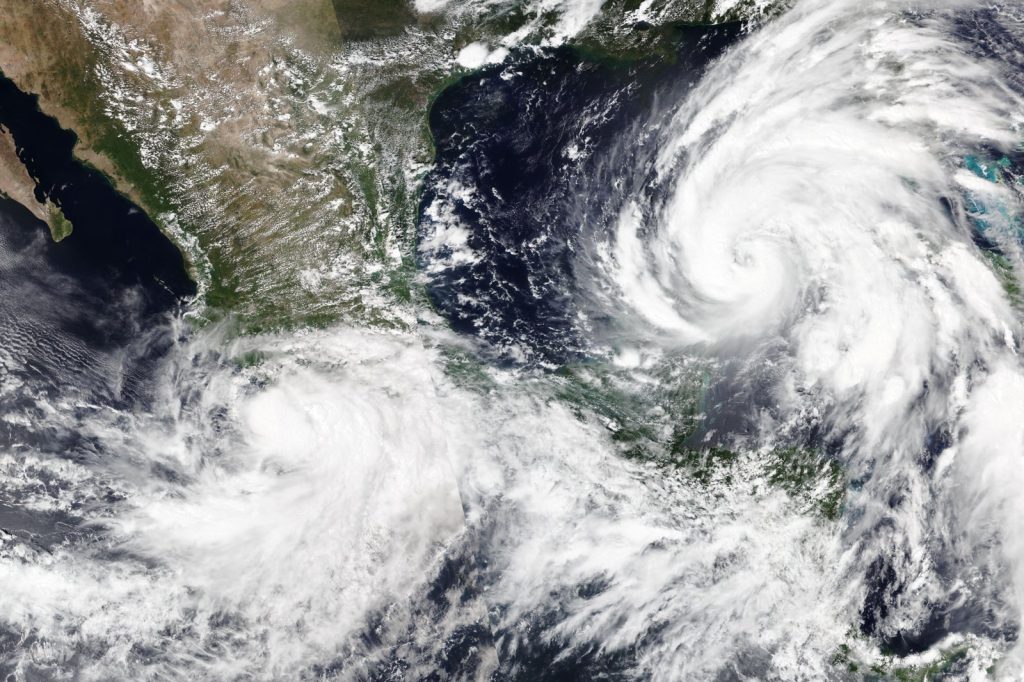
Nine hundred and fifty millimeters of rain. That’s the number that separates Tropical Storm John from the storms that came before it in southern Guerrero, Mexico. It is more than double what Hurricane Otis dumped on the same region last year.
That single figure — 950mm — is not just a statistic. It is the central fact that defines the scale of this disaster.
To understand what that means, consider Otis. Otis was a catastrophic event. It made landfall as a Category 5 hurricane.
It tore apart buildings. It killed dozens.
It was, by any measure, a historic storm. And now, a year later, a tropical storm — not even a hurricane — has exceeded its rainfall by a factor of two. The ground in Guerrero is saturated.
Rivers are swollen beyond their banks. The region’s infrastructure, already fragile after Otis, never fully recovered. Now it is being hit again, harder, with water instead of wind.
The rain is the story. Every other consequence flows from it.
Landslides are a growing concern. Flooding is widespread. Roads and bridges have been damaged or destroyed.
Communities are isolated. Access to basic services — water, electricity, medical care — has been cut off in many areas.
The report notes that the priority is restoring those services. But restoration requires access. Access requires roads.
And roads are underwater or washed away. Southern Guerrero is not a wealthy region. It has limited resources and limited infrastructure.
That is not an opinion. It is a condition.
When a storm drops nearly a meter of rain on a place like that, the damage is not just physical. It is economic. It is social.
It is long-term. The report states that recovery and rebuilding will take a coordinated effort from the Mexican government, international aid organizations, and local communities.
That is a polite way of saying that the region is in for a hard, slow climb. The comparison to Otis is unavoidable. It is also useful.
Otis was a hurricane. John is a tropical storm. The difference in classification is a matter of wind speed, not rainfall.
John’s winds were weaker, but its rain was heavier. That is a reminder that the category of a storm does not tell you everything.
A tropical storm can be as destructive as a hurricane if it stalls over land and keeps raining. That appears to be what happened here. There is no named official in the report.
No direct quotes. No specific death toll or damage estimate beyond the rainfall number.
That is fine. The rainfall number is enough. It is the anchor.
Everything else — the landslides, the flooding, the isolation, the need for aid — is a consequence of that one number. The report does not speculate on how long recovery will take. It does not offer a timeline.
It states that the focus is on providing aid and support, and on assessing damage. That is where things stand.
Secondary disasters are a real threat. When the ground is this wet, hillsides give way. When rivers are this high, they overflow.
The report flags these concerns. It does not predict them.
It states them as growing possibilities. That is responsible journalism. The people of Guerrero are beginning what the report calls a long process of recovery.
That is the right phrase. It will be long. It will be difficult.
And the rain that fell — 950mm of it — is the reason why.




