
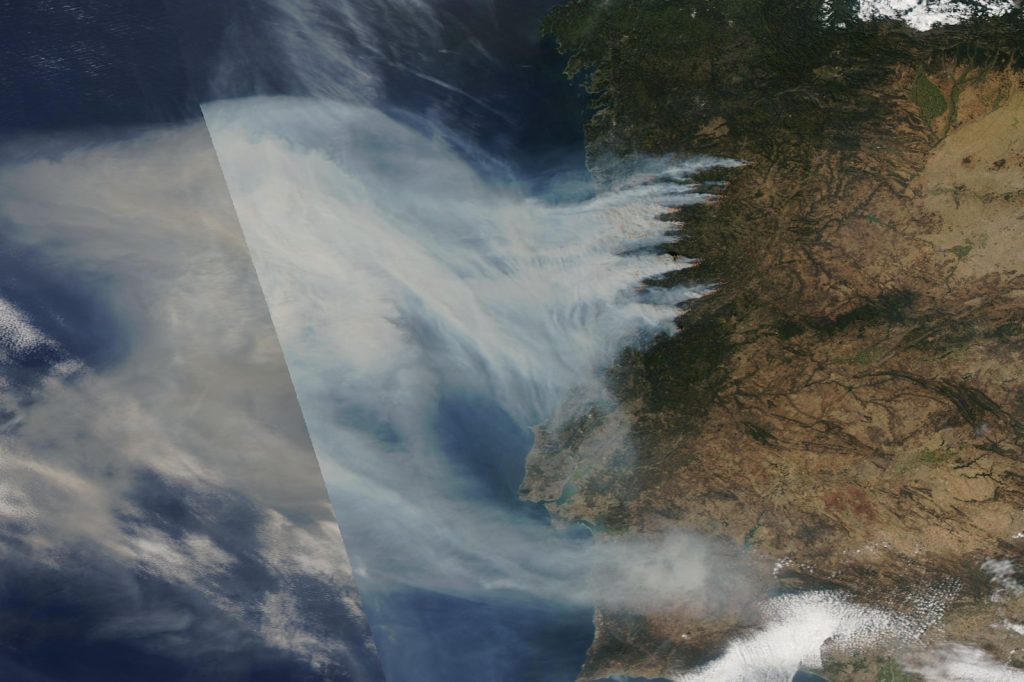
Portugal, September 27, 2024 — cybernewschronicle.com — The numbers alone tell a grim story. More than 1,000 wildfires. At least 128 described as devastating.
Over 135,000 hectares burned. Nine dead, including four firefighters.
But the raw statistics from the 2024 Portugal wildfires, which began on September 15 and were brought under control by September 20, only hint at the deeper forces at play. This was not a single blaze. It was a coordinated assault of fire across central and northern Portugal.
Villages were evacuated. Homes and businesses were destroyed.
The sheer volume of simultaneous fires overwhelmed local resources, forcing a massive response: over 5,000 firefighters on the ground. The European Union stepped in with aid, a clear signal that this disaster exceeded national capacity. Why so many fires in such a short window?
The report does not specify causes, but the pattern is familiar in southern Europe. Dry conditions, strong winds, and a landscape primed for burning can turn a handful of ignitions into a regional catastrophe. When more than a thousand fires erupt within days, containment becomes a race against time.
The firefighters who died in the line of duty were engaged in that race. They lost.
Now the immediate crisis is over. The blazes are controlled. But the aftermath is far from settled.
Authorities and fire crews remain on the ground. They are not packing up.
They are watching for flare-ups. The risk of re-ignition is real. Dry fuel does not disappear once the main fire is out.
A single ember, a shift in wind, and a controlled area can burn again. That vigilance will last for days, possibly weeks. The environmental cost is staggering.
Over 135,000 hectares of land are gone. That is not just trees and brush.
It is soil structure, wildlife habitat, and watershed stability. When a fire burns that hot and that wide, the ground itself changes. Erosion follows.
Water absorption drops. The next heavy rain could bring floods to the same scorched slopes.
The ecosystems that took decades to build will not return quickly. Some may not return at all. For the displaced residents, the road ahead is hard.
Evacuation saved lives, but it did not save livelihoods. People have lost homes. Businesses are destroyed.
The report does not give a count of structures lost, but the phrase “widespread destruction” covers a lot of ground. Rebuilding will take years.
Insurance claims, government aid, and EU support will help, but the emotional toll is another matter. Watching your village burn from a distance leaves a scar that no check can erase. The firefighters deserve the credit they are getting.
Five thousand people worked in dangerous, exhausting conditions. They saved lives.
They prevented the fires from spreading even further. Their bravery is not a talking point; it is a fact of the operation. They held the line until the fires broke.
But holding the line is not the same as winning the war. Portugal faces a future where such fires are more likely, not less. The conditions that fed this disaster — heat, drought, accumulated dry vegetation — are not anomalies.
They are trends. The 135,000 hectares burned this September will regrow, but the next dry season will bring new fuel.
The question is whether the country can build a fire management system that matches the scale of the threat. For now, the teams stay. The watches continue.
The fires are controlled, but the danger is not gone. The aftermath is just beginning.




