
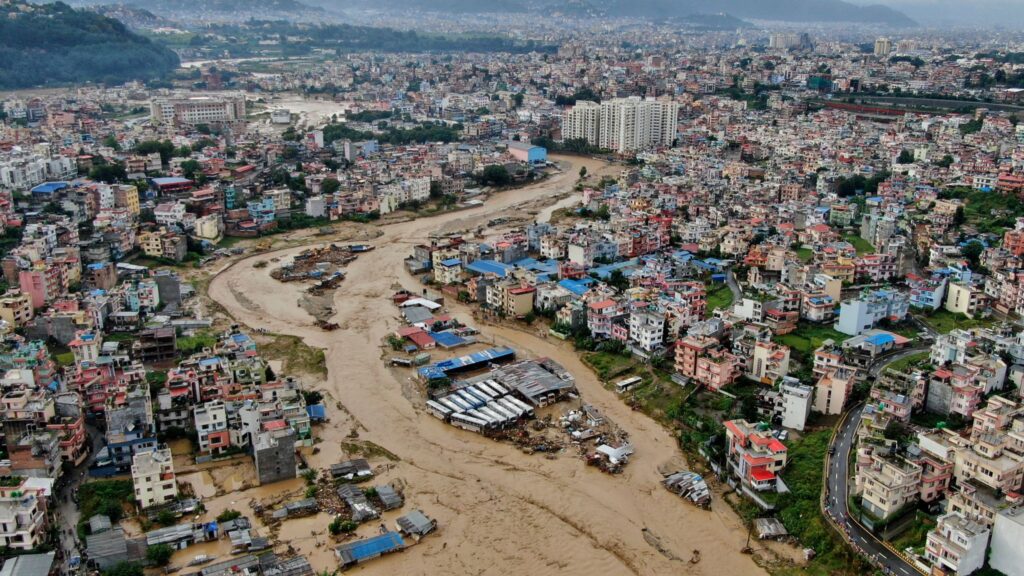
KATHMANDU, Sept. 1 — The morning of August 26 began like any other along the Nepal-China border, until a massive glacier avalanche sent tons of rock, mud, and ice into nearby rivers, unleashing flash floods and landslides that have since killed more than 1,000 people. The avalanche registered a force equal to a 5.2-magnitude earthquake. Debris flowed dozens of miles downriver, and bodies have been washing ashore as far as 250 miles downstream, leaving a roughly 40-mile path of destruction in its wake.
Nearly 4,800 people remain missing, and an estimated 90,000 — including roughly 17,000 children — have been impacted. The death toll is expected to rise in coming days and weeks.
Among the missing are tourists from as many as 27 countries, including the United States. Many visitors were in the region for the Nepali festival of Janai Purnima or on pilgrimage to Tibet’s Mount Kailash. Entire villages were wiped out.
Major roads, bridges, electricity systems and critical infrastructure were severely damaged, and buildings remain buried under mud. Nepal is in monsoon season, and the disaster has created new lakes and disrupted rivers, increasing the risk of further landslides, mudslides and flash floods.
Heavy rain is forecast, and the affected terrain is among the most difficult to navigate in the world, complicating response efforts. ## Relief on the ground Project HOPE’s Emergency Response Team is on the ground in Nepal, mobilizing mobile medical units in affected communities and coordinating with local partner Volunteer Corps Nepal. The team is assessing health and humanitarian needs and working to keep Nepal’s health system functional.
Project HOPE identified a gap in access to services on the western and northern sides of the Trishuli River and is hiking when necessary to reach those in need. Needs include healthcare, water, sanitation and hygiene (WASH), shelter, clothing, food, medication and mental health support. Crowded shelters and disrupted services increase the risk of dengue fever and diarrheal diseases; mosquito nets are needed as dengue season runs September through November.
Medical surge staffing support is also needed. “The situation is still developing,” said Emad Al Shammari, Project HOPE Senior Director of Global Supply Chain & Security.
“Behind every number is a family and a community affected by this disaster. Right now, the priority is reaching those communities, understanding what they need and making sure assistance gets to the people who need it most.” ## How to help Project HOPE’s mission is equipping health care workers and supporting communities. Donations support mobile medical units and long-term recovery efforts.
The organization has responded to similar rapid-onset disasters, including floods and landslides after Hurricane Melissa in Jamaica, cholera after flooding in Malawi and Mozambique, and earthquakes in Colombia and Venezuela. With forecast rain and the risk of further landslides, relief workers warn the crisis is far from over.
The priority in the coming days remains reaching isolated communities cut off by the destruction.




