
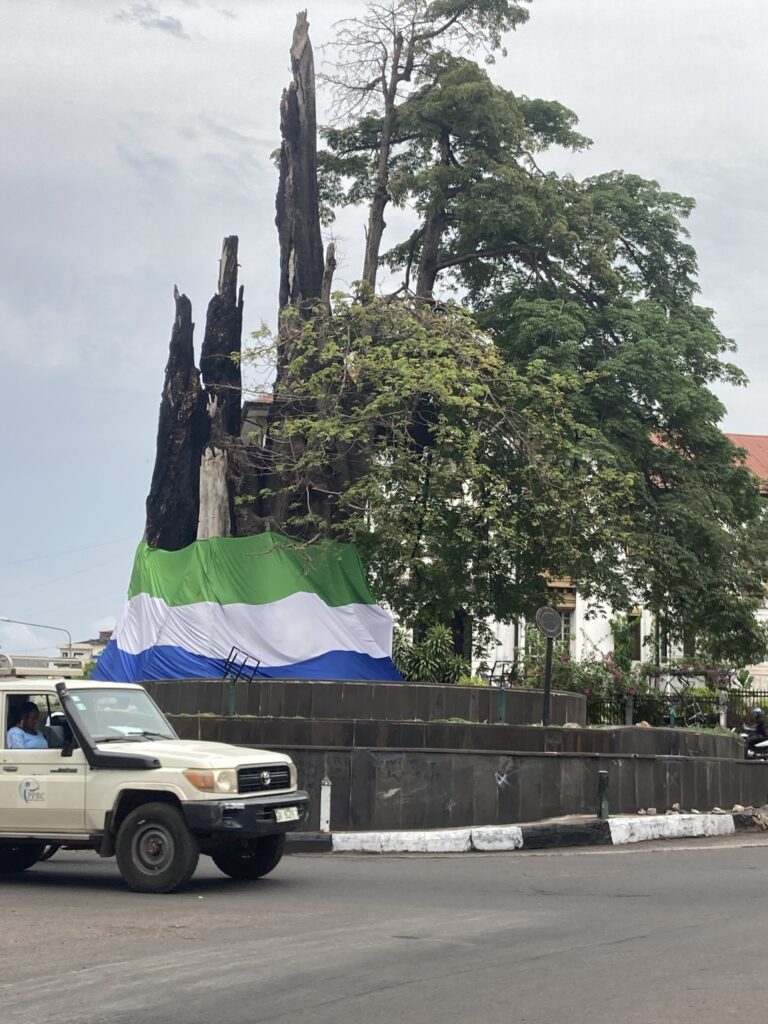
A powerful rainstorm that struck Freetown, Sierra Leone, on the night of May 24, 2023, caused the collapse of the city’s famed Cotton Tree, a centuries-old Ceiba pentandra specimen. The kapok tree, deeply woven into the nation’s identity, fell during the severe weather event, prompting an outpouring of grief from citizens and officials alike.
President Julius Maada Bio characterized the loss of the landmark as a profound national tragedy. The tree’s significance traces to 1792, when a group of formerly enslaved African Americans who had fought for the British during the American Revolutionary War established a settlement in Freetown. These Black Loyalist soldiers, also referred to as Black Nova Scotians, had been relocated to Nova Scotia before leaving North America.
They founded Freetown on March 11, 1792, and the Cotton Tree stood as a living monument to their arrival and the city’s founding. Their descendants today constitute part of the Sierra Leone Creole community, for whom the tree’s destruction carries deep emotional weight.
As authorities begin evaluating the storm’s broader impact, the incident has intensified discussions about the vulnerability of historical and natural landmarks to extreme weather. The Cotton Tree had endured countless storms over centuries, its broad canopy and thick trunk offering shade and shelter to residents and visitors. Its fall underscores the fragility of such cultural treasures.
The Ceiba pentandra species is native to tropical Africa, including Sierra Leone, and can grow to heights exceeding 60 meters. The Freetown specimen had become an integral part of the urban landscape.
In response, the government has announced plans for a tree-planting initiative to replace the lost tree and promote urban forestry, an effort expected to unite the community around environmental stewardship. The destruction has also highlighted the need for sustainable urban planning and conservation. As Freetown expands, balancing development with preservation is crucial. Investments in renewable energy sources like solar and wind power could reduce fossil fuel dependence and enhance energy security, helping cities mitigate extreme weather impacts.
The international community has expressed solidarity with Freetown, offering support for recovery and rebuilding. As the city moves forward, the memory of the Cotton Tree is expected to inspire renewed commitment to protecting natural and cultural heritage.
The legacy of the tree, which symbolized the bravery of the city’s founders, will continue to resonate as Freetown works to restore its green spaces and build resilience for future generations.




