
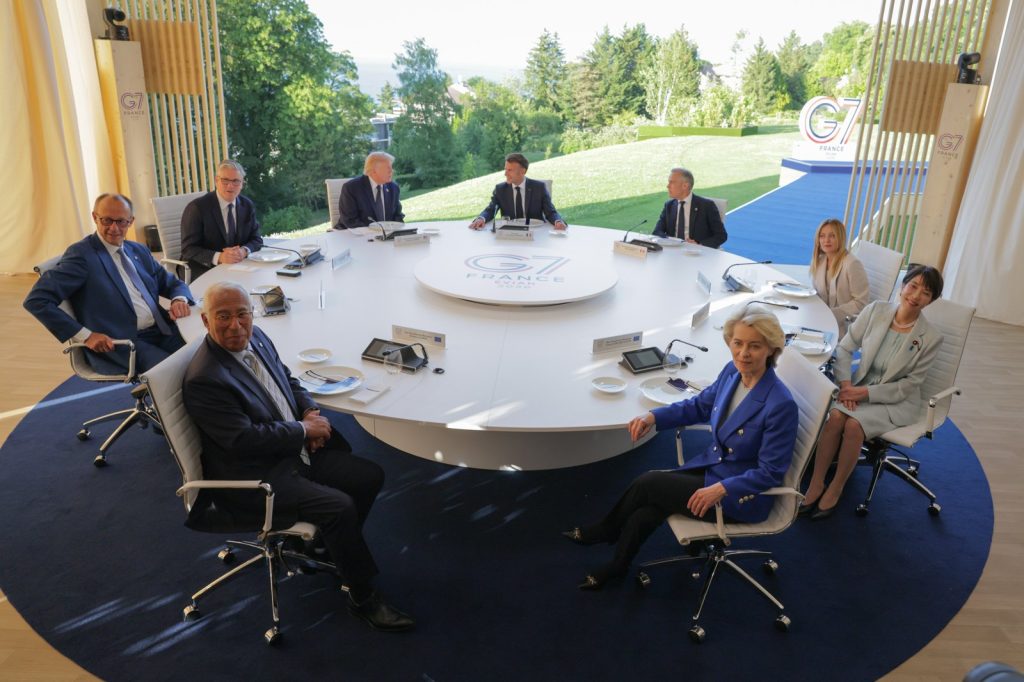
The Strait of Hormuz, a narrow maritime corridor between Iran and Oman that carries approximately one-fifth of the world’s oil supply, has become the focus of a conditional pledge from the Group of Seven major democracies. Foreign ministers from the seven nations have agreed to safeguard passage through the strategic waterway, but their commitment is contingent on the cessation of active hostilities. The agreement represents a post-conflict posture rather than an immediate operational plan.
The G7 is effectively betting on a future scenario where fighting stops, and only then promising to deploy resources to keep the oil lanes open. The alternative, without such a guarantee, could be widespread economic disruption.
The numbers underscore the stakes. Daily, tankers carrying crude from Saudi Arabia, Iraq, Kuwait, and the United Arab Emirates navigate this chokepoint. Any interruption would send prices surging globally, affecting gas stations in Ohio, refineries in Rotterdam, and power plants in Japan.
The G7’s accord aims to prevent such a disruption from becoming a full-blown stranglehold on global energy markets. The Iranian government has previously attempted to block or harass traffic through the strait, drawing international condemnation.
The G7’s collective commitment is a direct response to those actions. The United States pushed forcefully for the agreement, with the US Secretary of State leading negotiations, while foreign ministries across all G7 countries conducted the detailed diplomatic work required to reach consensus. A critical detail remains unspecified: the agreement does not name the conflict or identify combatants.
What is clear is that the G7 expects a cessation of hostilities before activating its commitment to secure the strait. Until that occurs, the waterway remains vulnerable to potential disruption.
The Strait of Hormuz connects the Persian Gulf to the Arabian Sea, functioning as a critical chokepoint. Such chokepoints invite trouble. A single mine, a fast boat, or a missile could halt traffic.
The global economy relies on just-in-time delivery systems, and a week of closure would empty storage tanks. Two weeks could trigger recessions.
The G7 recognizes these concrete risks. Freedom of navigation is the principle at stake. The G7 nations are signaling that international waters cannot be seized by threats from any single country. The Iranian government’s attempts to disrupt traffic are the reason this agreement exists, and the G7 is drawing a line.
This is a diplomatic achievement, demonstrating that the G7 can act together on a shared threat. However, it also reveals the limits of that unity, as the promise is conditional and tied to an end of fighting that has not yet arrived.
The Strait of Hormuz is a real place with real currents and real ships. The G7 has pledged to protect it, but only when the war ends. Until then, the world watches the funnel and hopes the promise holds.




