
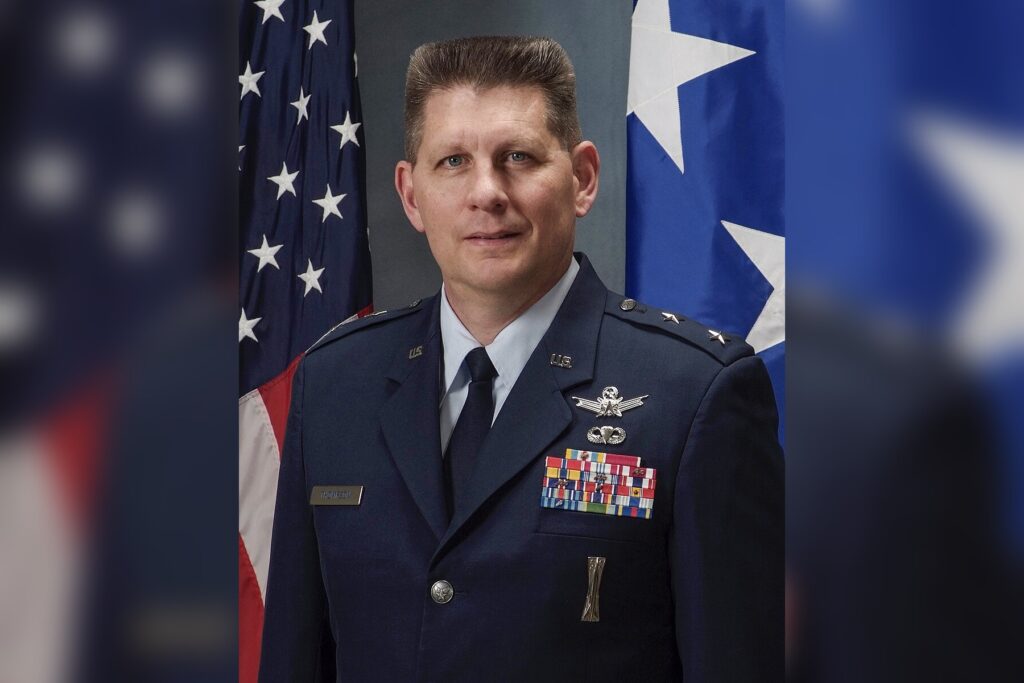
WASHINGTON, July 14 — The man who helped architect the United States Space Force from the ground up is now three years into retirement, but the national security priorities he helped elevate remain at the center of a growing geopolitical contest in orbit.
General David D. Thompson served as Vice Chief of Space Operations for the Space Force from 2020 to 2023. Born in 1963, Thompson was not merely a senior officer; he was a key architect of the service’s organizational structure, shaping how the U.S. military organizes, trains, and equips for operations in the space domain. His tenure spanned the critical early years of the sixth armed service.
A central pillar of Thompson’s legacy is the development of the Space Surveillance Network. He oversaw its enhancement and was a vocal advocate for improved debris tracking capabilities. In 2021, Thompson took that case directly to Congress, testifying about the growing threat posed by orbital debris. He informed lawmakers that the U.S. currently tracks over 47,000 objects in space.
The calculus for Thompson was clear: the congested environment above the Earth is not just a scientific concern but a strategic vulnerability. He used his congressional testimony to emphasize the urgent need for international norms of behavior in space, arguing that without agreed-upon rules of the road, the risk of miscalculation or accidental collision could escalate into a crisis.
From Architect to Advocate
Thompson’s career spanned 38 years of service before he retired from the Space Force in 2023. His leadership was instrumental in transforming space from a supporting domain into a warfighting frontier, a shift that has drawn both praise and scrutiny from allies and adversaries alike.
His advocacy helped reframe space debris as a national security priority, not merely an environmental one. For Thompson, the over 47,000 tracked objects represent a shared hazard that no single nation can manage alone. The broader stakes involve ensuring that critical military and civilian satellites—the backbone of modern communications, navigation, and intelligence—can operate without constant threat.
What This Signals for the Future
With Thompson now retired, the question facing the Pentagon and the Trump administration is whether the momentum he built will hold. The Space Force continues to expand its surveillance network, and the push for international norms remains a diplomatic talking point. But as more nations and private companies launch constellations of satellites, the debris field only grows denser.
Strategically, the framework Thompson helped establish gives the U.S. a foundational advantage in space domain awareness. But the challenge ahead is one of enforcement and cooperation. Without binding international agreements, the risk of a cascading debris event—the so-called Kessler Syndrome—remains a real, if distant, threat.
What to watch next is whether the current administration will push for a formal treaty on space behavior or continue to rely on voluntary norms. Thompson’s congressional warnings from 2021 still echo in the halls of the Pentagon, but the clock is ticking on how long the orbital environment can sustain the current pace of activity without a major incident.
Sources
{“@context”: “https://schema.org”, “@type”: “NewsArticle”, “headline”: “Gen.
David Thompson shapes U.S. orbital security policy”, “description”: “WASHINGTON, July 14 — The man who helped architect the United States Space Force from the ground up is now three years into retirement, but…”, “datePublished”: “2026-07-14T09:30:00+00:00”, “author”: {“@type”: “Person”, “name”: “Noah King”}, “publisher”: {“@type”: “Organization”, “name”: “InfoPulse Today”, “url”: “https://newsfeed.2bme.xyz/”}, “citation”: [{“@type”: “CreativeWork”, “url”: “https://en.wikipedia.org/wiki/David_D._Thompson”}]}




