
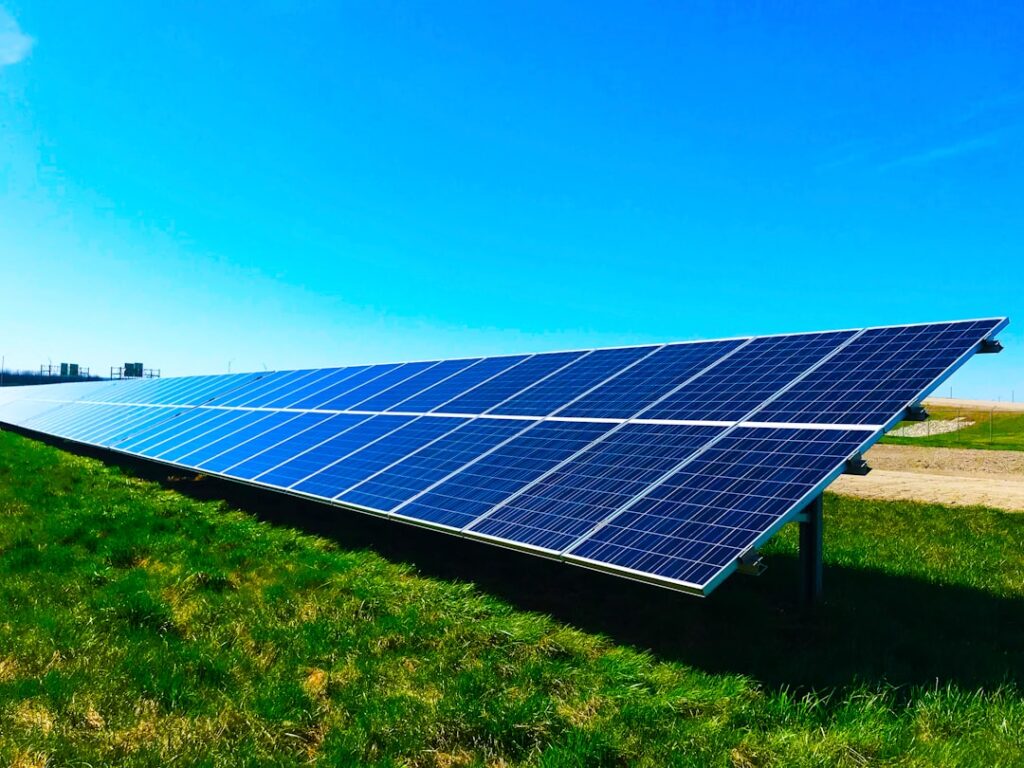
Solar power hit 2 terawatts of global capacity in 2024. That is double the 1 terawatt recorded just two years earlier, in April 2022. The numbers come from industry data tracking installations worldwide.
The pace is striking. It took decades to reach the first terawatt.
It took roughly two years to double it. Behind that growth is a simple technology shift. Most of the world’s solar capacity comes from photovoltaic systems — the panels on rooftops and in ground-mounted solar farms.
These convert sunlight directly into electricity. They dominate because they are modular, cheap to manufacture, and quick to install.
The other technology, concentrated solar power, uses mirrors to focus sunlight and create steam that drives a turbine. CSP accounts for a minor share of global capacity. Almost all of it sits in Spain and the United States.
The expansion is not even. It is driven by a handful of countries. In 2024, the top installers were China, the United States, and India.
China has been the dominant force for years. Its manufacturing scale and state-backed deployment pushed global capacity past each new milestone.
The United States added substantial photovoltaic capacity in recent years. India emerged as a key player, part of a broader acceleration across Asia. These three countries collectively shape the market.
But the technology is spreading into most geographic regions. Large solar farms using photovoltaics are under construction on every continent except Antarctica.
The growth is dynamic and varies strongly by country. Some nations are building capacity fast. Others are still early in the curve.
The 2 terawatt milestone matters because solar is no longer a niche source. It supplements conventional power in many grids. In some places, it is becoming the primary source during daylight hours.
That changes how utilities plan their generation mix. It also changes the economics of electricity.
Solar’s variable output still requires backup from other sources, but the scale now makes it a serious part of the global energy system. The jump from 1 to 2 terawatts happened during a period of supply chain disruptions, trade disputes, and policy shifts. That suggests the underlying cost reductions and deployment momentum are strong enough to overcome headwinds.
Photovoltaic module prices fell sharply in 2023 and 2024, driven by overcapacity in Chinese factories. That made projects viable in markets where solar was previously too expensive.
Spain and the United States remain the only countries with significant CSP stations. That technology has not scaled the way photovoltaics have. CSP plants are more expensive per megawatt and need direct sunlight and large tracts of land.
They also take longer to build. The market has voted with its dollars, and the money has gone overwhelmingly to photovoltaics. What the data does not show is where the next terawatt will come from.
China is still building fast. The United States has a large pipeline of projects waiting for grid connections.
India’s policy targets are ambitious. But the pattern of growth is unpredictable. It depends on local politics, grid infrastructure, and financing conditions.
What is clear is that the technology works, the costs keep falling, and the world has already doubled once in two years.
{“@context”: “https://schema.org”, “@type”: “NewsArticle”, “headline”: “Global Solar Capacity Doubles to 2 Terawatts in Two Years”, “description”: “Solar power hit 2 terawatts of global capacity in 2024. That is double the 1 terawatt recorded just two years earlier, in April 2022. The numbers come from indu”, “datePublished”: “2024-09-26T15:00:00+00:00”, “author”: {“@type”: “Person”, “name”: “InfoPulse Today”}, “publisher”: {“@type”: “Organization”, “name”: “InfoPulse Today”}}




