
Three Decades of Steady Progress Mark a New Electricity Milestone
On April 11, 2025, the global energy transition reached another notable point, the outcome of thirty years of quiet, persistent effort. Data show that most of the new electricity capacity added around the world now originates from renewable sources. This development did not erupt overnight; it is the accumulated result of steady gains, policy choices, and engineering work.
Thirty years ago, renewables occupied a narrow niche. They were considered costly and unreliable.
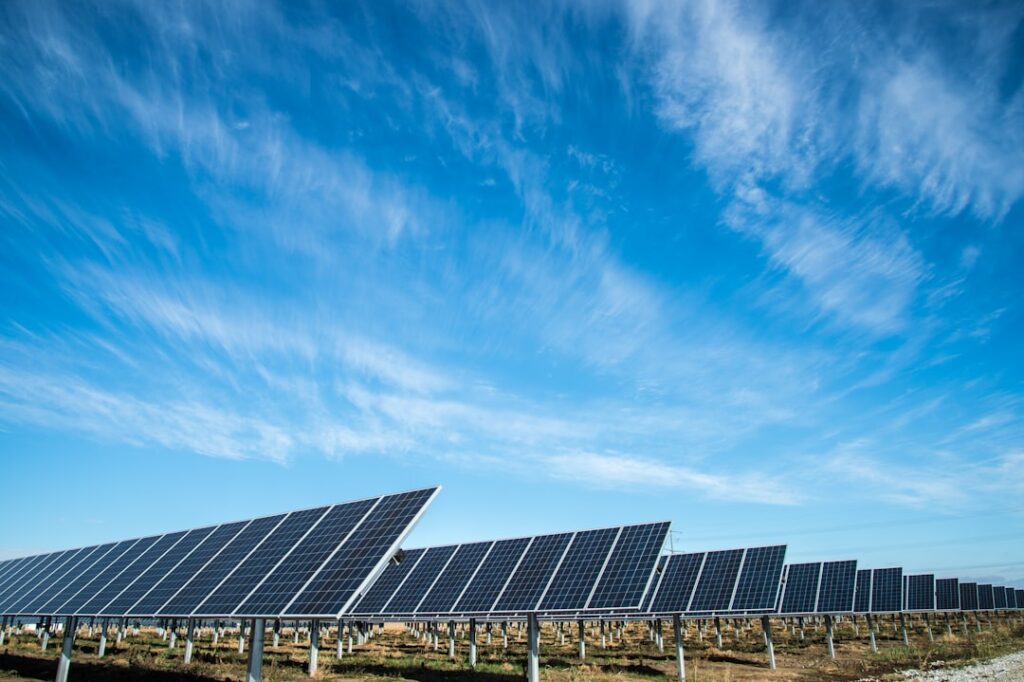
Solar panels were rare curiosities on rooftops, wind turbines appeared only on a handful of breezy ridges, and hydropower stood as the sole mature technology, albeit limited by geography. Bioenergy and geothermal existed mainly as local experiments. Over time, costs began to decline.
The decline was gradual at first, then accelerated. In the last ten years, solar and wind have become price‑competitive with coal and natural gas.
That price competition has become the main driver of the ongoing shift. Renewable energy draws from resources that are replenished on a human timescale: sunlight, wind, water, biomass, and the Earth’s internal heat. Unlike oil or coal, which are finite stocks, these are continuous flows.
The central challenge has always been to capture these flows at low enough cost—a challenge that has now been met. The scale of installations can be misleading.
A single solar farm may stretch across hundreds of acres, while a solitary rooftop panel covers only a few square feet. Both generate usable electricity. This flexibility allows renewables to fit into dense urban settings as well as open rural landscapes. It enables a village in a developing nation to bypass the traditional grid entirely, powering lights and phones with just a few panels.
It also permits a factory in an industrial park to offset its own demand by installing wind turbines along its property line. Nevertheless, wind and solar output varies with weather.
The sun does not shine at night, and the wind does not always blow. Grid operators must therefore manage this variability, balancing supply and demand on a second‑by‑second basis. Controllable renewable options help ease the task: dammed hydroelectric plants can be switched on or off, bioenergy facilities can burn fuel when needed, and geothermal plants deliver steady output day and night.
These sources provide stability, buying time for improved storage and smarter grid management. The broader trend is one of integration.
Renewables work best when paired with electrification. Electric vehicles achieve true cleanliness only when charged from green power, and heat pumps for buildings become carbon‑free only when supplied with renewable electricity. The two movements reinforce each other: more renewables make electrification cleaner, and greater electrification creates demand that justifies additional renewable capacity.
Cost reductions have been the decisive factor. Over the past decade, the price of solar modules has fallen by roughly 90 percent, while wind turbine costs have dropped by about half.
These are not minor tweaks; they represent structural shifts that have redrawn the economics of power generation. Fossil fuels still hold advantages in certain applications, but their long‑term cost trend points upward, whereas renewables point downward. This divergence propels the industry forward.
The world continues to move toward a cleaner, more sustainable future. That statement is not a forecast; it describes what is already occurring, one installation at a time.




