
American crude oil production more than doubled between 2008 and 2023, climbing from 5 million barrels per day to 13.2 million barrels per day, according to the U.S. Energy Information Administration. That surge vaulted the United States into the position of the world’s top oil producer.
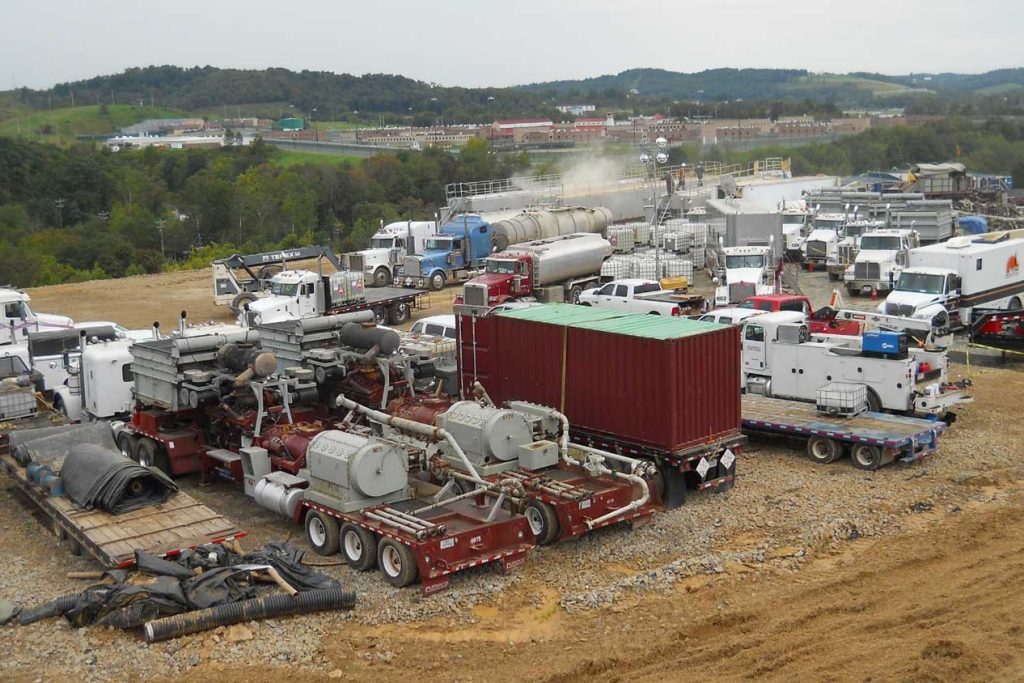
The engine behind this transformation is the shale revolution, a technical marriage of horizontal drilling and hydraulic fracturing that has fundamentally rewired the nation’s energy landscape. The process itself is straightforward: a well is drilled vertically, then turned sideways to run through a rock layer; a high-pressure mix of water, sand, and chemicals is pumped into the formation to create cracks that release trapped oil and gas. It is not subtle engineering, but it has worked at a scale that surprised even the optimists.
The Persistence of a Texas Wildcatter
The breakthrough that made the modern boom possible did not come from a major oil company but from an unlikely source: a Texas wildcatter named George P. Mitchell. In the late 1990s and early 2000s, Mitchell spent years refining the fracturing process in the Barnett Shale near Fort Worth.
His persistence turned what had been a marginal economic proposition into a commercially viable enterprise. Without his specific refinements to the fracturing method, the entire modern boom likely would not have occurred.
Mitchell’s success set off a wave of drilling that quickly spread beyond the Barnett. Two regions now dominate domestic output. The Bakken Shale in North Dakota proved that fracking could work even in the most hostile, remote, and cold conditions.
The Permian Basin in West Texas, a vast and geologically complex formation, showed that the technique could be scaled across multiple stacked layers of rock. Together, these plays transformed the nation’s supply picture.
Geopolitical Reach and Environmental Debate
The production surge carried significant geopolitical weight. The United States sharply reduced its dependence on foreign oil.
Global energy markets felt the pressure as a major new source of supply emerged, contributing to lower global prices. For Washington and its allies, the calculus of energy security shifted. The shale boom altered the strategic landscape, giving the United States and its partners greater flexibility in managing supply disruptions and diplomatic leverage.
The shale revolution also brought persistent environmental controversies. Critics point to two main risks.
The first is water contamination from the chemical-laced fluids used in the fracturing process. The second is induced seismicity — the technical term for small earthquakes triggered by the injection of wastewater deep underground. These concerns continue to shape state regulations and public opinion, even as the industry has worked to address them.
A Mature Industry, Still Evolving
The shale revolution is now a mature industry, but it is not static. Production growth has slowed. Companies now emphasize efficiency and cost discipline over raw output. The era of breakneck expansion that defined the early years of the boom is giving way to a more measured phase.
Operators focus on extracting more from existing wells and optimizing the use of capital. The foundational technologies — horizontal drilling and hydraulic fracturing — remain the same, but the industry’s approach has shifted toward sustainability and financial prudence.
The shale revolution, born of a wildcatter’s determination, continues to shape American energy production and its place in global markets.




