
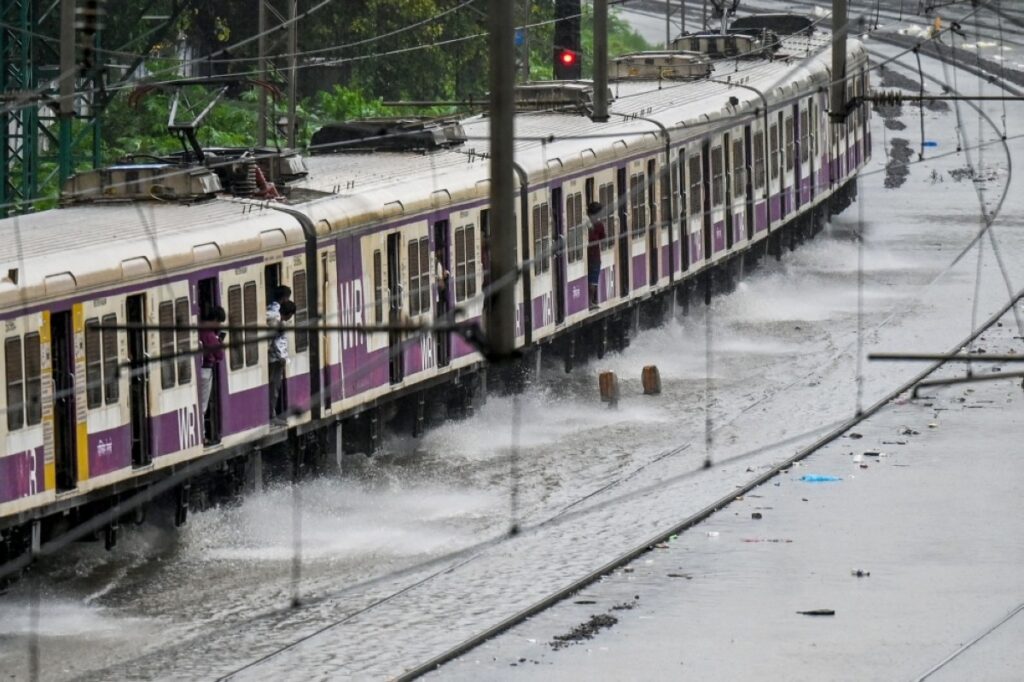
MUMBAI, July 10 — For all the noise of the monsoon season, the salient point on the Mumbai Suburban Railway today was water. Standing water on the tracks, to be precise, which caused delays and cancellations that stranded thousands of commuters across the network. The disruption, which began early on July 10, affected one of the busiest commuter rail systems in the world.
The Mumbai Suburban Railway, operated by Indian Railways, carries over 7.5 million passengers daily across its four lines: Western, Central, Harbour, and Trans-Harbour. The network spans about 465 km (289 miles) with 150 stations.
When waterlogging occurs on the tracks, it can disrupt signaling systems and pose safety risks, leading to reduced train speeds or, in some cases, a complete suspension of service. Notably, at one local station, the standing water attracted wildlife. A fish was sighted on the tracks, a detail that underscores how deeply the flooding can affect the system.
For commuters already accustomed to the monsoon’s annual assault on punctuality, the event was another layer of frustration. The Mumbai Suburban Railway is no stranger to the elements.
The monsoon season typically sees reduced punctuality across the network, and today’s waterlogging was a sharp reminder of the infrastructure’s vulnerability. The system, which spans about 465 km, relies on tracks that run at ground level in many areas, making them susceptible to flooding when drainage systems are overwhelmed. For all the noise of the delays, the core problem is a familiar one.
The railway’s signaling systems, which depend on electrical circuits in the tracks, can be disrupted by standing water. This forces operators to reduce speeds or halt services entirely to ensure safety. The result is a cascade of delays that ripple across the network, leaving thousands of passengers waiting on platforms or seeking alternative routes.
The fish sighting, while unusual, is not entirely surprising. Standing water on tracks can attract wildlife, and the presence of a fish at a local station highlights the extent of the flooding.
It is a detail that might seem almost absurd, but it speaks to the broader challenges faced by the system during the monsoon. The Mumbai Suburban Railway, operated by Indian Railways, is a lifeline for the city. With over 7.5 million passengers daily, it is one of the most heavily used commuter rail systems in the world.
The network’s four lines—Western, Central, Harbour, and Trans-Harbour—cover about 465 km and serve 150 stations. When waterlogging disrupts service, the impact is felt across the metropolitan area.
Today’s disruption is part of a broader pattern. The monsoon season, which typically runs from June to September, brings heavy rains that can overwhelm drainage systems and flood tracks. The result is reduced punctuality and, on days like today, significant delays and cancellations.
For commuters, it is a recurring frustration that tests patience and resilience. The railway’s operators, part of Indian Railways, face a difficult task. They must balance safety concerns with the demand for reliable service.
When waterlogging occurs, the priority is to ensure that trains do not operate on flooded tracks, where signaling systems may be compromised. This often means reducing speeds or suspending service, which can lead to long delays.
For all the noise of the monsoon, the Mumbai Suburban Railway remains a critical piece of infrastructure. The system carries millions of passengers daily, and disruptions like today’s highlight the challenges of maintaining such a network in a climate prone to heavy rains. The fish sighting, while an unusual detail, is a reminder of how deeply the elements can affect the system.
Looking ahead, the monsoon season is far from over. The Mumbai Suburban Railway will likely face further disruptions as rains continue.
For now, commuters are left to navigate the delays and cancellations, a familiar experience for those who rely on the network. The system, for all its scale and importance, remains vulnerable to the weather, and today’s events are a stark reminder of that reality.




