
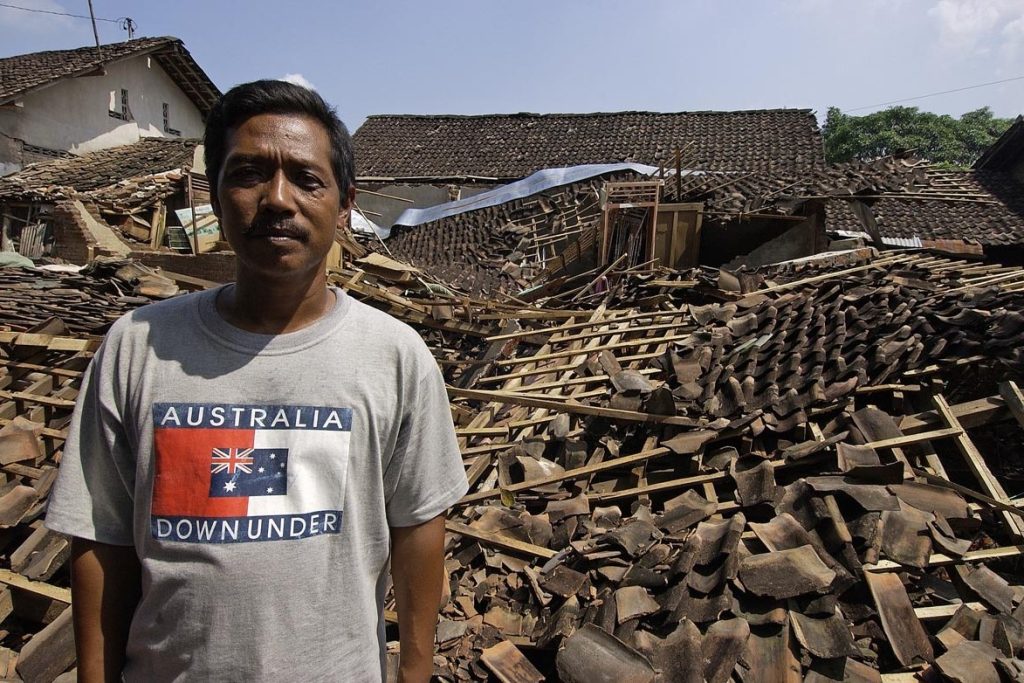
Yogyakarta, Indonesia, June 30, 2023 — cybernewschronicle.com — A 5.8 magnitude earthquake struck the Bambanglipuro district in the Special Region of Yogyakarta, Indonesia, on Friday, leaving one person dead and two others injured, according to local authorities. The quake, which hit at a shallow depth, sent residents fleeing into the streets and caused damage to buildings in the area, though detailed assessments of structural harm are still underway.
Indonesia sits at the convergence of several major tectonic plates, a geological reality that makes it the most seismically active country on the planet, according to the United States Geological Survey. The nation regularly experiences a high frequency of smaller tremors, but larger events are not uncommon.
USGS records show Indonesia has endured more than 150 earthquakes of magnitude 7 or greater between 1901 and 2019, and on average, the country sees a magnitude 7 earthquake every year, with one exceeding magnitude 8 occurring roughly once per decade. The deadly event in Bambanglipuro is a stark reminder of the persistent seismic risks faced by communities across the Indonesian archipelago. In Yogyakarta, a region already scarred by the devastating 2006 earthquake that killed thousands, Friday’s tremor triggered panic.
Witnesses described people scrambling from homes and workplaces as the ground shook violently for several seconds. Emergency response teams were quickly deployed to search for survivors and provide medical aid to the injured.
Beyond the immediate human toll, the earthquake underscores the broader challenges of living in a region shaped by volcanic activity and plate tectonics. Volcanic eruptions and landslides often follow such seismic events, compounding the dangers for local populations. While the 5.8 magnitude quake is not among the strongest recorded in Indonesia’s history, its shallow depth likely amplified its destructive potential, a pattern seen in similar events around the world.
For Indonesia, investing in resilient infrastructure and early warning systems remains a critical priority. The country has made strides in improving building codes and public education campaigns since the 2004 Indian Ocean tsunami, but many structures in rural and semi-urban areas like Bambanglipuro remain vulnerable. Strengthening these defenses not only saves lives but also reduces the economic disruption that follows major disasters, allowing communities to recover more quickly and maintain their livelihoods.
The push for energy security in Indonesia also ties into this resilience. Expanding renewable energy sources, such as geothermal and solar power, can reduce dependence on imported fuels and create a more decentralized grid less prone to catastrophic failure during earthquakes.
By diversifying its energy mix, Indonesia can enhance both its national security and the stability of essential services during crises, without relying on the contentious debate over climate models. A clean, reliable energy system is a practical goal for a nation facing frequent natural hazards. As rescue crews continue their work in Bambanglipuro, the focus remains on the immediate needs of the affected families.
But the long-term lesson is clear: in one of the world’s most seismically active zones, preparation and sustainable development are not luxuries—they are necessities. A cleaner environment, built on robust infrastructure and smart energy choices, offers a path forward that prioritizes safety and prosperity for all Indonesians.




