
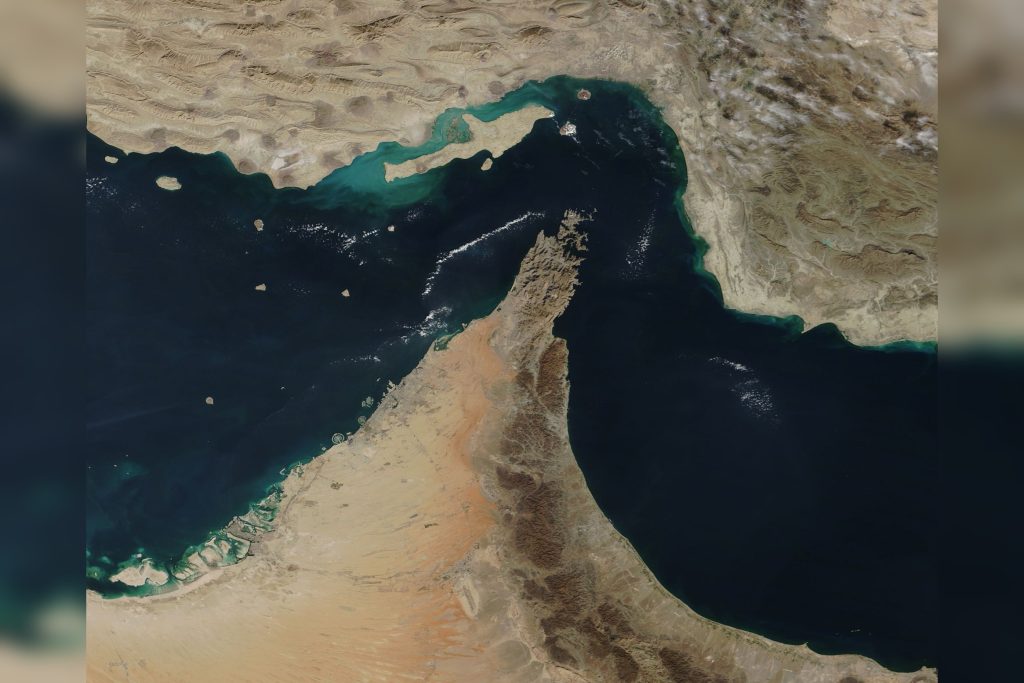
The strategic waterway known as the Strait of Hormuz, a narrow passage connecting the Persian Gulf to the Gulf of Oman and the sole maritime outlet for several Gulf states, has long been a focal point of global energy security. Bordering Iran to the north and the Musandam Peninsula of Oman and the United Arab Emirates to the south, the strait carries a large share of the world’s seaborne oil and liquefied natural gas.
Its potential closure, which Iran has signaled as a lever of power for decades, carries broad implications: prolonged blockades could trigger widespread supply shortages and destabilize energy markets far beyond the Middle East. Against this backdrop, the figure most directly associated with the strait’s current security posture is Rear Admiral Alireza Tangsiri, commander of the Islamic Revolutionary Guard Corps Navy. Born in 1960 in Tangsir, Bushehr Province, Iran, Tangsiri joined the IRGC during the Iran-Iraq War of 1980-1988, serving as a naval officer.
His rise through the ranks reflects a career built on institutional loyalty to the Revolutionary Guard. In 2010, he was appointed deputy commander of the IRGC Navy under Rear Admiral Ali Fadavi.
When Fadavi stepped aside in 2018, Tangsiri took command—a post he has held ever since. His chain of command places him directly under IRGC Commander-in-Chief Major General Hossein Salami, who was appointed in 2019, making Tangsiri a central figure in Iran’s most sensitive military operations.
Building a Fleet of Small Boats and Long-Range Missiles
Under Tangsiri’s command, the IRGC Navy has undergone a significant transformation. He has overseen a major expansion of the service’s small-boat fleet, as well as enhancements to its missile capabilities. In 2020, he announced the construction of new fast-attack craft and underground missile bases—assets designed to operate in the confined waters of the Persian Gulf and to threaten larger naval vessels.
These moves are part of an asymmetric warfare strategy that prioritizes speed, numbers, and surprise over traditional blue-water naval power. Tangsiri’s public statements have matched the expansion of his force.
In 2019, he declared that the IRGC could close the Strait of Hormuz if Iran’s oil exports were blocked—a threat that carried added weight given the strait’s critical role in global energy supply. In 2023, he led exercises simulating attacks on U.S. aircraft carriers, underscoring the IRGC Navy’s stated readiness to confront the American naval presence in the region. Historically, the strait has remained open even during regional conflicts, but Iran has long signaled its ability to disrupt traffic through threats or mining preparations.
A Sanctioned Commander with Direct Access to the Top
The U.S. Treasury Department has had Tangsiri on its sanctions list since 2019, designating him under Executive Order 13224 for supporting terrorism. The designation places him among a cadre of IRGC officials whose assets and transactions within the U.S. financial system are blocked. Despite these measures, Tangsiri remains in command and continues to direct IRGC Navy operations.
His role proved critical on April 28, 2025, when the IRGC Navy, under his command, announced the closure of the Strait of Hormuz. That announcement—the most direct move against the waterway in years—heightened concerns among international shipping and energy markets.
The strait’s vulnerability as a chokepoint for maritime trade has made it a recurring flashpoint in tensions between Iran and Western powers, particularly over sanctions and military posturing. A prolonged closure would have far-reaching consequences, not only for the Gulf states that depend on the strait as their sole maritime outlet but also for global energy stability. For now, Tangsiri remains in command, his small-boat fleet and underground missile bases a constant presence in the waters off Iran’s coast.
His direct reporting line to Salami places him at the center of Tehran’s decision-making on maritime security. The question for the international community—and for the families living along Iran’s southern coast, in the shadow of the strait—is what he will order next.




