
The James Webb Space Telescope has identified dimethyl sulfide in the atmosphere of K2-18b, a planet located 124 light-years from Earth. This molecule is significant because on Earth, it is produced almost exclusively by living organisms—primarily marine phytoplankton, bacteria, and the decomposition of organic matter.
K2-18b is classified as a sub-Neptune, similar in size to Neptune but orbiting a red dwarf star. A research team from the University of Cambridge made the detection while studying the planet’s atmosphere, not specifically searching for signs of life. The team used Webb to observe starlight filtering through the planet’s upper atmosphere.
Different molecules absorb light at distinct wavelengths, and the resulting pattern included the chemical signature of dimethyl sulfide. Biologists consider dimethyl sulfide a biosignature because no known geological or chemical processes produce it in significant quantities.
Earth’s marine microbes generate approximately 60 million metric tons of this compound annually. However, scientists caution that the simplest explanation is not necessarily the correct one. K2-18b differs fundamentally from Earth—it is larger, colder, and encased in a thick atmosphere composed primarily of hydrogen and helium.
The chemistry of such an environment remains poorly understood, and unknown reactions could potentially generate dimethyl sulfide without biological activity. The Cambridge team has reported their detection while acknowledging these uncertainties.
K2-18b resides within its star’s habitable zone, where temperatures could theoretically support liquid water. Unlike Earth, however, the planet is not rocky. As a sub-Neptune, it likely lacks a solid surface, instead possessing a dense atmosphere that gradually transitions into a hot, high-pressure interior. Being in the habitable zone indicates suitable temperature conditions for liquid water, not the presence of life itself.
This detection marks a significant advancement in exoplanet research. Before Webb, astronomers could only identify broad atmospheric components like water vapor, carbon dioxide, and methane.
Webb’s infrared instruments can distinguish individual molecular fingerprints, enabling the detection of specific organic compounds at vast distances. The University of Cambridge, established in 1209, has witnessed numerous scientific theories develop over centuries. This finding represents an early stage of investigation.
The detection constitutes a single data point requiring confirmation through additional observations. Other research teams will attempt to replicate the results, and the signal could potentially represent a different molecule that appears similar in Webb’s data.
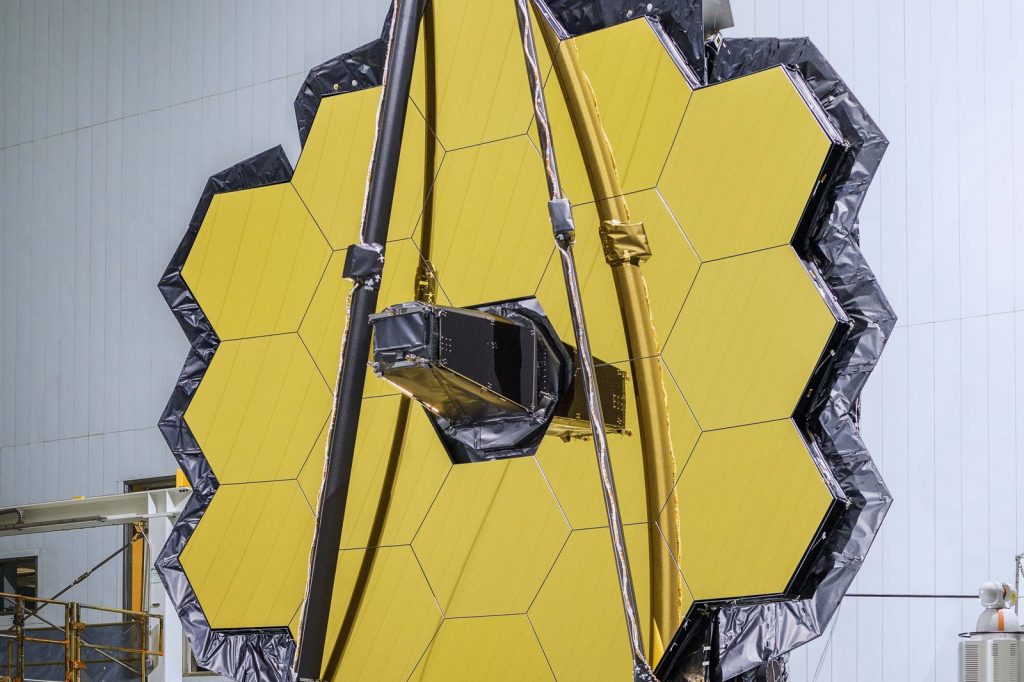
Webb’s 6.5-meter mirror and its position one million miles from Earth provide the sensitivity necessary for such observations. The telescope was designed specifically to detect biosignatures, and this detection fulfills that capability. Whether the signature indicates life or results from unknown chemical processes, the telescope has demonstrated its effectiveness.
Further observations of K2-18b will examine additional wavelengths and conduct more detailed analysis. The planet will continue orbiting its star, allowing starlight to pass through its atmosphere, and Webb will continue collecting data.




