
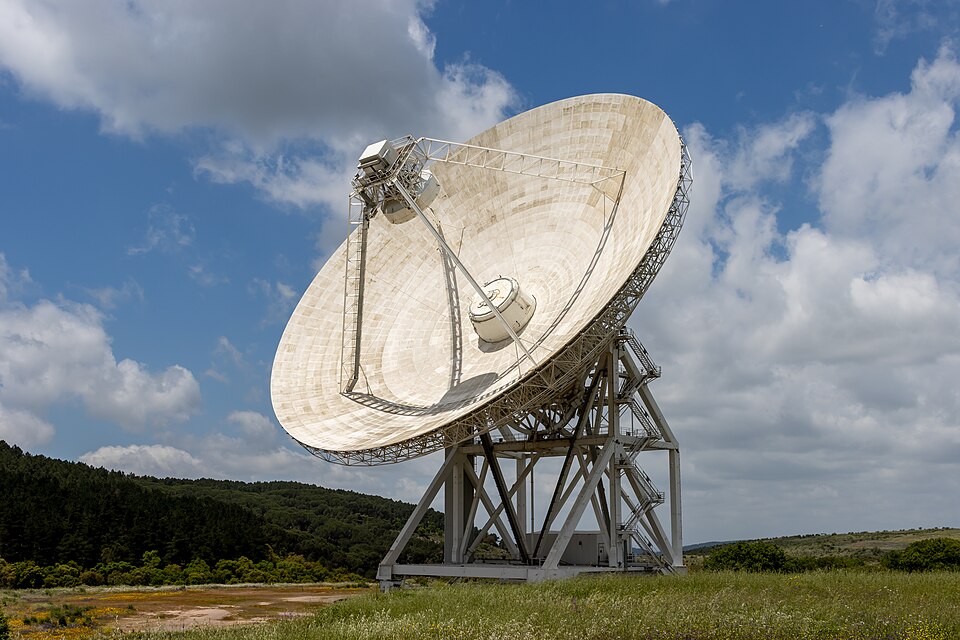
On a barren high plateau in Chile’s Atacama Desert, an array of radio telescopes has captured the chemical signature of a simple sugar drifting within a star-forming cloud roughly 26,000 light-years from Earth. The detection, detailed in the August 2012 edition of the journal Astronomy & Astrophysics, marks the first time scientists have identified the molecule glycolaldehyde in interstellar space. Glycolaldehyde is the simplest form of sugar and a critical building block for ribonucleic acid, or RNA, a molecule essential to life as we know it.
The signal was picked up by the Atacama Large Millimeter/submillimeter Array, known as ALMA, perched on a high-altitude desert plateau. The molecule resides in a region of the Milky Way called Sagittarius B2, a massive star-forming cloud near the galaxy’s center.
This cloud has long been a prime target for astrochemists, having previously yielded other complex organic molecules. Glycolaldehyde, however, holds special significance because of its direct role in forming RNA.
Organic Precursors, Not Life Itself
The research was led by scientists from the Max Planck Institute for Radio Astronomy in Bonn, Germany. Their findings do not point to the presence of life, but rather to the presence of organic molecules that serve as precursors to biological molecules. The detection suggests that the basic chemical ingredients for life may be widespread throughout the universe.
For years, scientists have theorized that such molecules could have been delivered to the early Earth via comets or meteorites, potentially seeding life. This discovery strengthens that idea, showing that these chemical building blocks are not unique to our planet but exist in the vast spaces between stars.
Sagittarius B2, the cloud where the sugar was found, is a well-known hunting ground for astrochemists. It has yielded other complex organic molecules in the past, but glycolaldehyde stands out because of its role in forming RNA, a molecule that carries out essential functions in all living cells. The detection does not change the timeline of life on Earth or imply that life exists elsewhere. What it does is confirm that the raw materials for life are drifting through the galaxy in places where stars and planets are born.
How Sugars Form in the Void
Sugar molecules are organic compounds that act as fundamental building blocks for more complex biological structures. They can form within the interstellar medium, the mix of gas, dust, and radiation that fills the space between star systems in a galaxy. Scientists have long studied this medium to understand how matter behaves in the cosmic void.
The density of atoms in interstellar space is extremely low, but over vast distances these atoms still collide and react, allowing for the creation of organic precursors. The presence of glycolaldehyde in a star-forming cloud shows that the ingredients for life are not confined to Earth.
If such compounds exist in star-forming clouds, they may travel through space on comets or meteorites. This process could distribute the necessary chemicals to young planets, potentially supplying them with the raw materials needed for the emergence of life. The discovery shifts how researchers view the origin of biological materials in the universe, suggesting that the chemical steps leading to life may begin long before planets form.
By nightfall in the Atacama desert, ALMA’s telescopes will continue their systematic sweep of the sky. For the scientists in Bonn and their international collaborators, the search for more complex molecules in interstellar space is just beginning.
Each new detection adds another piece to the puzzle of how life’s building blocks spread across the galaxy.




