
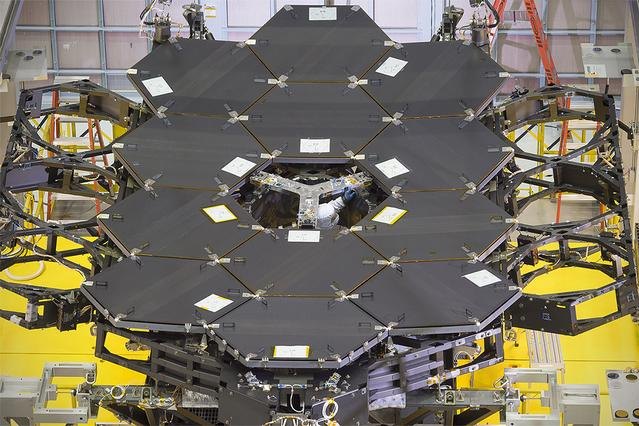
Astronomers at the University of Cambridge have reported that the James Webb Space Telescope detected dimethyl sulfide in the atmosphere of exoplanet K2-18b, a chemical compound that on Earth is generated exclusively by biological activity. The finding marks a significant step in the search for life beyond our solar system.
Located approximately 124 light-years—or 38 parsecs—from Earth, K2-18b is classified as a sub-Neptune planet, sharing a size similar to that of Neptune. Its atmosphere is believed to consist of hydrogen, helium, and heavier elements. The detection was made by analyzing starlight as it passed through the planet’s atmosphere, a technique that allows researchers to identify specific chemical signatures.
Dimethyl sulfide is commonly associated with biological processes on Earth, where it is produced primarily by marine microorganisms. While its presence on K2-18b does not constitute definitive proof of life, it suggests that the planet’s conditions may be compatible with biological activity.
The discovery has generated considerable interest among scientists, who view it as a promising lead in the ongoing effort to find extraterrestrial organisms. The University of Cambridge, an institution founded in 1209 with a long record of academic achievement, has been central to this research. The detection represents the latest in a series of scientific breakthroughs from the university’s research community.
Researchers there emphasize that continued study of K2-18b and similar exoplanets will be necessary to determine whether the chemical’s presence is linked to living organisms or alternative non-biological processes. The James Webb Space Telescope’s advanced instrumentation has enabled this level of atmospheric analysis, which was previously unattainable.
Scientists globally are now examining the data to better understand K2-18b’s properties. The telescope’s capabilities have already proven valuable for astronomical research, and this finding highlights its potential to uncover further insights into the universe. This detection raises fundamental questions about the origins of life and the possibility of biological activity elsewhere in the cosmos. While much remains unknown about K2-18b, the discovery has sparked renewed enthusiasm within the scientific community.
Researchers anticipate that further observations with the Webb telescope and other instruments will yield additional information about the planet’s atmosphere and its potential to support life. The finding underscores the importance of sustained investment in scientific exploration.
As astronomers continue to study exoplanets, discoveries like this one challenge existing assumptions and expand humanity’s understanding of the universe. The detection of dimethyl sulfide on K2-18b is seen as an early step in what may become a broader effort to identify signs of life beyond Earth.




