
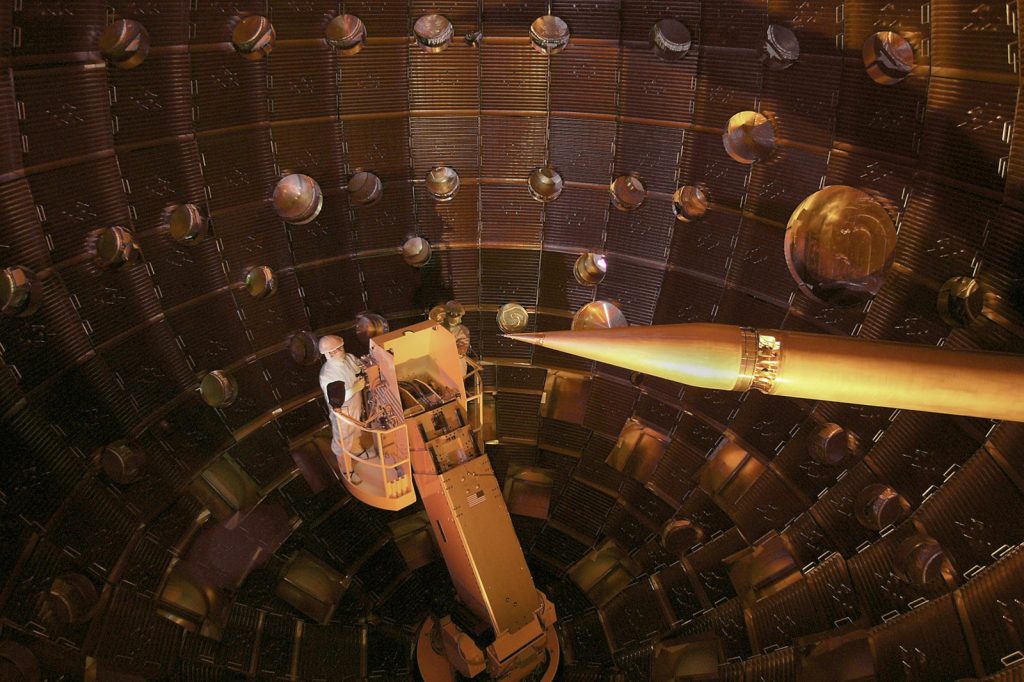
LIVERMORE, July 6 — The figure that matters: one net energy gain. In December 2022, Lawrence Livermore National Laboratory (LLNL) achieved the first controlled nuclear fusion experiment to produce a net energy gain, a milestone known as ignition. The breakthrough was conducted at the National Ignition Facility (NIF), which uses 192 laser beams to compress a tiny capsule of deuterium-tritium fuel.
The experiment proved that fusion could be harnessed in a controlled laboratory setting to yield more energy than it consumed. Dr. Kimberly S.
Budil, a physicist, has served as LLNL’s director since 2021. She is the first woman to lead the lab in its 70-year history. Budil earned her PhD in applied science from the University of California, Davis, and previously served as LLNL’s Principal Associate Director for Weapons and Complex Integration.
The bottom line for investors and energy watchers: the 2022 result was a scientific proof-of-concept, not a commercial product. Budil has stated that significant engineering challenges remain before fusion can become a practical energy source.
She has emphasized the importance of public-private partnerships to accelerate fusion commercialization. Budil has also advocated for sustained federal investment in fusion research and for building on the NIF’s success with a next-generation inertial fusion facility. By the numbers, the NIF’s 192 laser beams represent a massive experimental platform.
The tiny capsule of fuel is a far cry from the scale needed for grid-scale power generation. The engineering hurdles include achieving ignition repeatedly, at higher gain, and at lower cost. Investors will note that the path from lab demonstration to commercial reactor typically takes decades.
Budil’s call for a next-generation facility signals that the scientific community sees the 2022 result as a starting point, not a finish line. The breakthrough has drawn attention from private fusion companies and venture capital.
But Budil has been clear: the work ahead is about engineering, not just physics. The NIF’s success has given researchers a target to aim for, but the route to practical fusion energy remains under construction. What to watch next: whether federal funding materializes for a next-generation inertial fusion facility, and whether public-private partnerships can accelerate the timeline.
Budil’s leadership at LLNL positions her as a key voice in that conversation.




