
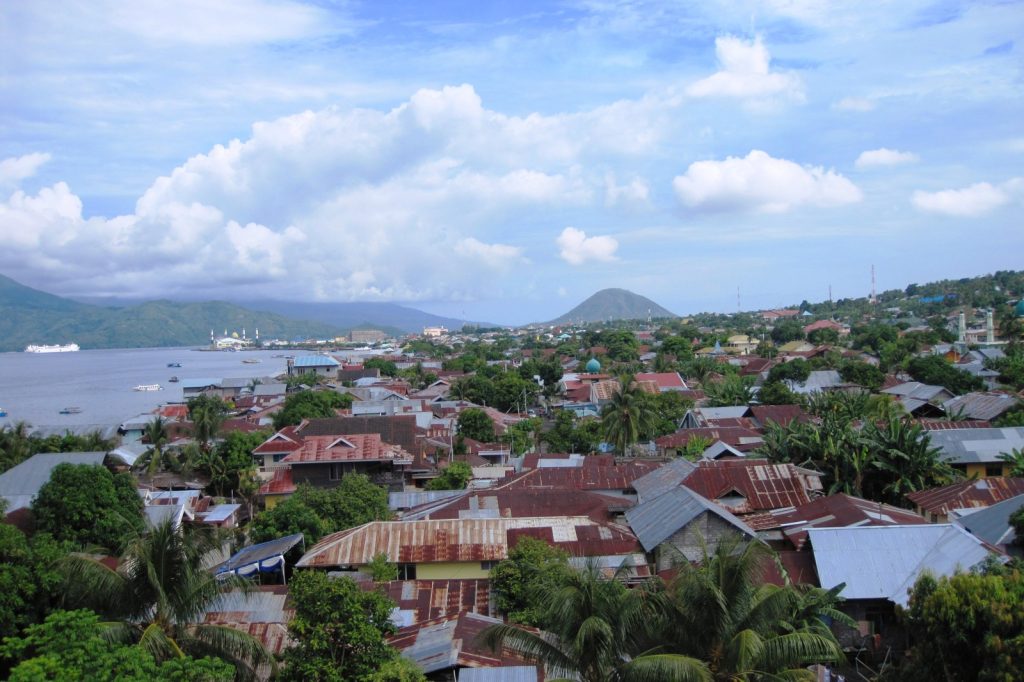
TERNATE, Aug. 4 — A magnitude 5.7 earthquake struck 127 kilometers northwest of Ternate, Indonesia, on Tuesday at 20:16:37 UTC, the U.S. Geological Survey reported. The quake originated at a depth of 35 kilometers, placing it firmly in the shallow category that often brings noticeably stronger shaking to the surface.
No tsunami warning was issued following the event, according to the USGS. The agency detected the tremor through its real-time global seismic monitoring network, which tracks earthquakes as they happen around the world.
A region accustomed to the ground moving
The waters and islands around Ternate sit in one of the most seismically restless corridors on Earth. Over the past two decades, at least 500 earthquakes of magnitude 5.0 or greater have been recorded within roughly 300 kilometers of the area — an average of about 25 a year, though they tend to arrive in clusters rather than steady rhythm.
The strongest of those in recent memory came in 2007, when a magnitude 7.5 quake struck the same broad region. That event remains a reference point for local seismologists, a reminder that the earth here can deliver far more than a moderate jolt.
Tuesday’s tremor, by contrast, was more modest in scale. Earthquakes in the magnitude 5 range are generally classified as moderate, capable of producing minor to moderate damage near the epicenter. In a region where buildings and infrastructure have been shaped by generations of seismic activity, the shaking may be felt strongly by residents, even if structural damage remains limited.
Shallow depth, stronger sway
Depth plays an outsized role in how an earthquake is experienced. At 35 kilometers below the surface, Tuesday’s event is considered shallow; the USGS notes that quakes less than 70 kilometers deep typically generate stronger shaking at the surface than deeper ones of the same magnitude. That means the energy released by the magnitude 5.7 event had less rock to travel through before reaching communities in the area.
The practical consequence is straightforward: people closer to the epicenter may have felt a sharper, more pronounced jolt than the modest magnitude alone would suggest.
Seismologists also point to the likelihood of aftershocks. Following an earthquake of this size, additional tremors are common and may continue for days or even weeks. Authorities and observers in the affected area generally advise residents to remain prepared for further shaking in the near term.
The USGS continues to monitor the region through its global seismic network, watching for any changes in activity that might signal a larger pattern. For now, the 5.7 event stands on its own — a moderate, shallow quake in a portion of Indonesia where the earth rarely stays still for long. What happens next, as always in this part of the world, depends on the ground itself.




