
Only one crewed mission in history has flown to meet two separate spacecraft that could house their own crews. That was Soyuz T-15 in 1986, when cosmonaut Leonid Kizim went to Salyut 7 and then on to the Soviet Union’s Mir. NASA plans to repeat the feat with Artemis III, which it has scheduled for next year.
The mission is not a Moon landing. Four astronauts will launch aboard Orion on a Space Launch System rocket into Earth orbit, then meet each of the program’s two commercial lunar landers in turn over about two weeks. Those are SpaceX’s Starship and Blue Origin’s Blue Moon. A landing is planned for Artemis IV, which is currently scheduled for 2028.
“Artemis III will be a highly choreographed dance with a demanding launch sequence across multiple launch pads,” Artemis Program Manager Jeremy Parsons said in a NASA update on July 15. He called it “one of the most complex and ambitious missions NASA has ever undertaken.”
Three launches, three vehicles
Blue Moon goes first. It will fly on Blue Origin’s New Glenn from Space Launch Complex-36 at Cape Canaveral Space Force Station and can stay in orbit up to 30 days, per the NASA update. That lets engineers check the lander before the crew commits to launch.
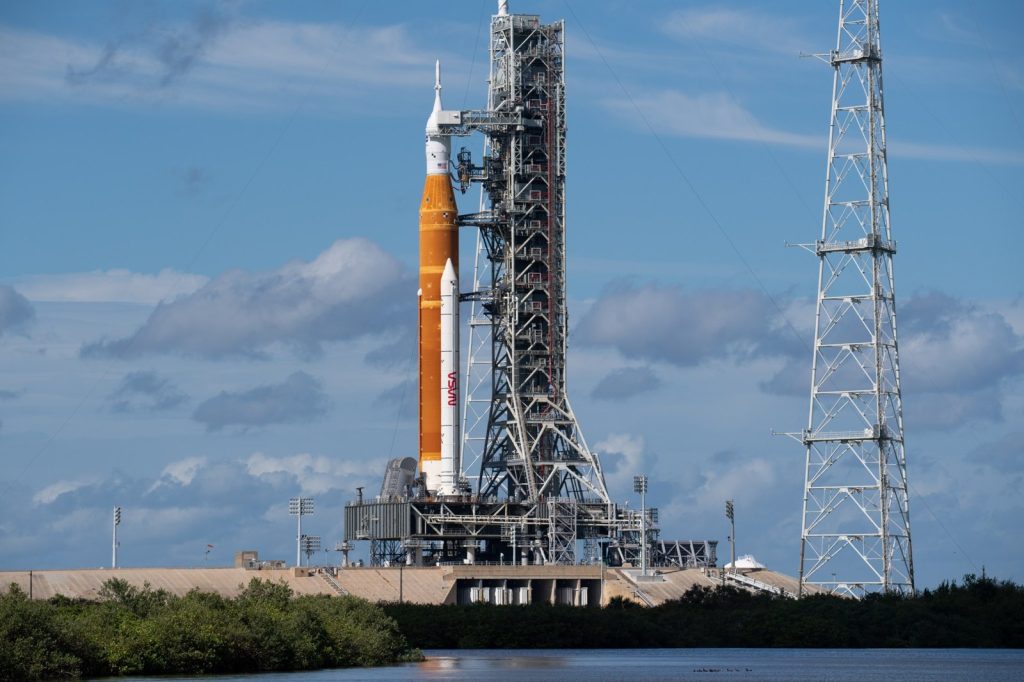
SLS follows from Launch Complex-39B at Kennedy Space Center. Orion will dock with Blue Moon in low Earth orbit for about two days. Two astronauts can enter the lander to test its environmental control systems and avionics. A test spacesuit built to mirror future moonwalk gear will fly inside, so engineers can see how it fits in the cabin.
Starship launches only after Orion and Blue Moon have undocked. SpaceX is building two Starship towers on Florida’s Space Coast, at LC-39A and SLC-37, and it is not yet clear which will host Artemis III. Orion and the crew will stay docked with Starship for about a day, then head home for a parachute splashdown in the Pacific off the US West Coast.
Neither lander will be its final landing version. Blue Origin will fly a Blue Moon Mark 2, a step up from its smaller Mk1 cargo lander. Starship will be the Version 3 design that debuted on its Flight-12 launch in May, fitted with a docking adapter. Because it has no crew cabin to enter, Orion and Starship will test communications and maneuvering between the two vehicles.
What could slip
A New Glenn rocket exploded during an engine test at SLC-36 in May. Blue Origin CEO Dave Limp has said he is confident the rocket will return to flight by the end of 2026, and that matters because the Mk1 demonstration mission planned this year may be delayed. Steve Creech, NASA’s Human Landing System program manager, said both companies have put forward “aggressive objectives” to build confidence before a crewed landing.
Starship has flown about a dozen times but is still in development and has yet to meet many of NASA’s requirements for a crewed lunar landing. NASA estimates Artemis IV will need at least 15 Starship refueling launches. Each vehicle on Artemis III needs only one launch, and NASA says all three rockets will have more launch opportunities than a lunar mission would offer.




