
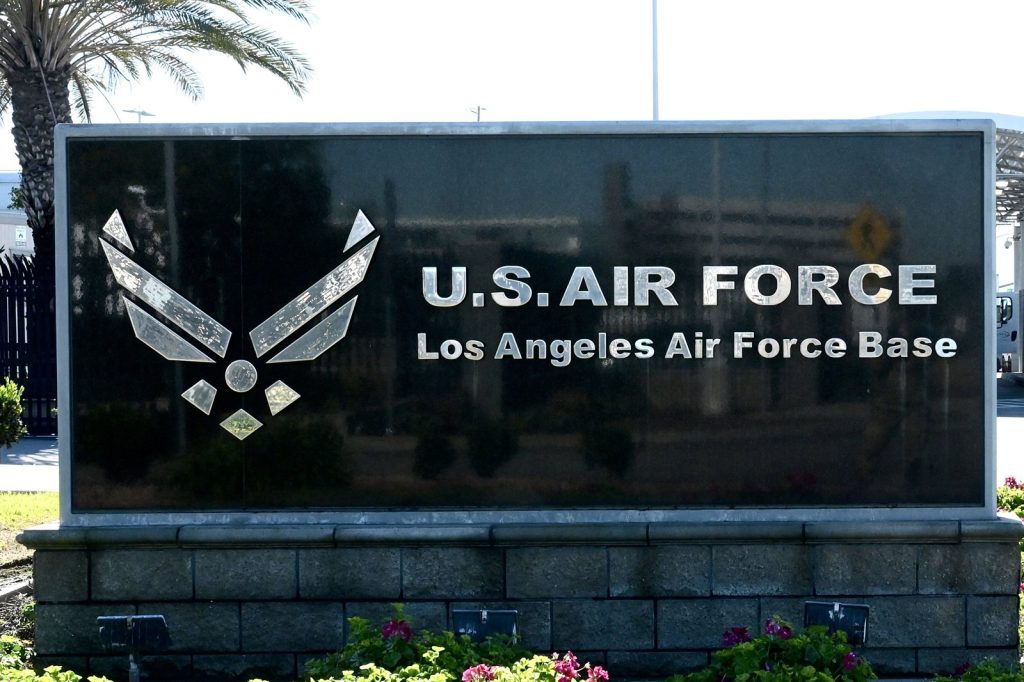
LOS ANGELES, July 21 — The Space Force’s Space Systems Command, headquartered here at Los Angeles Air Force Base, is driving the National Security Space Launch Phase 3 procurement — a contract architecture that will shape the military’s access to orbit for years. The solicitation hit the street in mid-2023, with industry proposals due in early 2024.
As of August last year, SSC commander Lt. Gen. Philip Garrant indicated award decisions were expected in late 2024 or early 2025, though the timeline remains tethered to annual budget approvals and technical milestones that can shift the calculus at any time.
The Strategic Lines of Phase 3
Phase 3 is split into two distinct lanes, a design that reflects the Pentagon’s desire to balance cost-efficiency with assured access for the heaviest payloads. Lane 1 covers less demanding missions; initial awards were widely expected to go to SpaceX and Blue Origin, the two companies with mature or maturing vertical-launch capabilities. Lane 2 targets heavy-lift requirements and demands certification of new vehicles before they can carry national security satellites.
Strategically, the two-lane structure signals a deliberate effort to foster competition while hedging against single-provider risk — a lesson hard-learned from the years when the United Launch Alliance held a near-monopoly on classified launches. The broader stakes: maintaining uninterrupted access to space for intelligence, missile warning, and communications constellations that underpin American military dominance.
Certification Race and Vehicle Milestones
On Lane 2, the certification track is crowded. ULA’s Vulcan Centaur completed its maiden flight on January 8, 2024, carrying the Peregrine lunar lander. The Space Force expected the vehicle to achieve national security certification by mid-2024, a milestone that would open the door to Lane 2 task orders.
Blue Origin’s New Glenn, which aimed for its first flight in 2024, is targeting certification in 2025 — a timeline that remains contingent on a successful debut and subsequent flight history. Relativity Space, after pivoting its Terran R vehicle to a larger design, now targets a first launch in 2026, pushing its own certification prospects further into the decade.
SpaceX’s Falcon 9 and Falcon Heavy, already battle-tested and certified for Lane 2, give the service an immediate heavy-lift workhorse. That certification status places SpaceX in a distinct strategic position: the company can compete for Lane 2 contracts today while rivals race to prove their systems.
Infrastructure and Future Launches
The procurement also funds launch infrastructure upgrades at Cape Canaveral Space Force Station, Florida, and Vandenberg Space Force Base, California — the two primary gates for U.S. military launches. These improvements are essential to handle the cadence and variety of vehicles expected under Phase 3, from Vulcan pads to New Glenn’s LC-36 and SpaceX’s expanding operations. On the payload side, the Space Force plans to launch the first of its Next-Generation Overhead Persistent Infrared satellites in 2025 aboard a Vulcan rocket.
NG-OPIR represents a generational leap in missile-warning capability — a system designed to track hypersonic threats from orbit. Its launch date will serve as a real-world stress test of both Vulcan’s certification status and the broader Phase 3 timeline.
Taken together, the Phase 3 procurement is less a simple contract award than a long-term strategic bet on the U.S. launch industrial base. The lanes, the certification requirements, and the infrastructure spend all point to a military that is no longer content to buy a single ride to orbit. The calculus now: ensure that when a Vulcan, a New Glenn, or a Terran R is ready, the pad, the payload, and the budget will be there.
Sources
{“@context”: “https://schema.org”, “@type”: “NewsArticle”, “headline”: “NSSL Phase 3 Contract Awards Timeline, Rocket Certifications Expected”, “description”: “LOS ANGELES, July 21 — The Space Force’s Space Systems Command, headquartered here at Los Angeles Air Force Base, is driving the National Security Space…”, “datePublished”: “2026-07-21T09:30:00+00:00”, “author”: {“@type”: “Person”, “name”: “Noah King”}, “publisher”: {“@type”: “Organization”, “name”: “InfoPulse Today”, “url”: “https://newsfeed.infopulsetoday.com/”}, “citation”: [{“@type”: “CreativeWork”, “url”: “https://en.wikipedia.org/wiki/Space_Systems_Command”}]}




