
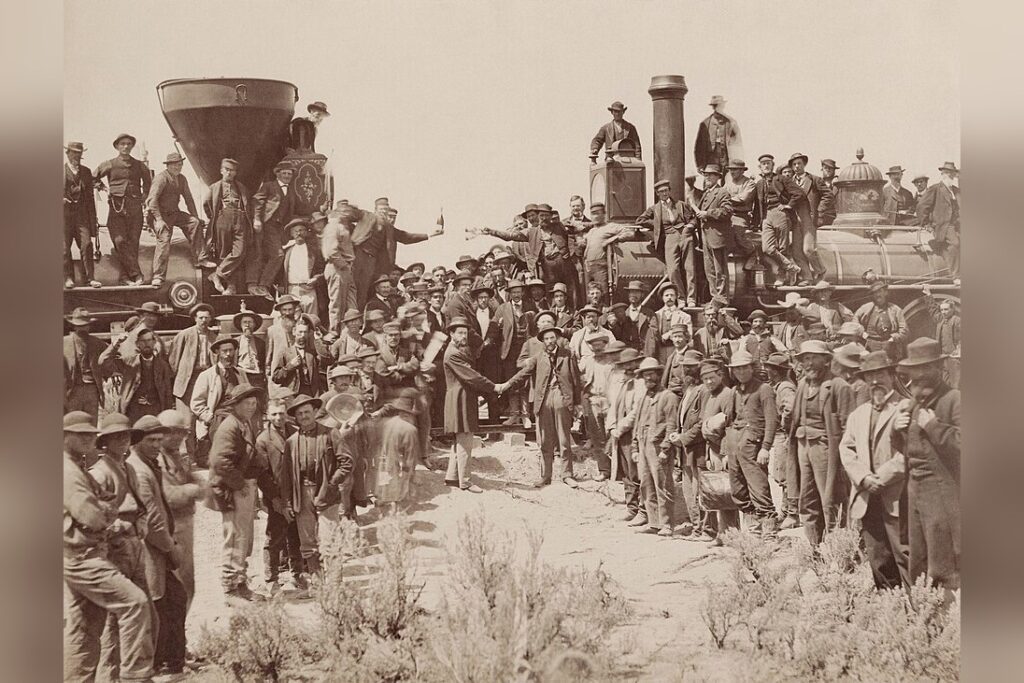
WASHINGTON, July 10 — The Pacific Railroad Acts of 1862 and 1864 remain among the most consequential federal subsidies in American history, establishing a framework for government-private partnership in infrastructure that shaped the nation’s westward expansion. The record shows these laws authorized and financed the construction of the First Transcontinental Railroad, a project that would bind the continent. The 1862 Act granted the Union Pacific and Central Pacific railroads a 400-foot right-of-way.
It also provided alternating sections of public land, totaling 10 square miles per mile of track, and government bonds ranging from $16,000 to $48,000 per mile, depending on the terrain. The bonds were to be repaid from railroad revenues, according to the filing.
The 1864 Act doubled the land grants to 20 square miles per mile of track. It also permitted the railroads to issue their own bonds, a significant expansion of the original legislation. Total federal land grants to transcontinental railroads amounted to over 130 million acres.
That figure places the Pacific Railroad Acts among the most significant federal subsidies in U.S. history. Sources familiar with the legislation note that the government later forgave most of the debt the railroads owed on the bonds, a decision that has been debated by historians and economists ever since.
The Mechanism of the Subsidy
The structure of the 1862 Act was straightforward in design but complex in execution. The government issued bonds to the railroad companies, which were then expected to repay them from operating revenues. The land grants served as both collateral and an additional incentive, allowing the railroads to sell or develop the land to raise capital.
The 1864 Act’s doubling of the land grants reflected Congress’s recognition that the original terms were insufficient to attract private investment on the scale required. The permission for railroads to issue their own bonds further shifted the financial risk from the government to private investors, though the government retained the ultimate liability for the bonds it had issued.
Legacy and Precedent
The Pacific Railroad Acts set a precedent for government-private partnership in infrastructure that has echoed through subsequent generations. The model of federal land grants and bond financing was later applied to other railroad projects and, in modified form, to highways, airports, and telecommunications networks. The total of over 130 million acres granted to transcontinental railroads represents a scale of federal investment that has few parallels.
The forgiveness of most of the bond debt remains a point of contention, with critics arguing it amounted to a giveaway and defenders contending it was necessary to ensure the railroads’ viability. What to watch next is whether the current administration’s infrastructure proposals will draw on the Pacific Railroad Acts as a model.
The precedent of large-scale federal subsidy combined with private operation continues to inform debates about how best to finance major public works.




