
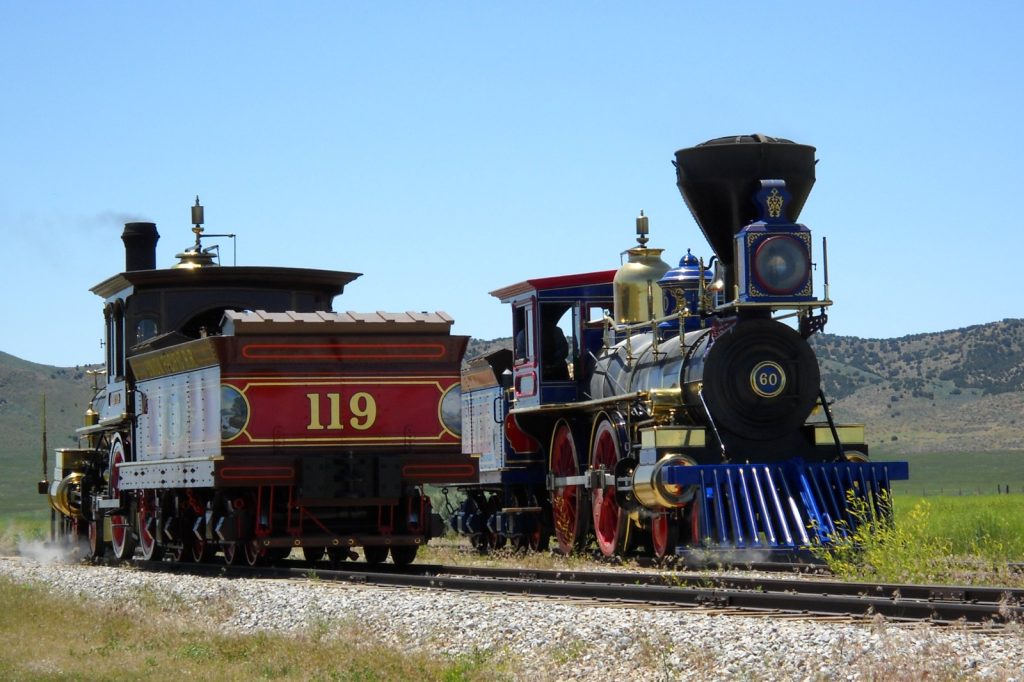
WASHINGTON, July 10 — The sound of a single golden spike, driven into a railroad tie at Promontory Summit, Utah Territory, on May 10, 1869, still echoes across the American landscape. That spike completed the First Transcontinental Railroad, a 1,912-mile continuous line that fundamentally rewired a continent. On the ground today, the story of that railroad is one of immense scale and human cost.
The project, officially known as the Pacific Railroad, was built between 1863 and 1869. It stretched from Council Bluffs, Iowa, via Omaha, Nebraska, to San Francisco Bay, California.
The Central Pacific Railroad Company of California pushed eastward from Sacramento, while the Union Pacific Railroad drove westward from Omaha. The men who built it came from across the globe. The Central Pacific relied on thousands of Chinese immigrants.
The Union Pacific depended on thousands of Irish immigrants. At its peak, the workforce numbered up to 20,000 men.
The Men and the Money
The Central Pacific was led by the ‘Big Four’: Leland Stanford, Collis P. Huntington, Mark Hopkins, and Charles Crocker. On the Union Pacific side, the key figures were Thomas C.
Durant, Grenville M. Dodge, and John A.
Dix. The financial engine for the entire enterprise came from Washington. The Pacific Railroad Acts of 1862 and 1864 granted massive federal subsidies.
The government provided land grants and bonds for every mile of track laid. The total cost of the project reached an estimated $100 million in 1860s dollars.
The two lines met at Promontory Summit in the Utah Territory. That day, Leland Stanford drove the ceremonial golden spike. The moment was celebrated as a triumph of American engineering and will.
What the Railroad Changed
The transformation was immediate and total. Before the railroad, crossing the country by wagon took between four and six months. After the railroad, the same journey took about seven days.
The railroad revolutionized settlement of the American West. The economic impact was staggering.
The line linked agricultural and mineral resources in the West to eastern markets. It spurred economic growth across the entire nation. But the cost was not only financial.
The railroad facilitated the displacement of Native American tribes from their ancestral lands. Today, the legacy of the First Transcontinental Railroad remains visible across the country.
The line itself, the workers who built it, and the government that funded it all shaped the America that followed.
{“@context”: “https://schema.org”, “@type”: “NewsArticle”, “headline”: “Transcontinental Railroad Finished in 1869, United America”, “description”: “WASHINGTON, July 10 — The sound of a single golden spike, driven into a railroad tie at Promontory Summit, Utah Territory, on May 10, 1869,…”, “datePublished”: “2026-07-10T09:30:00+00:00”, “author”: {“@type”: “Person”, “name”: “Isabella Moore”}, “publisher”: {“@type”: “Organization”, “name”: “InfoPulse Today”, “url”: “https://newsfeed.infopulsetoday.com/”}}




