
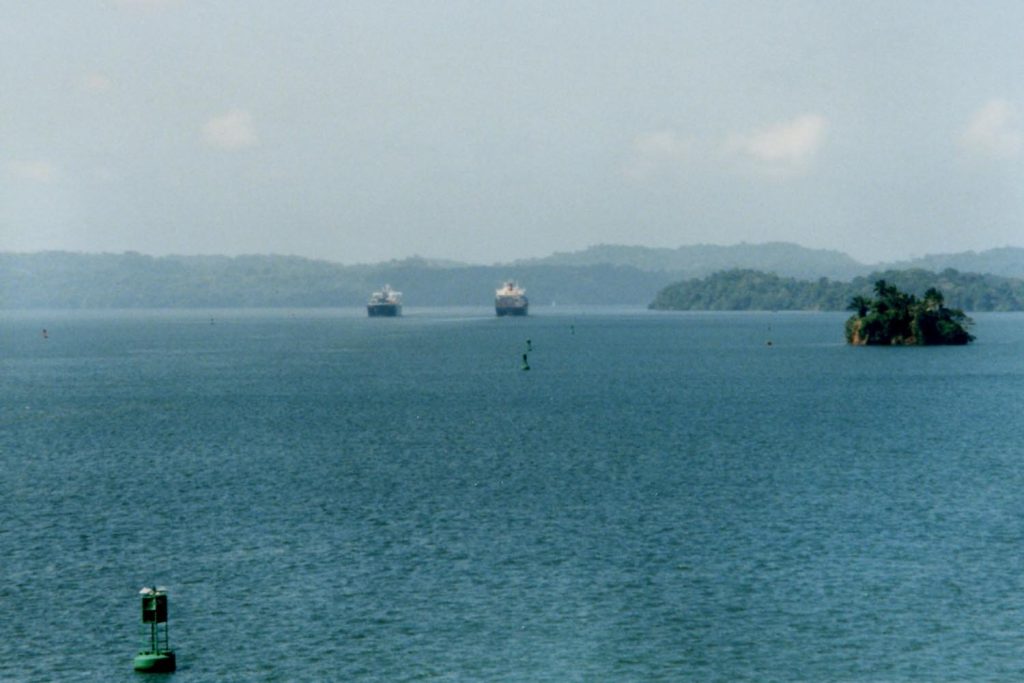
PANAMA CITY, July 10 — Two years after a punishing drought brought the Panama Canal to the brink of operational collapse, the waterway is still working through the consequences. The crisis of 2023, driven by the El Niño weather pattern and dramatically reduced rainfall in the Gatun Lake watershed, forced the Panama Canal Authority (ACP) to impose severe transit restrictions that rippled through global shipping. Each time a ship passes through the canal’s locks, about 52 million gallons of fresh water are required per transit.
When Gatun Lake — the canal’s primary water source — dropped to near-record lows, the ACP had no choice but to turn ships away or force them to carry lighter loads. The numbers tell the story.
Normally, the canal handles between 36 and 38 transits per day. By December 2023, that number had fallen to just 22. The ACP also imposed draft restrictions, limiting ships to a maximum depth of 44 feet (13.4 meters) in the water, down from the normal 50 feet (15.2 meters).
In practical terms, this meant vessels had to carry significantly less cargo — or find another way around.
The ripple effect on global trade
For shipping companies, the calculus was brutal. Pay more to carry less through the canal, or take the long way around. Many chose the alternatives: the Suez Canal or the Cape of Good Hope at the southern tip of Africa.
Both routes add days and fuel costs to any voyage. The situation worsened through the end of 2023.
In November, the ACP announced it would cut daily booking slots further, down to just 20 by February 2024. This wasn’t a temporary hiccup — it was a structural crisis that exposed the canal’s fundamental vulnerability.
A system built on rain
Here’s what it means in plain terms: the Panama Canal has no backup. Unlike many modern water systems, it has no reservoirs beyond Gatun Lake itself. It has no desalination plants to turn seawater into fresh water for the locks.
The entire operation depends entirely on rainfall in the watershed. When the rains don’t come, the canal doesn’t work.
This is the core problem the ACP now faces. The canal’s locks are engineering marvels, but they are also water hogs. Every transit consumes fresh water that could otherwise serve communities or ecosystems around the lake.
In a changing climate, where weather patterns become less predictable, this dependency looks increasingly fragile.
Long-term solutions and local opposition
In 2024, the ACP began investing in water management projects to address the vulnerability. The most significant proposal involves constructing a new reservoir on the Río Indio, a river that feeds into the broader watershed system. The idea is straightforward: capture more water during the rainy season so there’s enough stored up for the dry months.
But the project has run into serious headwinds. Environmental groups and local communities have raised opposition, concerned about the impact on ecosystems, displacement of residents, and changes to the local landscape.
The ACP is now navigating a delicate balance between securing the canal’s future and addressing the legitimate concerns of those who live near the proposed reservoir site. So far, no desalination plants have been built or announced. The canal authority appears to be betting on traditional water storage solutions rather than high-tech alternatives.
Whether that bet pays off depends on how quickly the reservoir can be built — and whether the opposition can be resolved.
What to watch next
The dry season is always the test. If another strong El Niño develops or if rainfall in the Gatun Lake watershed falls short again, the ACP could face the same impossible choices it confronted in 2023. The canal’s daily transit capacity remains below its pre-drought level, and the draft restrictions are a constant reminder that the system is running on thinner margins than it used to.
For now, the canal is operating, but the margin for error is small. The ACP’s ability to push through the Río Indio reservoir project — or find another solution — will determine whether the Panama Canal can weather the next drought, and the one after that.




