
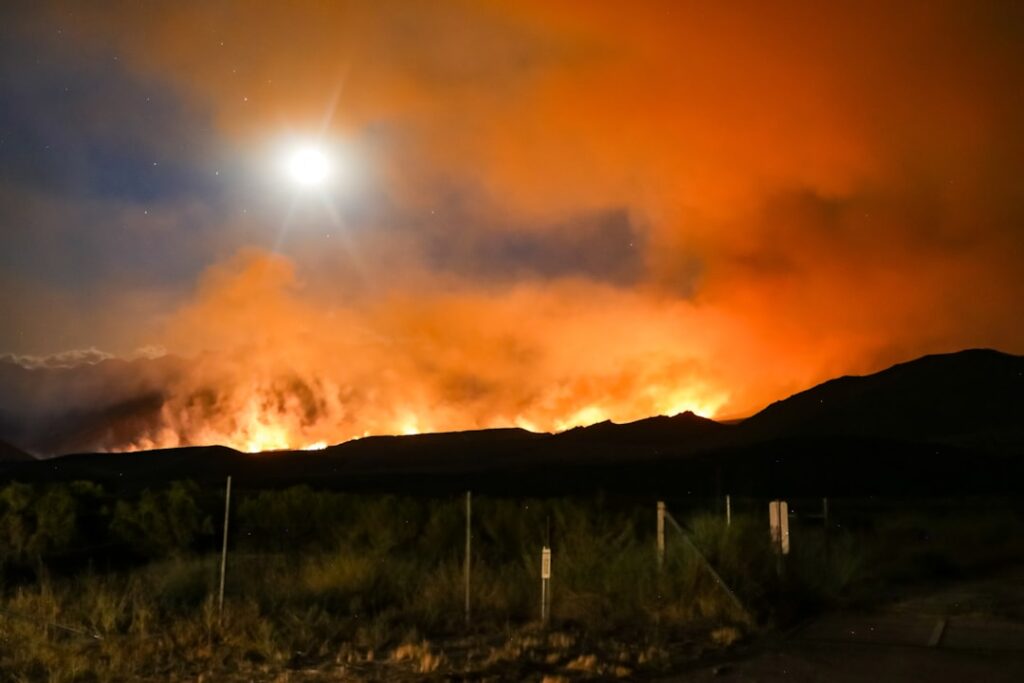
Northern California, July 28, 2024 — cybernewschronicle.com — The Park Fire has already erased more than 134 structures from the map of Northern California. That number will almost certainly climb. The blaze, now over 350,000 acres as of July 28, is chewing through rugged terrain in the Ishi Wilderness and Lassen National Forest.
Firefighters cannot get ahead of it. The human toll is immediate.
Thousands of people in foothill communities have been ordered to leave their homes. They pack cars with what they can carry, not knowing if a house will still stand when the smoke clears. Evacuation centers are open.
Hotels fill fast. For many, the question is not just when they can return, but whether there will be anything to return to.
Lassen Volcanic National Park is closed. That means lost tourism revenue for a region that depends on summer visitors. Hotels, gas stations, restaurants — all take a hit when the park gates shut.
The economic ripple spreads outward. Fire suppression operations already cost millions. The final bill will be far higher, and someone will pay it.
The fire started July 24 in Bidwell Park, in Butte County. That is not a remote lightning strike.
It is a city park, a place where people walk dogs and push strollers. The cause is alleged arson. One person, unnamed in reports, is accused of igniting this disaster.
That detail matters. It shifts the story from natural catastrophe to preventable crime.
It raises hard questions about how a fire set in a municipal park can explode into a 350,000-acre monster in four days. Butte County has been here before. The Camp Fire in 2018 leveled the town of Paradise, killed 85 people, and burned 153,000 acres.
That fire also started from human activity — faulty power lines. Now another human-caused fire tears through the same region. The scars of Paradise are still visible.
Many residents never fully recovered. Now they face it again.
The terrain is working against the fire crews. Rugged, steep, thick with dry vegetation. The Ishi Wilderness is not a place for bulldozers.
Lassen National Forest is vast and difficult to reach. Aerial support helps, but water and retardant drops can only do so much when the fire is moving fast through inaccessible canyons.
Ground crews are fighting a blaze they cannot easily reach. The environmental cost is staggering. Three hundred and fifty thousand acres of forest, brush, and wildlife habitat gone.
The smoke carries particulate matter hundreds of miles, fouling air for millions of people. Burned hillsides will erode when winter rains come, sending ash and debris into streams and reservoirs. The damage does not end when the last flame goes out.
What comes next is containment. But containment is not the same as victory.
Even after the fire lines hold, there will be months of cleanup, insurance claims, rebuilding. Some will not rebuild. Some cannot.
The closure of Lassen Volcanic National Park will last until the fire is out and the hazards are cleared. That could be weeks.
It could be longer. The Park Fire is a direct consequence of human carelessness or malice in a landscape primed to burn. The fuel is dry.
The wind is unpredictable. The terrain is hostile. And the people caught in the middle are left to flee, to wait, and to hope that the next report shows the fire slowing, not growing.




