
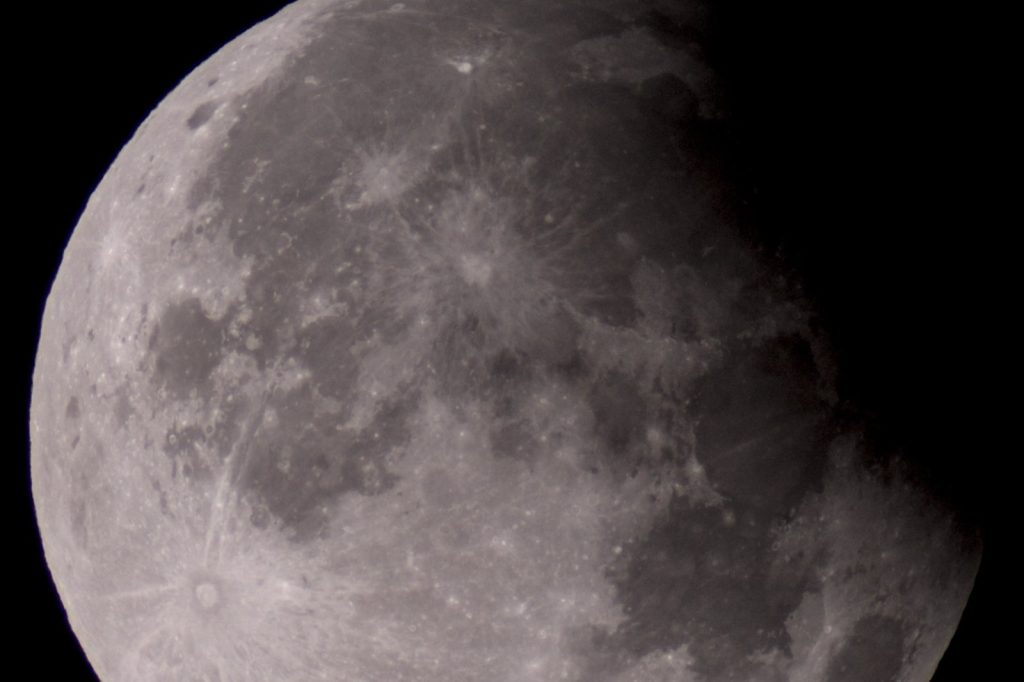
A Subtle Shadow Crosses the Moon
On the evening of September 17, 2024, a partial lunar eclipse began, reaching its conclusion the following morning of September 18. The event was observable from a wide swath of the planet, including the Americas, Greenland, Africa, Europe and Asia. Observers in these regions watched as Earth’s shadow crept slowly across the lunar disk, producing a gradual dimming that offered a quiet spectacle for anyone with a clear view.
The Americas as a Prime Stage
The continents of North and South America, together with their associated islands, presented a favorable vantage point. Their combined landmass covers a notable fraction of Earth’s surface, giving many communities a chance to see the eclipse. As the shadow moved, the moon’s face darkened in a steady progression. Along the western edge of the landmass, the American Cordillera—a extensive chain of mountains—provided a dramatic backdrop, while the flatter terrain of the eastern side offered contrasting perspectives.
Whether observers were in bustling urban centers or in more remote locales, the shared experience fostered a sense of connection and wonder.
A Worldwide Audience
Beyond the Western Hemisphere, the eclipse was also visible across Africa, Europe and Asia. This broad visibility underscored the global nature of the phenomenon, reminding people of Earth’s position within a larger celestial choreography.
The sight of the moon’s changing appearance prompted reflections on the intricate motions that govern tides, seasons and climate, reinforcing the idea that ordinary night‑time events are linked to planetary‑scale processes.
Scientific Opportunities
For researchers, the eclipse served as a natural laboratory. By studying how Earth’s shadow interacts with the lunar surface, scientists can gather information about the planet’s atmospheric properties and the dynamics of the moon’s orbit. Measurements taken during the event contribute to a deeper comprehension of the Earth‑moon system, shedding light on factors that influence ocean currents, tidal patterns and long‑term climate behavior. Continued analysis may reveal additional details about the moon’s composition, geological features and potential resources, knowledge that could inform the design of future lunar missions and exploration strategies.
Looking Toward the Future
The eclipse of September 17‑18, 2024 joins a series of celestial happenings that inspire curiosity about the cosmos. Its occurrence has helped renew interest in astronomy and space science, encouraging a new generation of students, engineers and explorers to consider careers in these fields.
As technological capabilities expand and upcoming missions to the Moon, Mars and beyond move forward, the prospects for discovery continue to increase. The event reminds observers that even in the present moment there remains much to learn about our nearest celestial neighbor and the wider universe. Continued exploration promises to uncover further secrets about the Moon’s makeup, Earth’s environment and the fundamental processes that shape our solar system, pointing toward a future rich with scientific advancement and discovery.




