
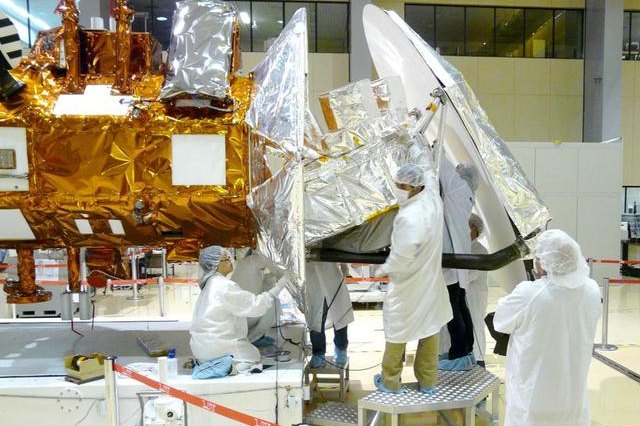
PARIS, July 14 — Against this backdrop of a crowded orbital highway, the international community is grappling with a challenge that grows more urgent by the year: the removal of debris from geosynchronous orbit, the most valuable real estate in space. At an altitude of 35,786 kilometres, GEO is home to the world’s most critical communications, weather and defence satellites. The energy required to rendezvous with defunct objects at that height presents technical and economic hurdles that, as of today, no nation or company has overcome.
No active debris removal mission has yet been approved for GEO. This stands in stark contrast to the activity unfolding in low Earth orbit, where the European Space Agency’s ClearSpace-1 mission is scheduled for launch in 2026.
That demonstration will target a 112-kilogram payload adapter in LEO, not the graveyard of derelict satellites circling far above. The wider picture is one of incremental progress against a slow-moving crisis. The Japanese company Astroscale, founded in 2013, has developed an End-of-Life Services mission for LEO but has not announced plans to extend its operations to GEO.
The U.S. Defense Advanced Research Projects Agency ran the Phoenix program between 2011 and 2016, studying the possibility of repurposing components from defunct GEO satellites. That work remains conceptual.
In the corridors of power in Washington, the U.S. Space Force’s Orbital Prime program, announced in 2021, now funds commercial debris removal technologies. The 2022 U.S. National Orbital Debris Implementation Plan explicitly calls for research into GEO debris removal. The Federal Communications Commission’s 2022 rules require new satellites to be deorbited within five years, a measure that may reduce future debris but does nothing to address the existing junk already in orbit.
What is at stake is the long-term sustainability of the orbital environment. The Inter-Agency Space Debris Coordination Committee recommends that satellites at end of life be moved to a graveyard orbit 300 kilometres above GEO. Compliance, however, is voluntary.
As of 2023, only about 60 per cent of GEO satellites follow the recommendation. The European Union’s Space Surveillance and Tracking program, operational since 2016, provides collision warnings to satellite operators.
The United Nations Committee on the Peaceful Uses of Outer Space continues to discuss debris mitigation, but no binding rules have been adopted. For now, the technical barriers remain formidable. The high altitude of GEO demands significantly more propellant and energy for any rendezvous mission than what is required in LEO.
The economics are equally daunting: there is no established market for removing debris that no one owns, and no liability framework to assign responsibility for the cleanup. What to watch next is whether the demonstration missions in LEO — ClearSpace-1 and Astroscale’s ELSA — prove the technology viable.
If they succeed, the conversation may shift from whether GEO debris removal is possible to how it can be financed and governed. If they fail, the graveyard orbit above 35,786 kilometres will continue to fill, with no one coming to clean it up.
{“@context”: “https://schema.org”, “@type”: “NewsArticle”, “headline”: “Proposed Solutions Target Cleanup of Geosynchronous Orbit”, “description”: “PARIS, July 14 — Against this backdrop of a crowded orbital highway, the international community is grappling with a challenge that grows more urgent by…”, “datePublished”: “2026-07-14T09:30:00+00:00”, “author”: {“@type”: “Person”, “name”: “Beatrice Bianchi”}, “publisher”: {“@type”: “Organization”, “name”: “InfoPulse Today”, “url”: “https://newsfeed.infopulsetoday.com/”}}




