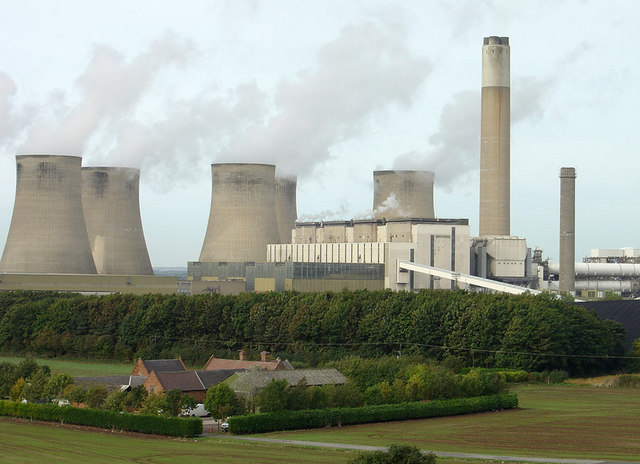
Ratcliffe-on-Soar Power Station, a coal-fired facility in Nottinghamshire, England, remains the final operational plant of its kind in the United Kingdom as of September 28, 2024. Owned and operated by Uniper, the station has been a cornerstone of the country’s electricity generation since it was first commissioned by the Central Electricity Generating Board (CEGB) in 1968. The facility boasts a generation capacity of 2,000 MW, positioning it as a major contributor to the national grid for over five decades.
Its location offers strategic advantages, sitting adjacent to the A453 road and near junction 24 of the M1 motorway. The plant also lies close to the River Trent and the Midland Main Line, with East Midlands Parkway railway station situated nearby, providing logistical benefits for coal deliveries and operational access.
Visually, the power station is defined by eight cooling towers and a 199-meter (653-foot) chimney, making it a prominent landmark visible across the surrounding region. These structural features reflect the engineering priorities of the late 1960s, emphasizing functionality and efficiency in design. As the UK’s last operational coal-fired power station, Ratcliffe-on-Soar holds a distinctive role in the nation’s energy sector.
Its continued operation has drawn attention amid the country’s shifting energy policies and commitments to lowering carbon emissions. The station’s impact on the local economy and community has been significant over its long history, though its future remains tied to broader discussions about the UK’s transition toward cleaner energy sources.
The plant’s status is subject to ongoing evaluation as the UK navigates its energy transition. Policymakers and industry observers are closely watching how facilities like Ratcliffe-on-Soar will adapt to evolving environmental targets and sustainability goals. The station’s operational plans are likely to face reassessment in the coming months and years, with potential implications for national energy policy, regional economic activity, and environmental outcomes. Ratcliffe-on-Soar’s legacy as a key electricity provider for more than half a century underscores its role in the UK’s industrial history.
As the country moves toward a more sustainable energy future, the fate of this coal-fired plant serves as a focal point in conversations about balancing energy reliability with climate commitments. The station remains operational for now, but its long-term role will be shaped by the ongoing shift in the UK’s energy landscape.