
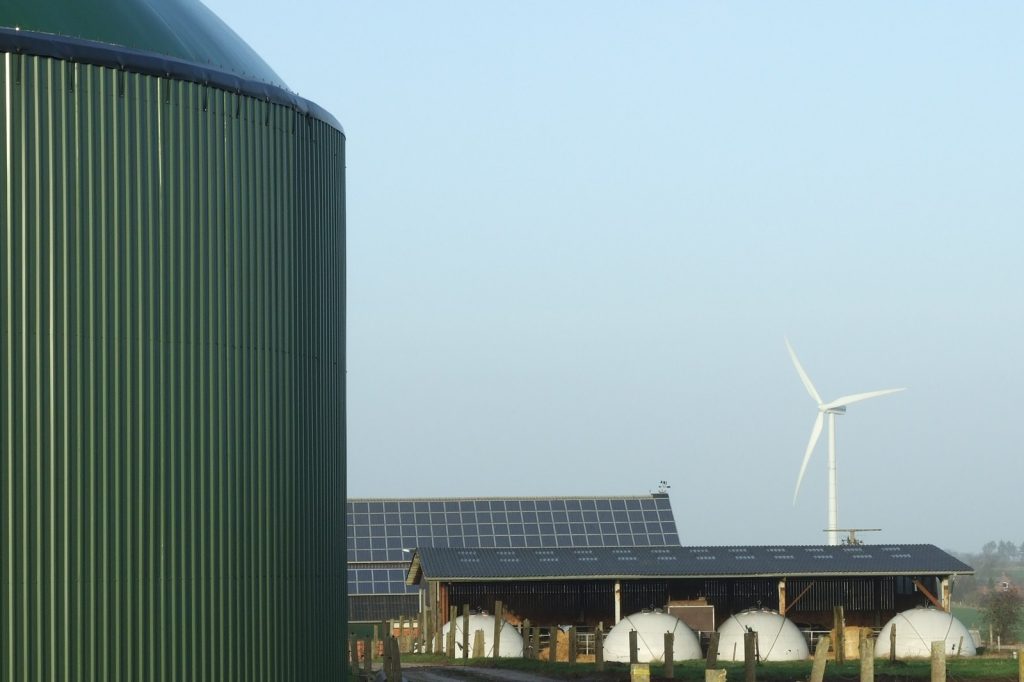
STEUBEN COUNTY, N.Y. — The methane digesters at Lent Hill Dairy Farm run all night. They turn manure into fuel. That fuel, researchers now say, could power the servers that run the internet.
It is not a perfect system. The digesters need electricity to operate.
Burning the captured methane still releases carbon dioxide. But the people pushing this idea forward argue it beats the alternative. “It’s not gone, but it’s different.
Less sharp,” one local farmer said of the smell since the digester started working. He asked not to be named.
He has lived with the lagoons for years. The change, he said, is real. The tension in rural Steuben County is plain.
The dairy has been here for generations. It is a fixture. Now, with the digesters, it is also a power plant.
A small one. A smelly one.
But a power plant nonetheless. For the farm, the math is simple. Manure is a waste product.
It costs money to handle. Now it brings in revenue.
A new income stream from something that used to be a problem. For the data centers, the appeal is different. They need electricity.
A lot of it. The grid can be unreliable. A local source, one that runs when needed, is valuable.
This is dispatchable power. It does not depend on the weather.
It depends on cows. The process works like this. The manure sits in lagoons.
Methane rises from it. The digesters capture that gas.
Then it is cleaned and piped away. To data centers. To the machines that store your photos, your emails, your bank records.
Proponents say the net effect is cleaner than what came before. Methane is a potent greenhouse gas. Letting it escape into the air is worse than burning it.
Burning it turns it into carbon dioxide. Still bad.
But less bad. That is the argument. The push is not limited to New York.
Other dairy-heavy states are watching. The model could spread.
Where there are cows, there is manure. Where there is manure, there is methane. Where there is methane, there is potential fuel.
On the gray afternoon when a reporter visited Lent Hill, the smell hit before the sight. Manure. Piles of it.
Steaming in the cool air. Stacked beside the red barns.
That is the raw material. That is the frontier. The farmer who spoke did not sound like an environmentalist.
He sounded like a man who noticed a change. A practical change.
The air is less sharp. That is something. There are costs.
There are always costs. The digesters run on electricity. The process is not free.
The carbon dioxide still goes into the air. But the people behind this see a trade-off they can live with.
It is a local solution to a big problem. The internet does not stop. The servers do not sleep.
They need power. Maybe that power comes from a field in Steuben County.
From a red barn. From a pile of steaming manure.




