
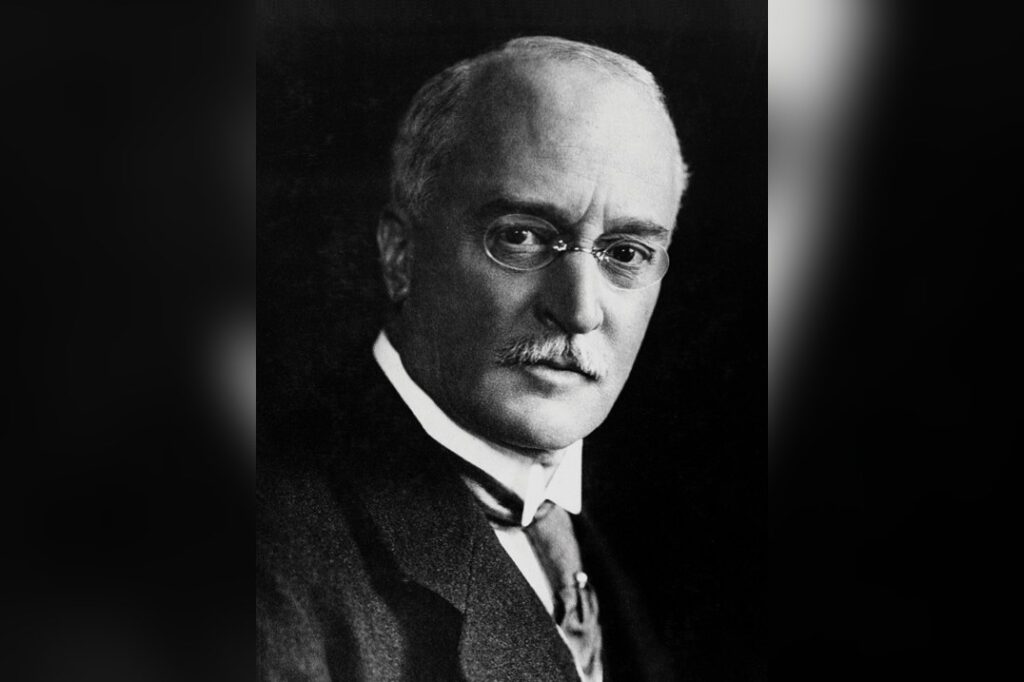
AUGSBURG, July 13 — The shift is hiding in plain sight, powering 90 percent of the world’s freight. Rudolf Diesel’s engine, first fired up in this Bavarian city in 1893, is the quiet giant of the global economy. And its origin story, rooted in a Paris-born German engineer’s obsession with efficiency, still shapes how we move goods, keep the lights on, and think about fuel itself.
Diesel was born in Paris on March 18, 1858. By 1893, he had patented a radically new kind of heat motor.
The first working prototype, demonstrated in Augsburg on August 10, 1893, ran on peanut oil. That choice of fuel is the trend underneath everything: Diesel designed his engine to run on a variety of fuels, including vegetable oils, long before the term “biofuel” existed. The numbers from that first test tell the story of an industrial leap.
Diesel’s engine achieved a thermal efficiency of about 26 percent. The contemporary steam engines it was competing against?
Only about 12 percent. That more than doubling of efficiency wasn’t just a lab curiosity. It was the foundation for a new kind of power, one that could be deployed anywhere, on any scale.
Diesel published his treatise, “Theory and Construction of a Rational Heat Motor,” in 1893, laying out the engineering philosophy behind his invention. The engine was designed to be durable, efficient, and flexible in its fuel sources. That flexibility is what makes the story so current.
The same logic that led Diesel to peanut oil is driving today’s research into renewable diesel, hydrotreated vegetable oil, and synthetic fuels. Watch this space: the engine itself hasn’t changed its fundamental bet on compression ignition, but the fuel equation is shifting again.
The Disappearance and the Legacy
Diesel disappeared from the steamer SS Dresden on September 29, 1913. His body was found days later. The death was ruled a suicide.
It was a grim end for a man whose invention was just beginning to transform the world. By 1914, just a year after his death, diesel engines were already powering ships, submarines, and industrial plants.
The technology spread fast. What’s changing now is the scale of that legacy. Today, diesel engines power about 90 percent of global freight transport — trucks, trains, and ships.
They are also used in generators for about 40 percent of the world’s electricity backup systems. That means when the grid goes down, from a hospital in Milan to a data center in Virginia, it’s often a diesel engine that kicks in.
The engine’s efficiency and durability made it foundational to the 20th-century industrial economy. That foundation hasn’t cracked. The trend underneath the current moment is the tension between Diesel’s original vision — a multi-fuel, high-efficiency workhorse — and the environmental pressure to decarbonize freight and backup power.
The engine itself is not the problem; the fuel often is. Diesel saw that coming. He built the machine to be flexible.
The question now is whether the fuel supply can catch up to the engine’s original design intent.
What to Watch
The next chapter is about fuel, not the engine block. Researchers and startups are working on biofuels, e-fuels, and hydrogen injection for existing diesel engines. The infrastructure is already there: the trucks, the trains, the ships, the generators.
The shift is about what goes into the tank. Diesel’s 1893 peanut-oil demonstration was a proof of concept.
It took more than a century for the economics and the policy to start aligning with that idea. Watch this space. The engine that moved the 20th century is being asked to move the 21st century on a different fuel.
The efficiency is already there. The durability is proven.
The question is whether the fuel can match the machine. Diesel, the man who disappeared into the English Channel, left behind an engine that refuses to disappear.




