
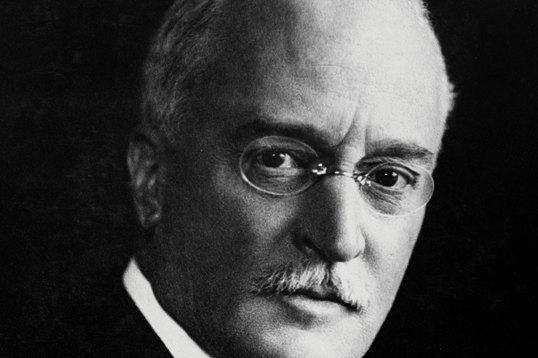
AUGSBURG, July 13 — On paper, the patent looked like a theoretical exercise. In practice, it rewrote the economics of power. Rudolf Diesel filed German patent DRP 67207 for his “working method and design for internal combustion engines” on February 27, 1892, with the patent granted in 1893.
The first successful test of the engine ran on August 10, 1893, here in Augsburg, and the numbers told the story. Thermal efficiency hit 26.2%.
Steam engines of the era typically managed 10-12%. That gap is the mechanics here: roughly double the work from the same fuel. The catch is in how Diesel got there.
His engine used compression ignition — air compressed to about 1,000°F before fuel injection. No spark plug.
That design choice eliminated the ignition system entirely, replacing it with pure thermodynamic pressure. The engine could burn a range of fuels, including coal dust and vegetable oils, which meant operators weren’t locked into a single supply chain.
The efficiency ratchet
By 1897, Diesel had pushed the production model to 35.5% efficiency. That figure represents a tripling of the steam engine’s typical performance in less than four years. On closer reading, the consequence is straightforward: diesel engines used about one-third less fuel than steam engines for the same power output.
For industrial power generation, that was not incremental improvement. It was structural.
Diesel published the engine’s design in his 1893 book “Theory and Construction of a Rational Heat Motor.” The title is revealing. This was not tinkering; it was a systematic attempt to rationalise the conversion of heat into mechanical work. The patent, the test, the book — each step locked in a logic that steam could not match.
What the numbers mean
The 26.2% efficiency from that first successful test in 1893, the 35.5% from the 1897 production model — these are not abstract engineering trivia. They represent a direct cost advantage. A factory or ship operator running a diesel engine burned roughly a third less fuel.
Over a year, that margin compounds. The steam engine’s dominance, built on decades of incremental refinement, suddenly faced a competitor that had leapfrogged its core metric.
Diesel’s compression ignition method also meant the engine was mechanically simpler in one critical respect: no spark timing, no ignition coils, no distributor. Compress the air until it glows hot, inject the fuel, let physics do the rest. That simplicity reduced moving parts and potential failure points, though the high compression required stronger engine blocks and better seals — a trade-off that would take years of metallurgical advances to fully resolve.
The revolution in industrial power generation was not instant. But the mechanism was in place by 1897: a rational heat motor that burned less fuel, ran on diverse feedstocks, and eliminated the spark plug.
The rest was scaling.
Sources
{“@context”: “https://schema.org”, “@type”: “NewsArticle”, “headline”: “Rudolf Diesel’s 1893 “Rational Heat Motor” Patent Surpasses Steam Engines”, “description”: “AUGSBURG, July 13 — On paper, the patent looked like a theoretical exercise. In practice, it rewrote the economics of power. Rudolf Diesel filed German…”, “datePublished”: “2026-07-13T09:30:00+00:00”, “author”: {“@type”: “Person”, “name”: “Beatrice Ferrari”}, “publisher”: {“@type”: “Organization”, “name”: “InfoPulse Today”, “url”: “https://newsfeed.infopulsetoday.com/”}, “citation”: [{“@type”: “CreativeWork”, “url”: “https://en.wikipedia.org/wiki/Diesel_engine”}]}




