
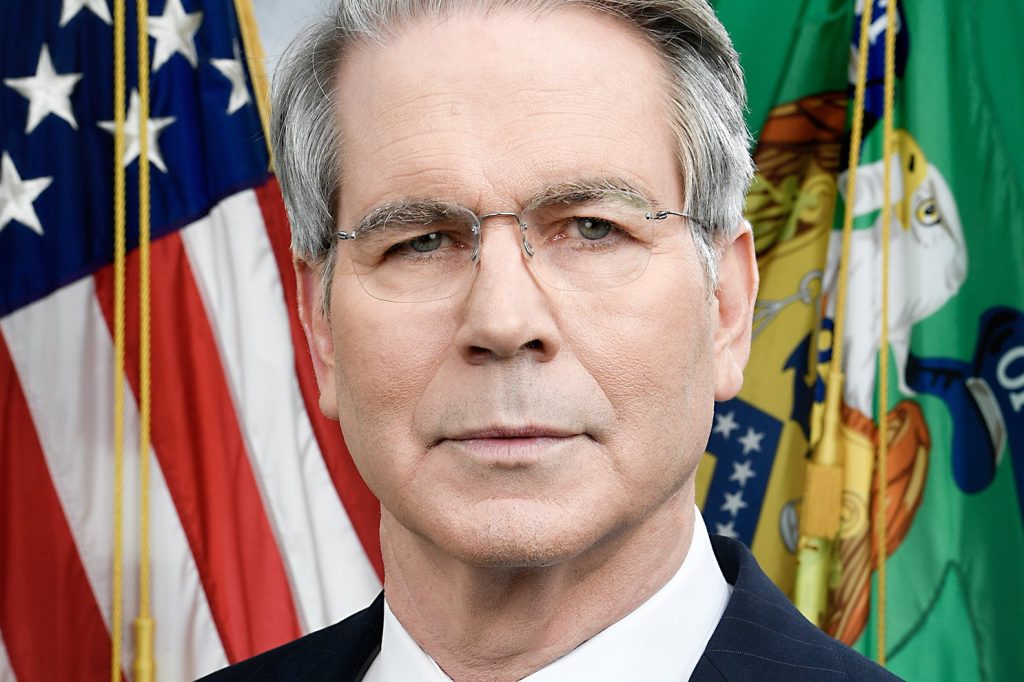
WASHINGTON, July 10 — On the seventh floor of the Treasury Department, the lights are burning late. Scott Bessent, the U.S. Treasury Secretary appointed by President Donald Trump in January 2025, is deep inside a complex economic modeling exercise. The task: analyze the potential impact of proposed tariffs on Russian oil.
The plan is still under development. No final decisions have been made. But the Treasury Department, working alongside the Energy Information Administration, is already running the numbers — trying to map out what happens to U.S. inflation and global energy markets if those tariffs take effect.
Bessent brings a particular lens to this work. Before stepping into the Treasury Secretary role, he was a hedge fund manager, the founder of Key Square Group, an investment firm built on macroeconomic analysis. He has spent years reading global economic currents — trade flows, currency movements, supply chain pressures. That background, officials say, gives him a practical grasp of how sanctions and trade measures ripple through markets.
The Macroeconomic Calculus
The core question before Bessent and his team is straightforward in concept, dizzying in its variables: If the U.S. imposes tariffs on Russian oil, how much do prices rise at home? What happens to the global supply picture? And does the economic cost outweigh the strategic gain?
The Treasury Department is working with the Energy Information Administration to model potential price increases. The EIA, the statistical agency within the Department of Energy, maintains detailed data on global petroleum supply, demand, and pricing. Together, the two agencies are building scenarios — testing different tariff levels, different Russian production responses, different reactions from OPEC and other major exporters.
Bessent has advised the administration on sanctions and trade measures before. His expertise in macroeconomic policy has made him a key voice in the internal debate over how aggressively to target Russian energy revenues while managing the domestic economic fallout.
A Delicate Balance
The proposed tariffs represent a significant escalation in the economic pressure campaign against Russia. But they also carry political risk for the Trump administration. Higher gasoline prices, even temporary ones, tend to hit consumer confidence hard. And with the 2026 midterm elections on the horizon, every economic decision carries added weight.
Bessent’s job is to give the president a clear-eyed assessment of those trade-offs. The Treasury Department’s analysis will factor in not just the direct price impact at the pump, but secondary effects — on manufacturing costs, on transportation, on the broader inflation picture.
By nightfall, the modeling work continues. Officials describe the process as iterative, with new data feeding in as the EIA refines its projections. The plan remains under development, they stress. No timeline has been set for a decision.
What is clear: Scott Bessent, the former hedge fund manager now sitting at the center of U.S. economic policy, is running the numbers on one of the most consequential trade decisions of the Trump administration. The outcome will shape not just U.S.-Russia relations, but the price Americans pay for energy — and the political landscape heading into November.




