
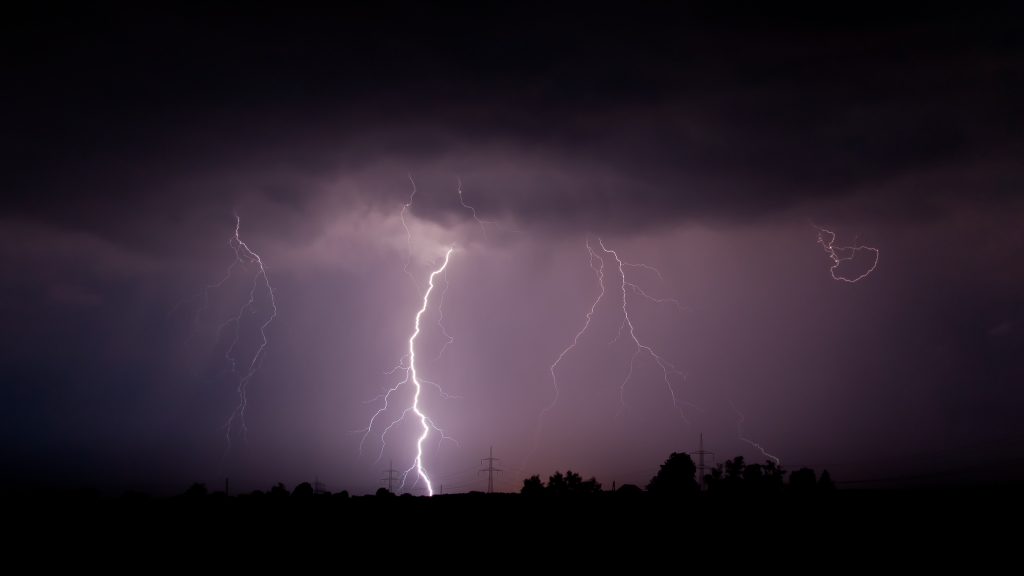
Three people died and seven others were rescued after a boat capsized on Geneva Lake as a severe thunderstorm swept through southern Wisconsin, authorities said. The incident occurred during the holiday weekend, when the population of Walworth County roughly doubles, according to Tom Hausner, undersheriff for the Walworth County Sheriff’s Department.
Hausner said he did not have any further details about the victims or those rescued. Police in the city of Lake Geneva are investigating, though officials there did not immediately respond to an email and voice message from The Associated Press seeking additional information.
Storm Wreaks Havoc Beyond the Lake
The storm’s toll extended well beyond the lake. Hausner reported many injuries across Walworth County after winds toppled trees, knocked down power lines, and damaged buildings. County authorities received multiple 911 calls reporting damage, people trapped in buildings, and pleas for help.
Deputies responded immediately but were delayed by downed power lines and trees blocking streets. “Power lines are all over the place.
We are urging people to stay away,” Hausner said. His agency asked for help from law enforcement in nearby counties and the Wisconsin Department of Natural Resources. Lake Geneva Mayor Todd Krause declared an emergency.
He said one person had minor injuries after being struck by a falling tree, and several areas of the city were experiencing power outages. The storms that rolled through the Midwest on Friday afternoon and evening prompted multiple cities to cancel holiday festivals and reschedule fireworks displays.
The National Weather Service had issued a severe thunderstorm watch for Lake Geneva ahead of the weather.
Investigation and Recovery Underway
The convergence of a holiday crowd, a sudden severe storm, and a lake that turned deadly is what investigators will now dissect. The catch for authorities now is clearing the debris and downed lines to reach every person who may still need help, while piecing together exactly what happened on that boat. The investigation is ongoing.
Geneva Lake, in southern Wisconsin, draws tourists from the Chicago area and beyond. Hausner noted the population in Walworth County nearly doubles during holiday weekends, underscoring the risks when severe weather hits a crowded recreational area.
The mechanics of the capsizing remain unknown, but the simultaneous demands of storm response and rescue operations have stretched local resources. Deputies are coordinating with neighboring counties and the state Department of Natural Resources to manage the aftermath. The broader history of Wisconsin lakes provides context for understanding such waterways.
Lake Mendota, the largest of the four lakes that define Madison, Wisconsin, has a name dating to 1849, when a surveyor proposed the word “Mendota,” which early historians suggested might come from a Native American language meaning “large” or “great.” Before European settlement, the Ho-Chunk people knew the lake as Wąąkšikhomįkra, or “Where the Person Rests.” The lake borders Madison on multiple sides, along with several smaller communities. Lake Mendota’s origins reach back to the end of the Wisconsin glaciation about 15,000 years ago.
As glacial ice retreated, it left behind a massive body of water that eventually broke into the four present-day lakes — Mendota, Monona, Kegonsa, and Waubesa — roughly 10,000 years ago. Over time, shallow marshes formed between them. Early European settlers described white sand beaches and clear water, a condition that did not last.
Change came swiftly after American settlement. A system of locks built in 1849 to regulate shipping through the Madison isthmus raised the water in Lake Mendota, submerging those white sand beaches.
Later, the rise of the Wisconsin dairy industry sent runoff from farms into the lake. That runoff carried nitrogen and phosphorus, turning the water murky and the lake bed dark black. The process transformed Lake Mendota from a clear, mesotrophic lake into a eutrophic one — a lake rich in nutrients that can fuel algae blooms and lower oxygen levels.
Lake Mendota’s history illustrates how human activity can reshape a lake in fundamental ways. The same forces that altered Mendota — development, agriculture, changes to water levels — are at work in many Wisconsin lakes today.
Understanding that history helps residents and visitors recognize that a lake’s condition is not fixed. It has been changed before, and it can be changed again, for better or worse, by choices made on the land around it. As authorities in Walworth County continue their investigation, the dual narratives of immediate tragedy and long-term environmental change offer a reminder of the complex relationship between people and the waters they live and recreate on.




