
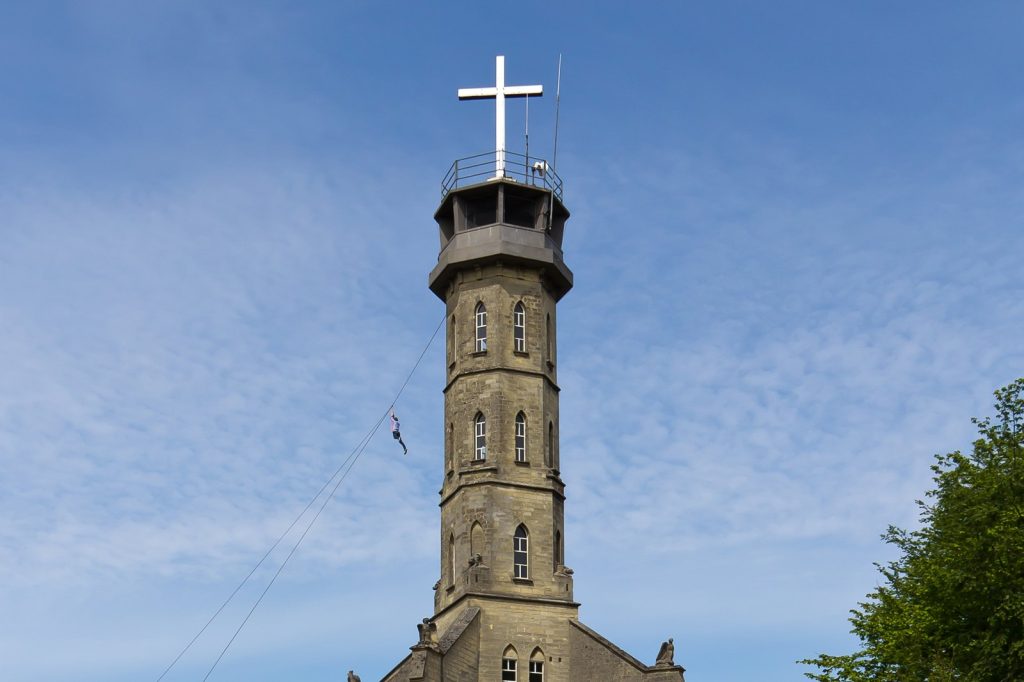
In the early hours of 16 March 2025, the Wilhelmina Tower on the Heunsberg vanished from the Geul valley’s skyline. The 30‑metre‑tall lookout, a Rijksmonument erected in 1906, collapsed before dawn, unnoticed by any passerby and without causing injuries.
Its disappearance has ignited a wave of questions about the condition of other aging monuments scattered across the Netherlands. Designed by architect Christiaan Alfons Prevoo, the tower was part of a late‑19th‑century programme that saw numerous observation points built on the Limburg hills to attract tourists and showcase the region’s scenery. For almost 120 years it stood on the steep slope of the Heunsberg, becoming a familiar silhouette for generations of visitors to Valkenburg who climbed its stairs for panoramic views of South Limburg’s Heuvelland.
The collapse did not occur during a storm or at a busy time of day; it happened in the pre‑dawn darkness when the site was empty. This timing suggests a gradual, internal failure rather than an abrupt external impact.
Preliminary reports point to possible contributors such as soil erosion, long‑term weathering, structural fatigue, and potential movement of the hill itself. Engineers plan to examine the foundation and assess whether the underlying ground has shifted over the decades. Local authorities will now secure the wreckage and launch a formal investigation.
While the immediate task is to clear the site and determine the cause, officials acknowledge that the incident raises broader concerns about the nation’s extensive inventory of Rijksmonuments. Many historic buildings and towers sit on hillsides, floodplains, or other soils that can change unpredictably, and regular, thorough inspections are costly and not always guaranteed.
It is important to note that the Wilhelmina Tower on the Heunsberg is distinct from other structures bearing the same name, such as the tower on the Vaalserberg located about twenty kilometres away, which remains standing. The shared name, however, may lead the public to wonder how many similar monuments could be vulnerable to comparable failures. The collapse serves as a stark reminder that even well‑known landmarks can disappear within hours, leaving no witnesses and no dramatic scenes.
Heritage managers now face the difficult decision of allocating resources for the upkeep and monitoring of centuries‑old monuments, many of which rely on concrete and steel that have endured weather, soil creep, and the inevitable wear of time. While the report does not specify whether recent structural assessments had been performed on the Wilhelmina Tower, the very fact of its sudden failure indicates that something may have been overlooked.
The incident is expected to trigger a comprehensive review of similar historic towers and lookout points across the country, an undertaking that will likely involve significant expense. For the community of Valkenburg, the loss is both emotional and symbolic. The tower’s silhouette, once a constant on the horizon, has been replaced by a pile of rubble.
As officials work to secure the area and uncover the precise reasons behind the collapse, the episode underscores a broader lesson: heritage, no matter how cherished, can become fragile when it ages beyond the limits of its original design.




