
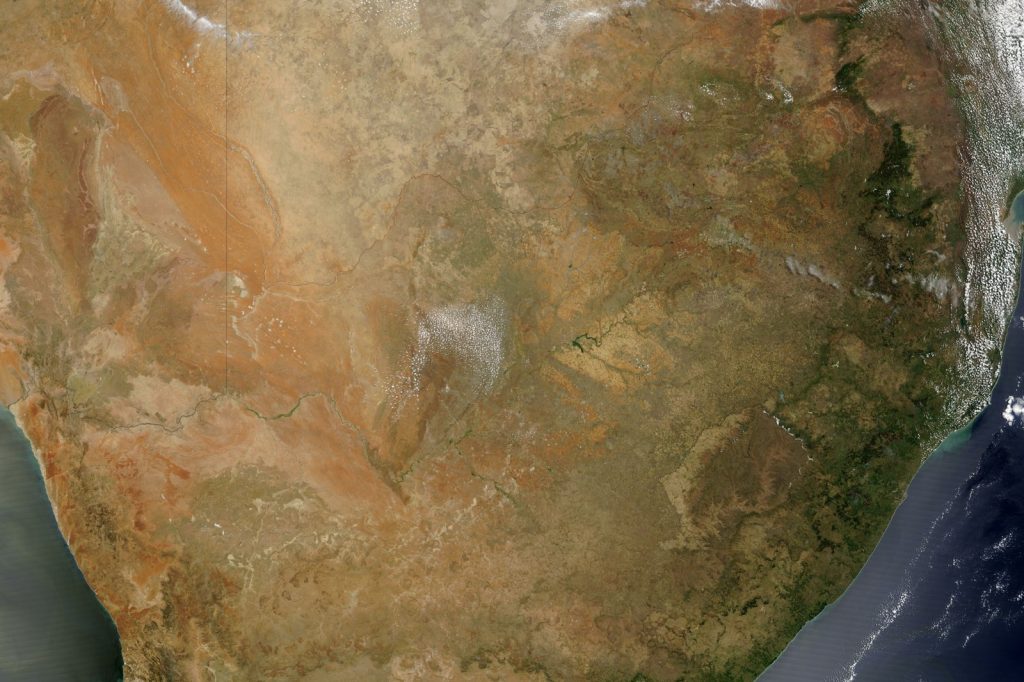
A severe drought across southern Africa has created a cascading crisis affecting 20 million people, agricultural production, biodiversity, and regional economies. The dry conditions are not isolated but interconnected, with crop failures, livestock losses, and water scarcity compounding one another. Agricultural land has become brittle as the drought persists.
Widespread crop failures have reduced food availability, while livestock productivity has dropped significantly. Water sources have shrunk, creating a chain reaction that affects every level of the region’s farming-dependent economy.
When rains fail, the entire system falters, the report notes. The scale of hunger is unprecedented. Twenty million people are currently struggling with food insecurity—a figure comparable to the population of Australia or larger than that of Chile.
This is not a prediction but a current reality, according to the report. Beyond human suffering, the drought threatens biodiversity.
Ecosystems rely on delicate balances that shift when water disappears. Some species adapt to dry conditions, but others cannot survive. The report warns of potential extinctions as a documented outcome of prolonged drought.
These effects can be long-lasting, as the land does not recover quickly. Heat waves compound the crisis by increasing evapotranspiration, a process that pulls moisture from soil and plants.
Forests and other vegetation dry out, creating fuel for wildfires. The region faces elevated wildfire risks, particularly during the annual dry season in the tropics. The report describes a vicious cycle: drought dries the land, heat bakes it, and fire consumes what remains. Some scientists argue that climate change is driving these extremes, making droughts more severe and less predictable.
A warmer atmosphere holds more moisture, pulling water from the land faster and intensifying both drought and heat waves. The report does not name specific scientists or provide their data but presents this argument as logically consistent.
The economic impact is immediate and widespread. Agriculture drives local economies, and when it fails, everything else suffers. Food shortages drive up prices while incomes drop.
The ripple effect touches everyone, not just farmers. The report does not offer solutions or name aid agencies or governments.
It simply presents facts: 20 million people facing hunger, crop failures, livestock losses, water scarcity, biodiversity threats, and wildfire risks. These elements combine into a crisis driven by the unrelenting drought. The region waits for rain, but rain alone may not be enough.
The damage from months or years of drought does not wash away in a single storm. Recovery takes time, and for 20 million people, time is running short.




