
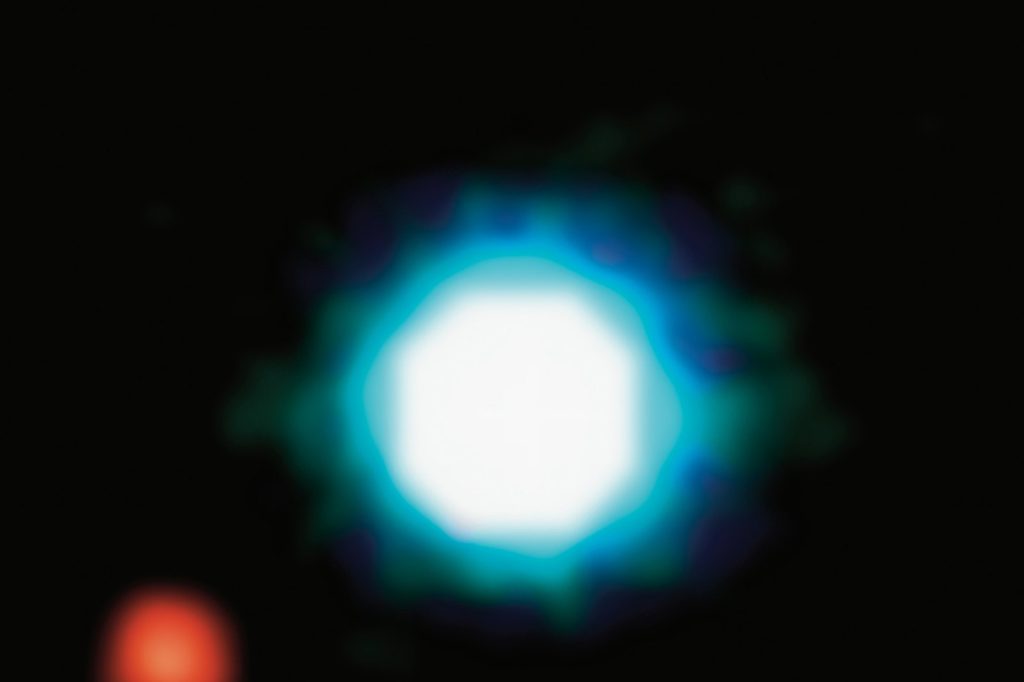
On 15 May 2024, astronomers announced the detection of a new exoplanet designated SPECULOOS‑3 b. The planet is comparable in size to Earth and circles a red dwarf star whose dimensions are similar to those of Jupiter. The find has generated considerable interest within the planetary‑science community, as it adds another candidate to the growing list of worlds that might host liquid water.
SPECULOOS‑3 b belongs to the class of terrestrial‑size planets that orbit low‑mass, cool stars. Red dwarfs are much smaller and cooler than stars like the Sun, and the host of SPECULOOS‑3 b is no exception.
Its size, described as “Jupiter‑like,” introduces a distinctive dynamic for the planet’s environment, prompting researchers to examine how the star’s properties could affect the planet’s habitability. On Earth, the balance between solar distance and atmospheric conditions allows roughly 70.8 % of the surface to be covered by liquid water, with the remaining 29.2 % consisting of land masses. The discovery of an Earth‑sized planet such as SPECULOOS‑3 b raises the question of whether a similar distribution of water and land could exist elsewhere.
Scientists plan to focus on the presence of liquid water as a primary indicator of potential habitability, employing spectroscopic techniques to probe the planet’s atmosphere for water‑related signatures. The detection was made using the same methods that have driven recent progress in exoplanet research—high‑precision photometry and analysis of starlight that passes through a planet’s atmosphere during transit.
By measuring the minute dimming of the host star’s light as SPECULOOS‑3 b moves across its face, researchers were able to infer the planet’s size and orbital characteristics. While the planet’s exact composition and surface conditions remain unknown, its Earth‑like dimensions place it among the most promising targets for follow‑up observations. Future studies will seek to determine atmospheric composition, temperature ranges, and the possibility of a stable liquid‑water reservoir.
The broader field of exoplanetary science continues to evolve rapidly, propelled by advances in telescope technology and data‑analysis algorithms. Each new discovery, including SPECULOOS‑3 b, underscores the value of sustained investment in observational capabilities and theoretical modelling.
Scientists emphasize that the identification of SPECULOOS‑3 b does not confirm the existence of life, but it does expand the catalogue of worlds where life‑supporting conditions might arise. The planet’s orbit around a red dwarf also offers a chance to study how stellar activity—such as flares common to small, cool stars—might influence planetary atmospheres over long timescales. As the astronomical community digests the implications of this find, the excitement mirrors that generated by earlier landmark detections of Earth‑sized exoplanets.
The ongoing search for biosignatures—chemical markers that could indicate biological processes—will now include SPECULOOS‑3 b among its prime candidates. In summary, the announcement of SPECULOOS‑3 b adds a noteworthy entry to the inventory of terrestrial exoplanets orbiting red dwarfs.
Its Earth‑like size, combined with the unusual Jupiter‑sized host star, presents a compelling laboratory for investigating the conditions that could allow liquid water—and potentially life—to exist beyond our Solar System. Researchers anticipate that continued observations will clarify the planet’s environment and contribute to the larger quest to understand how common habitable worlds are in the galaxy.




