
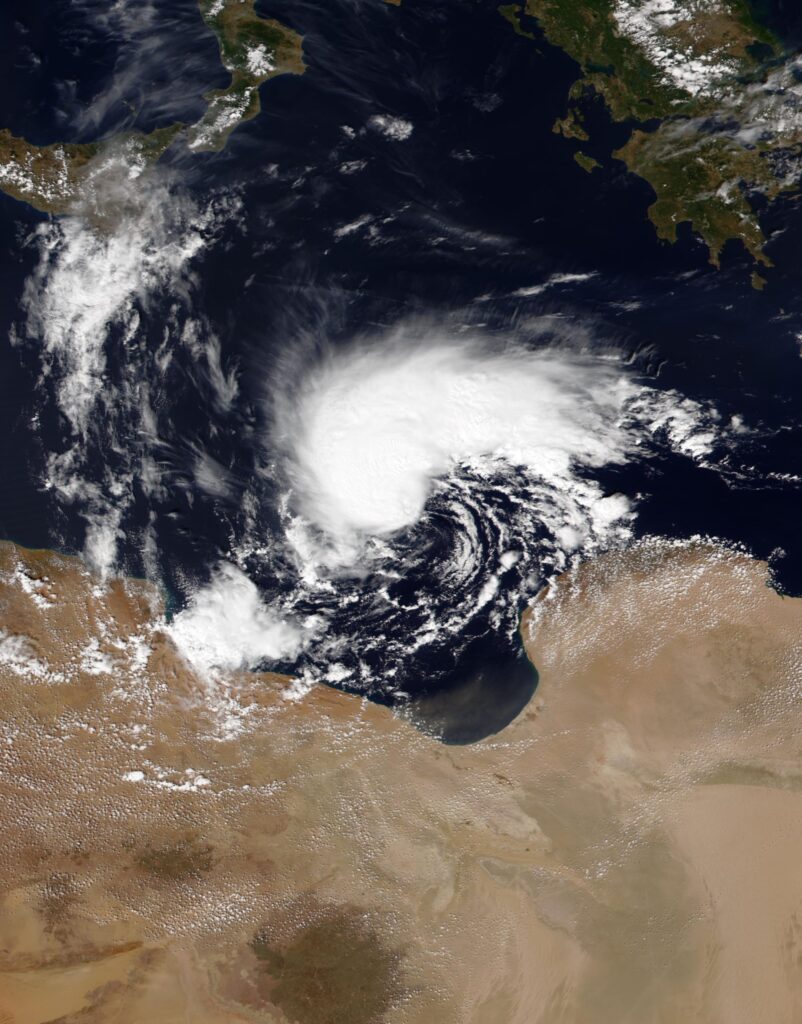
Origins and Development of Storm Daniel
On September 4 2023 a low‑pressure system formed over the Mediterranean, marking the start of what would become Storm Daniel, also referred to as Cyclone Daniel. The disturbance quickly organized into a tropical‑like cyclone that went on to inflict catastrophic damage across several nations.
Meteorologists later noted that Storm Daniel earned the grim distinction of being the deadliest Mediterranean tropical‑like cyclone in recorded history and ranked as the second‑costliest tropical cyclone ever recorded outside the North Atlantic basin. The storm’s birth was tied to an unusual atmospheric setup known as an omega block. A strong high‑pressure ridge became sandwiched between two low‑pressure troughs, causing the isobars to take on the shape of the Greek letter omega (Ω).
This pattern supplied the system with extra energy and allowed it to acquire quasi‑tropical characteristics while maintaining a Mediterranean low structure. The resulting configuration made the storm’s track erratic and amplified its destructive potential.
Early Impacts in Greece, Bulgaria and Turkey
As the cyclone matured, its first significant effects were felt in Greece, Bulgaria and Turkey. Intense rainfall produced widespread flooding that submerged roads, damaged homes and disrupted daily life across multiple regions. The flooding was extensive enough to attract immediate attention from emergency services and local authorities, who began rescue and relief operations while the system continued to move southward.
Devastation in Libya
Continuing its trajectory, Storm Daniel approached the Libyan coast where it unleashed torrential rain. The precipitation overwhelmed the landscape and triggered the failure of two critical dams—Derna and Mansour. When these structures collapsed, the sudden release of water sent a surge down the Wadi Derna river, inundating the city of Derna.
The dam failures were directly linked to the storm’s intensity, underscoring how the cyclone’s rainfall amplified existing vulnerabilities in the region’s water‑management infrastructure. The resulting flood caused severe damage to residential areas, public facilities and essential services in Derna and surrounding communities.
Economic Consequences in Greece
In Greece, the rainfall associated with Storm Daniel generated flood losses exceeding two billion euros. This figure made the cyclone the most expensive storm ever recorded for the country, highlighting the substantial strain placed on Greek infrastructure, public utilities and the broader economy. The flooding affected numerous localities, interrupted transportation networks, and forced businesses to halt operations, compounding the social toll of the event.
Ongoing Assessment and Future Outlook
Although the immediate emergency phase has passed, authorities in the affected nations continue to evaluate the full scope of the damage. Precise totals are still being compiled, and it may take additional time to determine the exact financial and human costs.
What is clear is that Storm Daniel left a profound imprint on Greece, Bulgaria, Turkey and Libya, and that recovery will require sustained rebuilding efforts, repair of essential services and support for displaced populations. Looking ahead, monitoring the situation remains essential. Updates from Greece, Bulgaria, Turkey and Libya will inform ongoing relief and reconstruction plans.
Providing assistance to those who lost homes or livelihoods is a priority, as is investing in measures that could reduce the likelihood of similar disasters. Strengthening early‑warning systems, improving dam safety standards and enhancing flood‑resilient infrastructure are among the steps that experts suggest could help mitigate the impact of future extreme weather events in the Mediterranean basin.




