
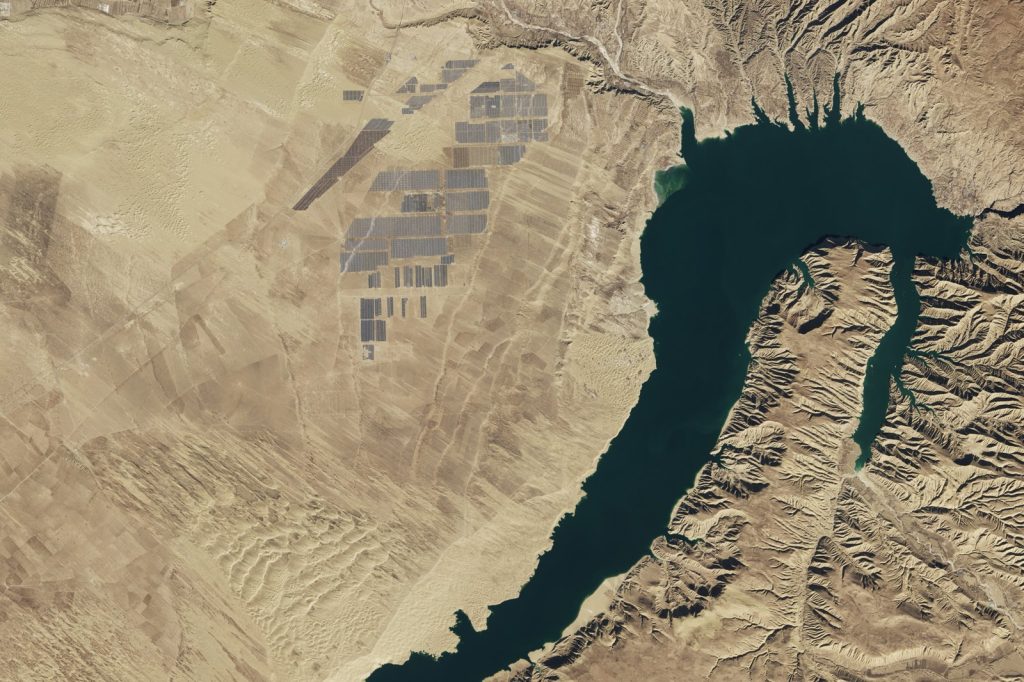
The Talatan Solar Park, situated on the Tibetan Plateau beside the Longyangxia Dam in Qinghai Province, began development in 2011. By 2026 it had reached an installed capacity of twenty‑one gigawatts, making it the largest solar power plant on the planet in both area and electricity output.
The facility produces more than eighteen thousand gigawatt‑hours of energy each year, a volume sufficient to supply power to millions of households. The park’s location is deliberate. The Tibetan Plateau offers expansive, sunny terrain that extends northwest into Gansu Province.
Its high altitude and clear skies provide a steady, predictable flow of electricity to the grid, a reliability that distinguishes it from wind power, which fluctuates, and from solar installations elsewhere that face nightly and cloud‑related variability. This consistent generation supports a stable power supply for the surrounding region.
Every gigawatt‑hour generated at Talatan displaces electricity that would otherwise come from coal or natural gas. Although China remains the world’s largest consumer of coal, the park shifts the balance toward a cleaner alternative and strengthens energy security—a concern highlighted in Beijing due to the country’s longstanding reliance on imported fuels. By reducing the need for diesel generators in factories and eliminating coal‑burn in homes served by the grid, the plant lowers the carbon intensity of the Chinese economy incrementally, one kilowatt‑hour at a time.
While the solar park delivers measurable benefits in energy security and emissions reduction, it sits on an ecologically sensitive plateau. Constructing a facility the size of a small city alters the landscape, requires water for panel cleaning, occupies land for infrastructure, and may affect local wildlife.
The source material does not quantify these impacts, acknowledging that the project is a net positive for energy generation but not free of trade‑offs. The Longyangxia Dam, located adjacent to the solar array, creates a hybrid hydro‑solar system. When sunlight is abundant, the dam can retain water; when the sun sets, it releases stored water to generate electricity. This combination smooths the variability inherent in solar output and presents a model that other nations are observing.
The twenty‑one gigawatt mark represents a milestone, not a limit. Since its inception in 2011, the park has continued to grow, and China possesses the manufacturing capacity, available land, and political commitment to expand further.
Doubling the park’s size would proportionally increase electricity generation, power additional homes, and leave more coal unburned. The ongoing evolution of Talatan underscores that its role in the national and global energy landscape is still developing.




