
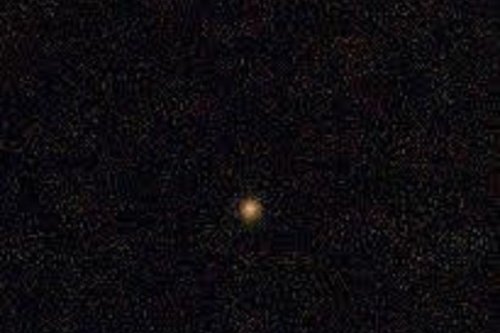
Third Interstellar Object Detected Crossing the Solar System
The Minor Planet Center has announced the confirmation of a third interstellar object currently moving through our Solar System on a hyperbolic path. This marks the latest addition to the small group of bodies known to have originated outside the Sun’s gravitational grasp.
The object is thought to be a comet, with an estimated diameter of roughly 12 miles, which converts to about 20 kilometers. Its size makes it a notable target for observation as it speeds past the Sun and planets. News of the detection has generated considerable interest among astronomers and space enthusiasts.
Researchers view the transient visitor as a rare chance to examine material that formed around another star, offering direct insight into processes that shape planetary systems elsewhere in the galaxy. The Minor Planet Center, the official agency responsible for cataloguing minor planets, asteroids and comets, issued the confirmation.
Established in 1947, the organization operates under the International Astronomical Union and is based at the Smithsonian Astrophysical Observatory. Over its decades‑long history the MPC has tracked countless small bodies, providing the data needed to refine orbital models and understand the distribution of material in the Solar System. Because the object follows a hyperbolic trajectory, it is not bound to the Sun.
Instead, it is merely passing through, set to leave the Solar System after a brief encounter. This orbital characteristic distinguishes it from the majority of comets and asteroids that remain gravitationally tied to the Sun.
The cometary nature of the visitor adds scientific value. Comets are known to contain volatile ices and primitive dust that have remained largely unchanged since the formation of their parent systems. Studying these materials can reveal details about the chemical environment and conditions present in the distant star system where the object originated.
During its transit, observatories worldwide are collecting photometric, spectroscopic and astrometric data. The goal is to determine the object’s composition, precise size, rotation state and outgassing behavior.
Such measurements will help place the visitor in context with the two previously identified interstellar objects and improve models of how such bodies are ejected from their home systems. The Minor Planet Center’s role in this event underscores its continuing contribution to astronomy. By promptly announcing the detection and disseminating the orbital elements, the MPC enables a coordinated global observing campaign. Its infrastructure, rooted in the Smithsonian Astrophysical Observatory, supports the rapid sharing of positional information essential for time‑critical studies.
Scientists emphasize that each interstellar visitor offers a unique laboratory. The hyperbolic path ensures the object will not return, making the current window of observation all the more precious.
Data gathered now will inform future searches for similar objects and deepen understanding of the mechanisms that launch planetesimals into interstellar space. While the object’s exact origin remains unknown, its trajectory and compositional clues may eventually point to a specific type of parent star or the dynamics of its natal planetary system. The discovery reinforces the idea that material routinely travels between stars, blending the contents of disparate cosmic neighborhoods.
As the object recedes, the astronomy community will continue to analyze the collected datasets. The findings are expected to contribute to broader questions about the frequency of interstellar visitors, the variety of their physical properties, and the implications for planet formation theories.
In summary, the confirmation of a third interstellar comet, roughly 12 miles across, moving on a hyperbolic route through the Solar System highlights both the dynamic nature of our cosmic neighborhood and the enduring importance of the Minor Planet Center in tracking and characterizing such fleeting guests.




