
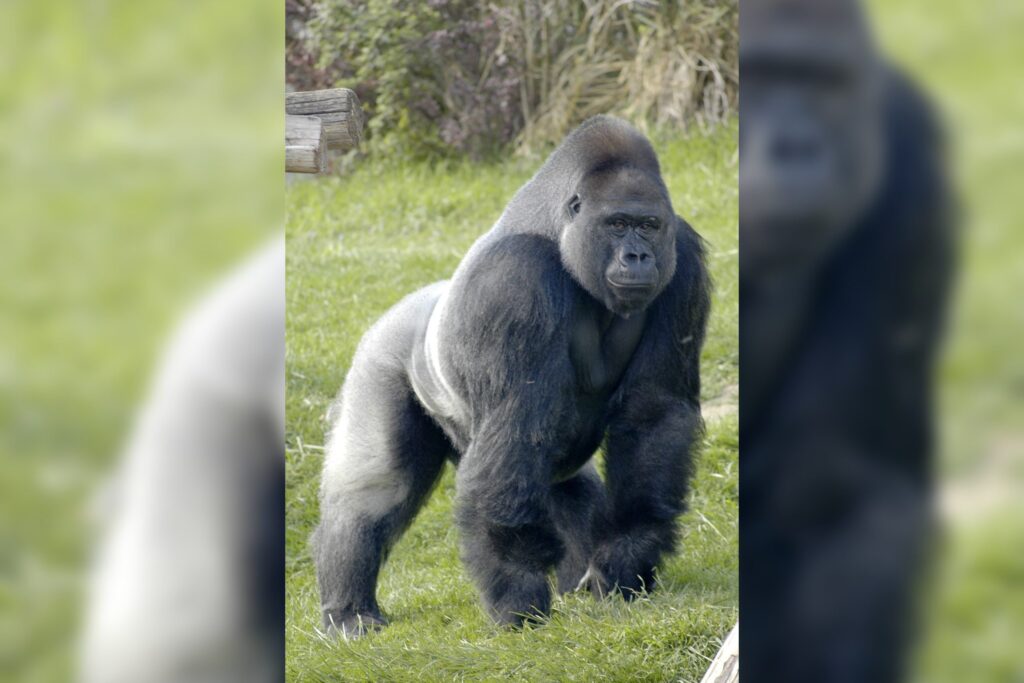
WASHINGTON, July 4 — A review of biological records and field studies offers a clear answer to a question that has puzzled many observers: why do gorillas, whose diet consists almost entirely of plants, possess large canine teeth? According to the scientific literature, the function of these formidable fangs is not related to food acquisition. Gorillas possess canine teeth primarily for social displays, dominance contests, and intraspecies competition, not for hunting or consuming meat.
These canines are essential for establishing social hierarchies and securing mating opportunities. The record shows a clear distinction between the sexes.
Female gorillas do have canine teeth, but they are not as large as those of males. This difference, known as canine dimorphism, is a key piece of evidence pointing to the teeth’s role in sexual selection and mate acquisition. On the timeline of gorilla evolution, the species descended from ancestors that were omnivores before becoming primarily herbivores.
The large canines were retained not for a dietary purpose but because they continued to serve a vital social function. Benefits of large canines in social interactions include intimidating rivals and deterring physical conflict without necessarily escalating to a fight.
How often do gorillas actually use their canine teeth in fights? The sources indicate these teeth are used in actual combat, though the primary function remains display and threat. A broken or lost canine tooth can be a significant disadvantage for a male competing for dominance.
The comparison to predator teeth is instructive. A gorilla’s canine teeth are different from those of a predator like a lion or tiger. Predator canines are shaped and structured for slicing meat and killing prey.
Gorilla canines are thicker and more robust, adapted for the stress of combat with other gorillas rather than the mechanics of a carnivorous diet. The role of the silverback gorilla is directly tied to its canines.
The silverback’s status as the dominant male in a troop is reinforced by the size and condition of its teeth. These teeth serve as a living credential of the animal’s ability to defend the group. Looking ahead, researchers continue to study the function of gorilla canine teeth through direct observation of social behavior and analysis of tooth wear patterns.
A question that remains open is whether gorillas could lose their large canine teeth through evolution in the future, should the social pressures that maintain them ever change.




