
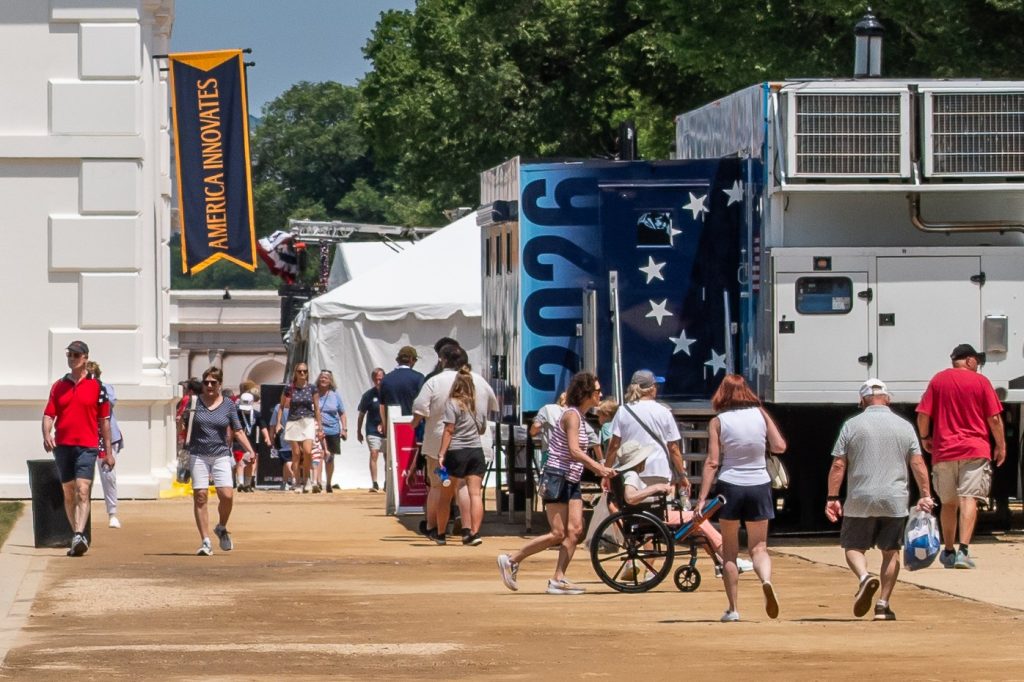
An intense heat wave settling over much of the eastern United States is forcing officials to warn of serious health risks as millions gather for parades, concerts, and festivals on the nation’s 250th birthday. This is not a typical Independence Day.
The celebrations cap years of preparation and planning, unfolding on a much bigger scale than usual. The Great American State Fair is being held on the National Mall in Washington, DC, drawing crowds to the heart of the capital. The timing is strategic: America adopted the Declaration of Independence on July 4, 1776, exactly 250 years ago.
The broader stakes now involve public safety during a holiday weekend when crowds traditionally pack outdoor venues from dawn through the fireworks. Officials across the eastern US are advising the public to take precautions.
The calculus for local governments and event organizers has shifted from pure celebration to managing heat-related risks.
A Milestone Anniversary Under Extreme Conditions
Independence Day commemorates the adoption of the Declaration of Independence on July 4, 1776, when delegates to the Second Continental Congress declared that the Thirteen Colonies were no longer subject to the British monarch and were now free and independent states. The Congress had voted to approve independence two days earlier, on July 2, passing the Lee Resolution.
The Declaration of Independence, largely drafted by Thomas Jefferson, served as the formal statement explaining that decision. The holiday quickly became associated with fireworks, parades, barbecues, concerts, and political speeches. Generations of Americans have gathered for these traditions every summer. John Adams, writing to his wife on the day after the vote, predicted the anniversary would be celebrated with pomp and devotion.
His forecast proved accurate. The Fourth of July remains the most significant annual civic celebration in the country.
The timing of this year’s events matters because the holiday falls in peak summer heat. Large crowds have always packed outdoor venues from city parks to the National Mall. Officials now face the added challenge of managing extreme temperatures during those gatherings.
The intersection of a major milestone anniversary and a heat wave over the eastern United States has shifted the focus from pure celebration to public safety. What began as a political break from British rule in the eighteenth century is now a modern test of how to keep millions safe during a holiday weekend in extreme weather.
The heat wave has settled over much of the eastern United States. From Washington to Los Angeles, the weather is disrupting plans to mark the nation’s 250th anniversary.
Safety Planning in a Polarized Climate
The celebrations are landing in the midst of a highly polarized political environment. For now, the focus remains on getting through the holiday weekend safely.
The intersection of extreme heat and large-scale public events is now a central planning reality for officials from the National Mall to city parks across the eastern seaboard. This signals a new layer of operational planning for mass gatherings in summer months. The calculus for local governments and event organizers has shifted from pure celebration to managing heat-related risks.
Officials across the eastern US are advising the public to take precautions as the heat wave forces a reassessment of traditional outdoor festivities. The Great American State Fair on the National Mall draws crowds to the heart of Washington, DC, yet the broader concerns now center on health and safety during a holiday weekend that typically sees millions gathered in parks and on parade routes from dawn until the nighttime fireworks displays.
The heat wave has settled over much of the eastern United States, disrupting plans and demanding a new level of operational planning for officials who must balance celebration with public safety. The 250th anniversary of the nation’s founding, a milestone years in the making, is being observed under conditions that underscore the growing challenge of managing large-scale public events in summer months.




