
The salient point about Singapore’s water supply is that the city-state never had enough of its own. Since independence, water has been what the national agency’s chief executive calls an existential issue, with the country dependent on imports from Malaysia while its population and economy grew. The answer it settled on is now studied elsewhere: a diversified portfolio of local catchment water, imported water, desalinated water and, most notably, NEWater, the recycled wastewater that Singapore turned into a national tap.
NEWater is, in the agency’s own description, “ultra-clean, high-grade recycled wastewater”, produced from both domestic and industrial sources. The design intent is a closed loop: PUB says the program let Singapore “reuse every drop of water endlessly”, a multiplier on a finite resource. Most output today goes to industrial customers who need high-purity water, with the rest topping up the reservoirs, which counts as indirect potable use and buffers the supply against dry spells.
The engineering is a three-stage scrub. Wastewater is treated at a reclamation plant, then passed through microfiltration or ultrafiltration, reverse osmosis and ultraviolet disinfection, stages meant to leave the water “free from bacteria, viruses, and other possible contaminants”. The testing has been proportionate to the claim: as of April 2020, some 20,000 analyses had been run, and the reported result is that NEWater is “cleaner than Singapore’s tap water in terms of color, clarity, and organic substances”. The fussiest customers are chipmakers; the reclaimed water is the primary supply for wafer fabrication plants, which cannot tolerate impurity. It would seem the driest fact of the program is its best endorsement.
The harder problem was politics, not membranes. Drinking recycled water has faced resistance almost everywhere, and Singapore, by PUB’s account, was no exception. The agency had tracked recycling technology since the 1970s, notably in the United States, before building a dual-membrane demonstration plant at Bedok in 2000, then running a two-year study with an independent expert panel to confirm the water was safe. It published the findings, lobbied politicians to back the program publicly, and closed the case with a stunt of considerable nerve: a “mass toast” of NEWater at the 2002 National Day Parade, led by the Prime Minister. Policy by toast, and it worked.
Supply, though, is only half the ledger. The “Save Water” campaigns began in the 1970s and survive as Singapore World Water Day, schools carry the conservation message, and a labelling scheme rates appliances and fixtures so households can comparison-shop their taps. For industry, the instrument is price: Singapore charges water at the marginal cost, defined as “the cost of producing and supplying the next drop of water”, so companies internalize the true cost, and grants from a Water Efficiency Fund pay for recycling and more efficient processes. Demand management, in other words, is treated as infrastructure.
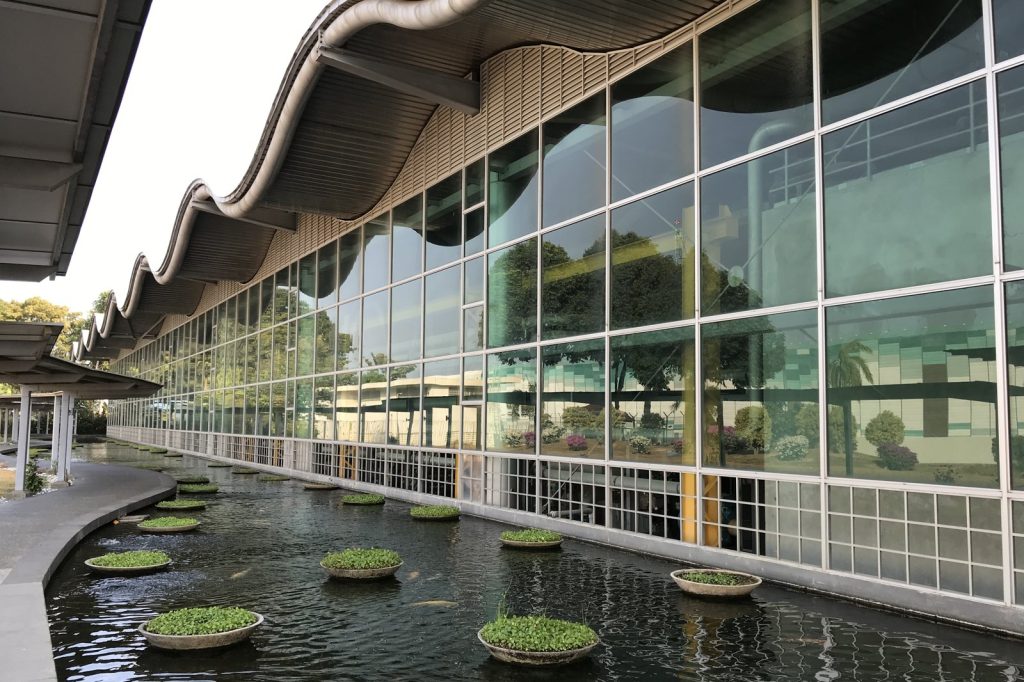
For all the noise around water technology, the arithmetic is unsentimental: demand is projected to double by 2060, five plants are in operation, and climate change makes dry spells more likely rather than less. PUB’s own framing, from its chief executive down, is that every resident has a role in the water story, conservation and recycling being two halves of one policy. There is a visitor centre that explains it all to the public, which is the quietly radical part. A country that once could not water itself now bottles the proof that it can.
Sources
- Singapore's Water Story from the Regenerative Lens | Centre for Liveable Cities Knowledge Hub
- NEWater: Singapore’s Recycled Water – Green Network Asia




