
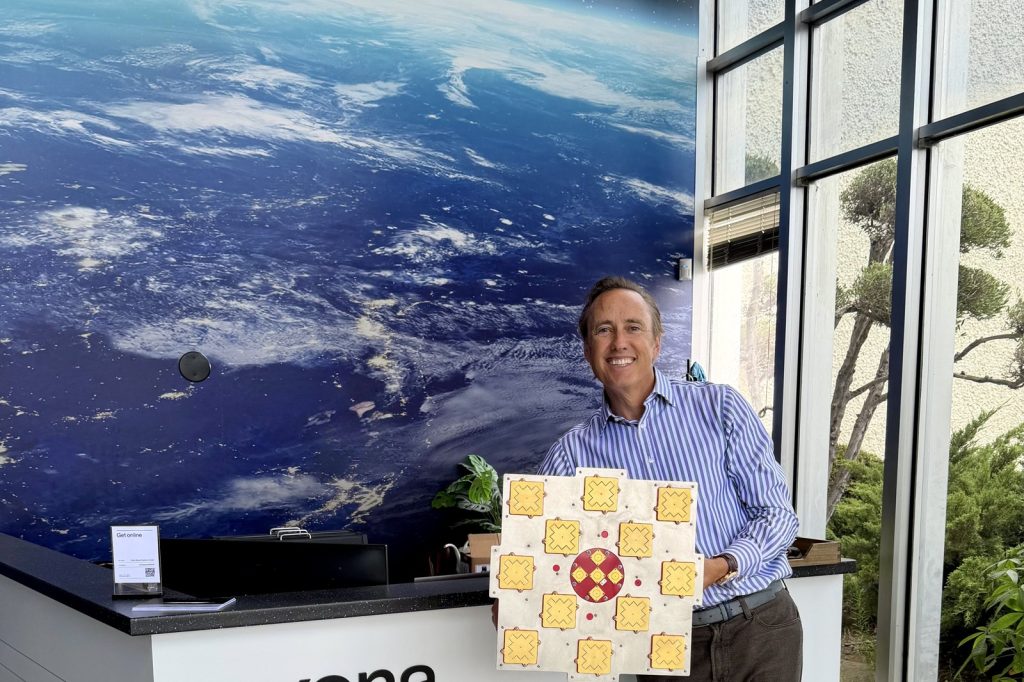
Xona Space Systems is about to put six satellites into orbit, the first step toward what it says will be a commercial rival to GPS. A SpaceX rocket is scheduled to carry them up in October.
TechCrunch reported that Xona has raised just over $300 million from venture investors since it was founded in 2019. That includes $20 million from the U.S. Space Force.
A doubtful start
Five engineers who met in Stanford’s aerospace engineering graduate program started the company. One of them, Tyler Reid, wrote his doctoral thesis on using satellites in low-earth orbit to improve navigation. He is now Xona’s chief technology officer.
CEO Brian Manning didn’t buy the idea at first. “My knee jerk was like, this is dumb,” he told TechCrunch. “Why would anybody replace GPS? It’s free, right?” Then he looked closer. His conclusion was that the market is the hardware, not the signal. Billions of devices sell every year, and “there’s an immense market that is desperately looking for better performance.”
The launch and the constellation
Four of the six satellites resemble a prototype Xona flew last year, which proved the technology. They are built around a platform from Aerospace Labs. The other two were built entirely at Xona’s Burlingame, California, headquarters and are meant to be the base of the full 258-satellite constellation, called Pulsar.
Pulsar is designed to give centimeter-level positioning. GPS gives meter-level. The signal is strong enough to reach inside buildings and urban areas, and Manning believes it is powerful enough to discourage jammers and spoofers.
Two engineering choices stand out. Xona’s satellites keep time without expensive onboard atomic clocks, relying instead on their closeness to Earth and constant contact with ground-based references. And the signal can be read by existing GPS receivers after a fairly simple software change, which gives the company a faster route into the market and through the rules on broadcasting navigation signals.
Customers and timing
Once the satellites are up, they will pass over the mid-latitudes about eight times a day, and Xona can start beta testing with real customers. Ian Gough, CEO of the electronic timing firm TimeBeat, said the pilot will let his engineers check and correct the timing from their devices around the world. Xona hopes to offer full coverage in the U.S., Europe, Japan and South Korea by 2028.
The U.S. government is watching closely. Jamming and spoofing of satellite navigation are increasingly common in conflicts. Reid, who worked on self-driving cars at Ford, sees a service like Pulsar as a requirement for autonomous vehicles.
Manning points to civil aviation as the model. “We see Xona and what we’re building being able to play a big part in that,” he said, “to provide the service to a car, so you can feel as safe taking your hands off the wheel as you are laying back in an airliner.”




