CAPE CANAVERAL, October 24, 2026 — NASA announced it is borrowing the Apollo‑era playbook to shave two years off its timetable for a lunar base and crewed landings, cutting meetings and streamlining hardware in a bid to stay ahead of a renewed space race with China.
Apollo‑Style Management Returns
Administrator Jared Isaacman told reporters that the agency is “adopting Apollo’s urgent and intense approach from 1968 through 1972” to accelerate development, a method he described as “not tech industry pixie dust or some new management philosophy” but a proven historical playbook that took NASA from Apollo 7 splashdown to Apollo 11 in just nine months.
Isaacman said the new focus means eliminating “endless meetings and bureaucratic inertia” while NASA expands its workforce to keep pace with commercial partners. The aim is to launch the first elements of a south‑pole base by the end of this year and have astronauts on the surface within two years, a timeline that would have seemed impossible just a decade ago.
Engineering Trade‑Offs: Lighter “Sortie” Suits
One concrete change is the decision to outfit the first moonwalkers with a simpler, lighter spacesuit rather than the more complex garment still being refined for long‑duration stays. The “sortie suits” are being built by Axiom Space and will be tested on the International Space Station next year, providing an early flight‑ready option while the full‑scale suit continues development.
NASA officials say the reduced suit complexity cuts both risk and schedule pressure, allowing the initial crew to focus on basic EVA tasks while the more elaborate suit matures for later missions.
Docking Exercise as a Litmus Test
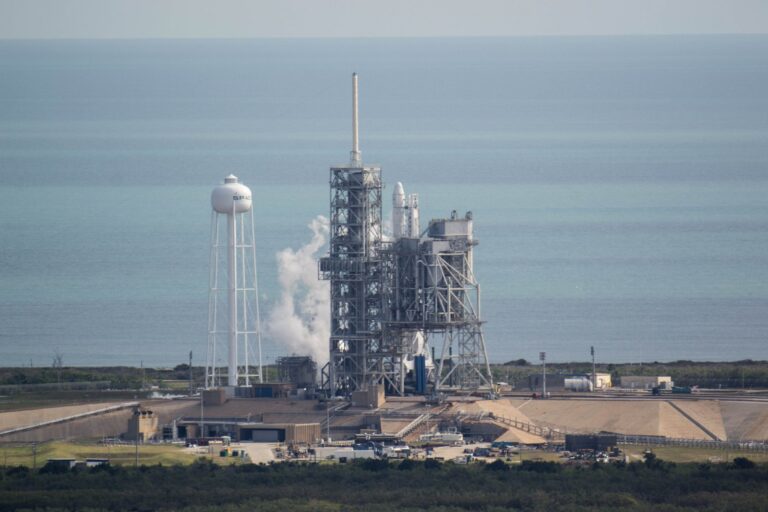
Artemis III, slated for next summer, will be a two‑week Earth‑orbit mission that serves as a docking rehearsal for the lunar landers built by SpaceX and Blue Origin. Three rapid‑succession launches from Cape Canaveral will place Orion in orbit, where it will first rendezvous with Blue Origin’s Blue Ghost at roughly 270 miles (435 km) altitude, then with SpaceX’s Starship in a slightly lower orbit.
The mission will carry three NASA astronauts and one Italian crew member, giving engineers a chance to validate communications, navigation and crew procedures before committing to a lunar descent. NASA has said it will keep its options open between the two commercial lander designs for the Artemis IV landing scheduled for 2028, ensuring competition drives performance and cost control.
South‑Pole Base and the Competitive Landscape
Unlike the equatorial sites of the Apollo era, NASA’s long‑term outpost will sit near the lunar south pole, where permanently shadowed craters promise water ice and more stable temperatures. The first launch carrying base elements is planned for the end of 2026, with additional landers, rovers and orbiters to follow so that a “moon car” will already be waiting when the first Artemis crew steps onto the surface, officials said.
A Pittsburgh‑based company, whose 2024 lunar attempt failed, is preparing a second try aimed at the same polar region, adding private‑sector momentum to the national effort. Isaacman warned that the “new space race” against China is “much closer than it ever needed to be” because of past delays, underscoring the strategic urgency behind the accelerated schedule.
Looking Ahead
With Artemis IV still on track for a 2028 landing, NASA’s current push focuses on proving the fast‑track processes and hardware that will support a sustainable presence on the Moon. If the sortie suits perform as expected and the docking drills go smoothly, the agency will have a solid foundation for the next phase of exploration, including the eventual establishment of a permanent habitat and the logistics network required to keep it supplied.
For now, the agency’s emphasis on Apollo‑style urgency, lean engineering and competitive commercial partnerships reflects a clear strategy: move fast, reduce risk, and stay ahead in a space race that now includes a determined China.
Sources
- NASA adopting Apollo’s urgency to build a moon base and land astronauts within two years
- NASA adopting Apollo's urgency to build a moon base and land astronauts within two years
- NASA adopting Apollo’s urgency to build a moon base and land astronauts within two years
Photo: Meisam (CC BY-SA 4.0)