Spain has laid some 3,900 kilometres of high-speed track for its 49 million residents. Only China, with 45,000 kilometres, has more, according to the International Union of Railways. On Wednesday, 544 people boarded two trains on that network south of Madrid, and at least 69 of them died.
On Saturday the pews of San Juan Bautista church in Urda were packed, and dozens more people stood outside to hear the Mass. Some wiped away tears. The Archbishop of Toledo, Francisco Cerro, said the days since the crash had felt like a “Good Friday for us all” and that “there are no words that can offer comfort.” He told the families: “You are not alone.” Urda’s mayor, Manuel Galan, said the village of around 2,500 was “very badly affected, in great pain and with a great need for support.”
What went wrong
A Renfe train bound from Madrid to Seville ran into the back of a stationary Iryo train. Transport Minister Óscar Puente said the LZB signalling system, which halts trains automatically when the line ahead is occupied, failed at about 8.30am because of a computer malfunction. An estimated six trains stopped along 63km of track. Monitoring then fell to a 24-hour control centre in Madrid.
Audio recordings obtained by Spanish media appear to show a controller clearing a train to move at 08:36 even though another ahead had stalled. In one, the operator tells the Renfe driver to disconnect and reconnect LZB, then continue at normal speed. The driver asks, “At normal speed?” The answer: “Yes.” Under standard protocol the driver would have crept along at no more than 40km/h on sight, not at the speed of a line built for up to 200km/h.
Puente called the decision to resume traffic “inexplicable” and “clearly, a wrong decision.” The Renfe train covered roughly 25km and hit the Iryo train about 17 minutes later. The minister said the control centre had time to verify the error and did not fix it, and that another train had received similar orders until its engineer insisted on on-sight operation. “I am not attributing responsibility to anyone, I am just stating the facts,” he said.
Identifying the dead
Forensic teams have finished autopsies on all 69 victims. Thirty-six have been identified so far, and relatives are giving DNA samples. The Castilla-La Mancha government said 58 people were receiving hospital treatment, and on Wednesday officials said 107 had needed care, 15 of them seriously.
The political cost
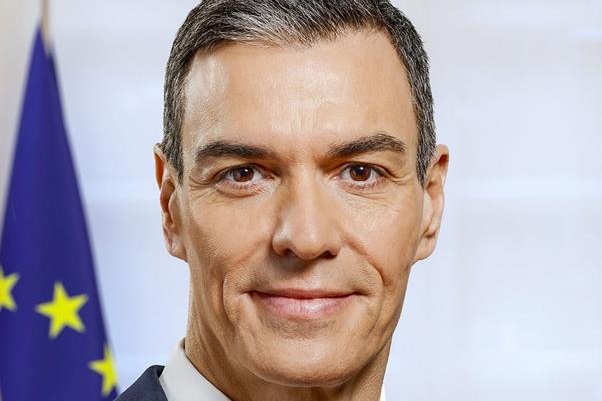
The crash lands weeks before the general election of November 29, in which Prime Minister Pedro Sánchez is fighting an uphill battle. In January, 46 people died when two trains, again one from Renfe and one from Iryo, collided near Adamuz in Andalucía. Sánchez called two accidents in one year “unacceptable for a country like Spain.” He said everything strongly suggests the causes are unrelated.
Opposition leader Alberto Núñez Feijóo wants a “complete and independent review” of the whole rail network: “Spain has the right to know what is going on with its infrastructure.” Joan Rodríguez of the train workers’ union raised the opening of the network to private operators, Iryo among them since 2022, saying the heavier traffic is a factor to keep in mind. Spain has declared three days of national mourning.
Sources
- TRT World – Spanish village mourns victims of rail disaster that killed dozens
- Spain’s Sánchez declares three days of mourning after at least 68 killed in Toledo train crash
- Spain train crash: What we know after two trains crashed with dozens feared dead
- 6 Canadians hurt, 1 missing in train crash in Spain that left at least 68 dead | CBC News
Photo: Pool Moncloa/ Carlos Spottorno de las Morenas (Attribution)