
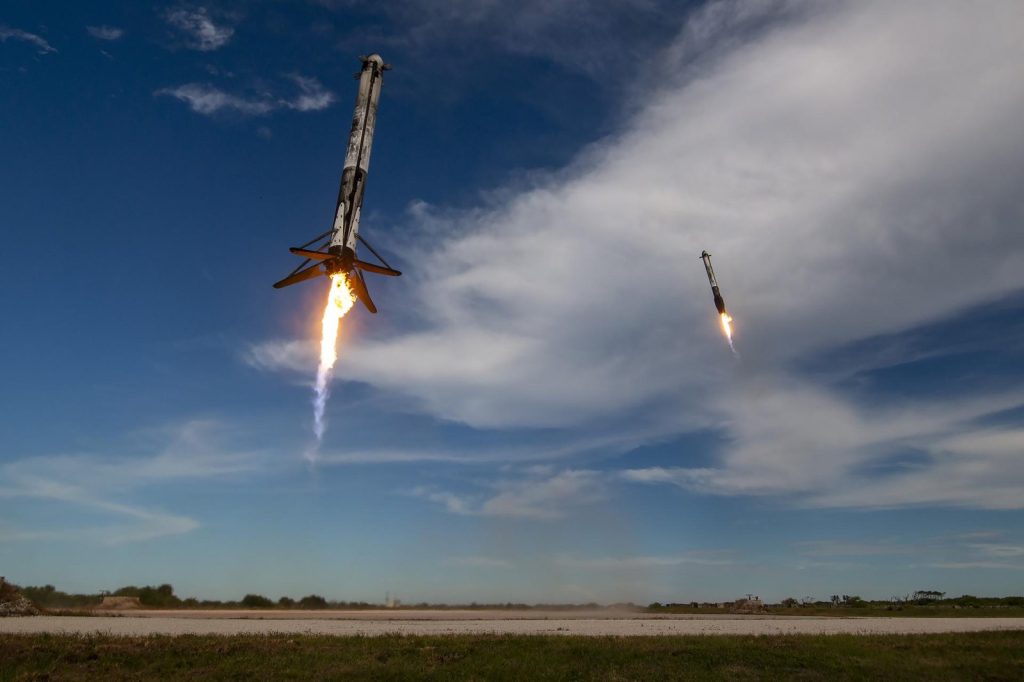
With the successful recovery of its first stage, China has joined the United States as the only nation to retrieve a liquid-fueled orbital rocket booster, a technical feat that stands to reshape launch economics and advance Beijing’s ambitions for crewed lunar missions. The milestone occurred June 23, 2024, when the Long March 10B rocket lifted off from the Wenchang Space Launch Site on Hainan island, delivered a test satellite to orbit, and then returned its first stage to a controlled vertical landing at a designated recovery zone.
Technical Milestone and Cost Implications
The Long March 10B is a two-stage partially reusable vehicle developed by the China Aerospace Science and Technology Corporation (CASC), a state-owned contractor. Its maiden flight carried the Shiyan-24 satellite, a test platform for technology verification whose specific experiments and orbital parameters were not disclosed by CASC.
The rocket is capable of carrying up to 27 metric tons to low Earth orbit. The first stage is powered by kerosene and liquid oxygen, while the second stage uses liquid methane and liquid oxygen. CASC officials stated that the recovery marks China’s first successful retrieval of a liquid-fueled orbital rocket stage.
They noted that the demonstration of key reusability technologies could cut launch costs by as much as 30% compared to expendable rockets. The flight followed a series of static fire tests conducted in 2023.
CASC described the June mission as a major milestone toward operational reusability, a phrase that suggests additional test flights are likely before commercial service begins. The company has not announced a date for the first operational Long March 10B mission.
Role in Broader Space Ambitions
The Long March 10B belongs to a family of rockets developed to support a range of missions, including flights to China’s Tiangong space station and crewed lunar voyages. This specific variant is a derivative of the Long March 10A, which is planned for lunar orbit insertion.
By flying the 10B first, CASC can gather flight data to reduce development risks for the 10A and for future crewed missions. The 10A variant will require its own series of test launches. The Long March 10 series is intended to support China’s crewed lunar missions.
The partially reusable design of the 10B is aimed at commercial space services, enabling the program to gather data while also lowering costs. The use of a recoverable first stage in this flight marks a deliberate shift away from expendable hardware, a transition that supports the growth of China’s commercial space sector.
The Competitive Landscape
China’s space program has accelerated its reusable rocket development since 2020, and the June 2024 flight is the most visible result of that push. Previously, only the United States had achieved the recovery of an orbital rocket booster. By moving to recover and reuse launch vehicles, China seeks to lower the per-kilogram cost of reaching orbit, a critical factor for both government and commercial payloads.
The ability to recover orbital boosters marks a significant shift in global space capabilities. Reusability reduces the need to build entirely new rockets for each launch, cutting hardware costs and turnaround time.
CASC has not disclosed the specific cost savings expected from the Long March 10B, but officials have cited the 30% reduction figure compared to expendable rockets. The June flight’s success validates the technology path China has pursued since 2020 and positions the Long March 10 family as a central element in Beijing’s plans for low-cost access to space, crewed lunar exploration, and sustained operations aboard the Tiangong space station.




